


Now in its eighth year, Cinema Reborn continues to offer rare chances for audiences across Sydney and Melbourne to witness newborn restorations of a striking medley of never-seen-like-this-before cult, classic, and long-buried films. This year’s iteration, currently igniting screens at Sydney’s The Ritz Cinema before visiting Melbourne’s Lido Cinema from Thursday the 8th of May, features works from across eight decades and four continents, and presents swooning romances, erotic nightmares, and once-lost historical epics alongside impressionistic portraits and wily docu-fiction hybrids.
In this conversation, we discuss the precious place of Cinema Reborn as a festival platforming the preservation and restoration of cinema within a landscape that often valorises newness; the ways films are reinvented through encounters with different and varied audiences; and the project’s history of programming cinemas of resistance, including this year’s 2K restoration Australian premiere of Leila and the Wolves (1984, dir. Heiny Srour), which, as James writes, honours the “involvement of Palestinian and Lebanese women in military resistance against British and Zionist colonisation in the twentieth century.”
Rough Cut: How and why did you first become involved with the festival? What do your roles entail?
James Vaughan: The first edition of Cinema Reborn in 2018 was held at the Australian Film, Television and Radio School (AFTRS) cinema. I can’t recall how I heard about it, but looking over the program I was so excited. It felt like exactly the kind of thing Sydney had been missing—serious retrospective programming that serves up under-appreciated masterpieces not as side dishes but as the main course.
While the films were old, some going back to the 1920s, I liked that they were also ‘new’—every film was a brand-new 4K restoration of something previously only available in shoddy low-res digital formats or not at all. Another great aspect of that first edition was the all-access festival pass. It’s the way I like to do festivals—just bunging as many films into the day as possible and drowning the brain with different faces, colours, landscapes, and time periods. It became something I looked forward to every year, but I don’t think it was until 2021 that I met Angelica, after the festival had relocated to The Ritz. I think she saw that I’d been attending a lot of sessions. Angelica told me the festival was put together by a team of volunteers, and she asked if I’d like to join. I’m pretty sure I said yes straight away.
It wasn’t actually my first involvement with film programming. In 2016, I was working as floor staff at the Museum of Contemporary Art Australia in Sydney, and convinced them to let me work voluntarily on a regular art film program in their rarely-used digital theatre. People such as Adrian Martin, Michelle Carey, and Amiel Courtin-Wilson were invited to curate one-month-long programs of art cinema. Although the series quickly developed an enthusiastic audience, it was discontinued after about eight months. While I subsequently shifted focus back to my filmmaking practice, I’d really enjoyed the curating experience and was grateful for the chance to do it again.
Once I began at Cinema Reborn, my role was the same as everyone else’s in most respects—to keep up with the longlist of new restorations coming out, attend the regular video meetings, discuss the relative merits of the films we were watching, and weigh in on administrative decisions. As the only film editor on the committee, I took on the responsibility to make the festival trailer. There are other specialised roles that are really important. Committee member Sue Murray is a veteran Australian producer and she handles most of the negotiations with distributors and license holders. Karen Foley manages the budget. I could go on, but everyone plays an important role in what is a labour of love.
This year I also curated and managed an independent program with the Swami Vivekananda Cultural Centre in Sydney—a small program of Indian Parallel Cinema which we presented at Riverside Theatres in Parramatta.
Angelica Waite: In 2018 I had just completed my film studies degree, and came across Cinema Reborn’s first program online. There were so many brilliant films—Rainer Werner Fassbinder’s In a Year of 13 Moons (1978), Sergei Parajanov’s The Color of Pomegranates (1969), and Yasujirō Ozu’s Tokyo Twilight (1957) were some of the bigger films I recognised, and there were many others I had never heard of. The curation was so varied and I felt really excited about it being in Sydney.
I volunteered with the festival this first year. I just helped with ushering; distributing leaflets and posters; and manning the door. It meant I was given a pass for the program, and was able to see three or four films a day for the duration of the festival. Some of these were incredible discoveries for me. Especially Med Hondo’s Soleil O (1967), Corrine Cantrill’s In This Life’s Body (1984), and Shadi Abdel Salam’s The Night of Counting the Years (1969)—all such singular and affecting films, which I think about often. And they were all presented in beautiful, restored quality. It was a really memorable week and one that made me feel very committed to being involved in film curation more generally. My enthusiasm to keep working with the festival must have been very obvious, as they asked me to join the committee the next year.
Some of us have been involved with the festival since this first edition, and others have joined as recently as this year. It’s a small team, but one which collectively has a huge amount of experience. We have some highly skilled producers, filmmakers, programmers, critics, and academics on the committee—all massive film enthusiasts. While everyone funnels these skills into different tasks to pull the festival together, we all share in the programming, as James mentioned, as well as finding people to introduce the screenings and write about the films ahead of the festival. I also help with managing our website and online content.
RC: Cinema Reborn’s programs are exceptionally diverse: geographically, stylistically, historically, linguistically. Can you speak about the process of researching, curating, and ultimately whittling down the program? Where do you begin?
JV: The main source of program ideas and also the original inspiration for Cinema Reborn is Il Cinema Ritrovato (Cinema Rediscovered) in Bologna. Founded in 1986 by the Cineteca di Bologna, it was intended to showcase the latest restored works from cinematographic archives and film laboratories around the world. The Cineteca receives government funding and remains a crucial source of technical, aesthetic, and historical expertise in that work. It’s now become a significant tourism event in the city’s calendar.
Every year in the fierce June heat, thousands descend on Bologna to enjoy the results of that work—hundreds of new digital restorations across ten days in the city’s indoor and outdoor cinemas. Geoff Gardner, Cinema Reborn’s founder and chair, was a regular attendee, and his idea was to bring a small sample of that back to Sydney. He started the committee, and each year it’s still an important part of our process for some of us to make the Bologna pilgrimage. I’ve been twice, and am planning to go again this year. Our initial longlist comes from that, but it grows once other restorations that premiere at Cannes, Venice, Locarno, Festival Lumière, New York Film Festival, and many other places are added to the mix. Most pace-setting film festivals now have some curated sidebar of new restorations. It’s popular with audiences too. When Cinema Reborn started in 2018 there wasn’t much competition, but we now have to move quickly or risk losing preferred titles to the big festivals.
The diversity you highlight was always one of the most attractive things for me. It’s common for festivals, museums, and film curators to organise retrospective programs by director, genre, actor, country, theme, et cetera. This can be great, but I really like that Cinema Reborn doesn’t work this way. Our only framework is to try to pick the best selection of films, and to have as much range as we can. We try to get at least one film from every decade, generally spanning from the 1920s to the 1990s. And geographic diversity is a big priority too.
RC: What are the most challenging aspects of preparing the festival?
JV: Getting the balance right with this diversity is probably the biggest challenge. The films produced in countries like the USA and France are often managed by well-oiled distribution machines with representatives we know, quick response times, and reasonable prices. It makes including these more familiar titles an easy process. On the other hand, the newly resurfaced film which was damaged, censored, or previously thought lost, coming out of Syria or Tibet, for example, may not have such a straightforward path to licensing. There may be no distribution arrangement for Australia, no office to contact, or prohibitive fees. Then there’s the unfortunate fact that these films, while often groundbreaking for aesthetic, cultural, or political reasons, do not always necessarily sell well. It’s rarely something even a serious film nerd has heard of before, so it’s a leap of faith—unlike buying a ticket to something by Orson Welles or Terrence Malick.
And so this is something we spend a lot of time discussing—the undiscovered films sometimes need really passionate advocacy from individuals within the group, because in most respects the path of least resistance points to North American and European titles. And yet while we can have differences of opinion regarding the balance between pragmatism and diversity, we all agree these rare, more ‘difficult’ films are essential for the integrity of the festival. They are a key part of what inspires us all to do this—the excitement of genuine discovery and being able to offer that kind of experience to others.
RC: Cinema Reborn holds a special place in the context of mainstream film festivals and the pace of media in general. What is the significance of retrospective programming and screening restorations within a landscape that valorises the ‘new’?
AW: James mentioned something earlier which I think rings really true here. The films we program span decades, but they all share a newness in that they’re being presented in newly restored format. I think this is key, and it’s what I find most exciting about screening restored films—there’s definitely an appreciation for film heritage in this festival’s curation, but the reality is, when these films resurface in a contemporary setting with new restorations, they also find new resonance.
It’s not just a nostalgia for older films that underpins these programs; there’s something very contemporary and active in how these films are being experienced. I love that interaction that happens in restoration programming. The film might emerge from a very specific geographical and historical moment—1970s Angola, 1950s Japan, early 1900s Italy, et cetera—but in a cinema in Sydney or Melbourne in 2025, people will inevitably bring their own political, artistic, and social knowledge and context to this film and its meaning.
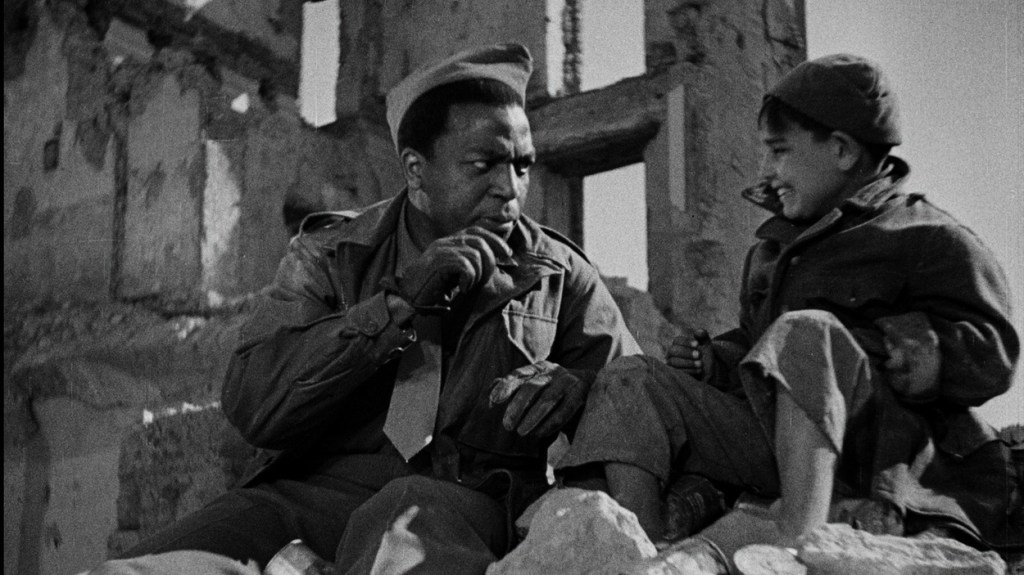
Some of these films may have also been made decades ago, but because of quality degradation and damage, or political suppression and censorship, have not actually been available to audiences in the form intended by their makers since. This is true of a film like Masoud Kimiai’s remarkable The Deer (1974) which we screened the year before last. The film premiered at Tehran International Film Festival in 1974, but was banned in Iran shortly after, and Kimiai was forced to recut the film and create an entirely new ending. No original camera negatives exist—which made the restoration extremely difficult. It cobbled together multiple missing and damaged scenes including the original censored ending. The restored film is scratchy and still clearly damaged in parts—but I think being able to see a reconstruction like this is a reminder of the huge privilege and power that exists in being able to access films that have been historically suppressed or denied. Again, there’s something that goes far beyond nostalgia for older films here—it’s a very active interaction with film history that’s enabled.
RC: I feel that a rich element of Cinema Reborn is the degree to which it engages local critics, such as through the commissioning of short essays on the films or involving critics to introduce screenings. Can you speak to this approach and process?
AW: This is a really important part of Cinema Reborn, and has been since the start. I think it speaks to what I was just saying, too—fostering conversation about each of the films is a big part of what makes the festival feel so generative and relevant. The speakers and writers contribute so much to the festival, and huge amounts of work go into those introductions and essays. Once we’ve selected the films, we all think about people who might have related experience, knowledge, or interest to introduce or write about the films. Some of the people involved are film critics or historians, others are filmmakers, producers, or other media professionals, and we aim for a mix of ages. There’re a number of people who have introduced films or contributed to our catalogue over multiple years who have become a part of a core Cinema Reborn community, and we’re always trying to bring in new people, too.
This is something the festival Chair, Geoff, has always been really passionate about. He’s very committed to nurturing a really engaged filmgoing culture around the festival, and I think all of us on the committee see how important this is. It’s translated to a festival that’s full of vibrant and passionate people and conversations. The cinema bar is always packed before and after sessions—and this kind of engagement is a massive part of what makes it such an enjoyable and stimulating festival to be involved with, and I hope, for audiences to step into, too.
Every year we publish a print catalogue with all of the essays from contributors, and we also publish them on our website. This year, we were lucky to have local academic Anne Rutherford as the editor of the publication. Cinema Reborn committee member Simon Taaffe works really hard on getting this ready for publication, too. This year it’s quite a hefty publication—there’s so much great material in there! It’s an important document of the festival and its purpose.
RC: Which film/s are you most excited to see at Cinema Reborn this year?
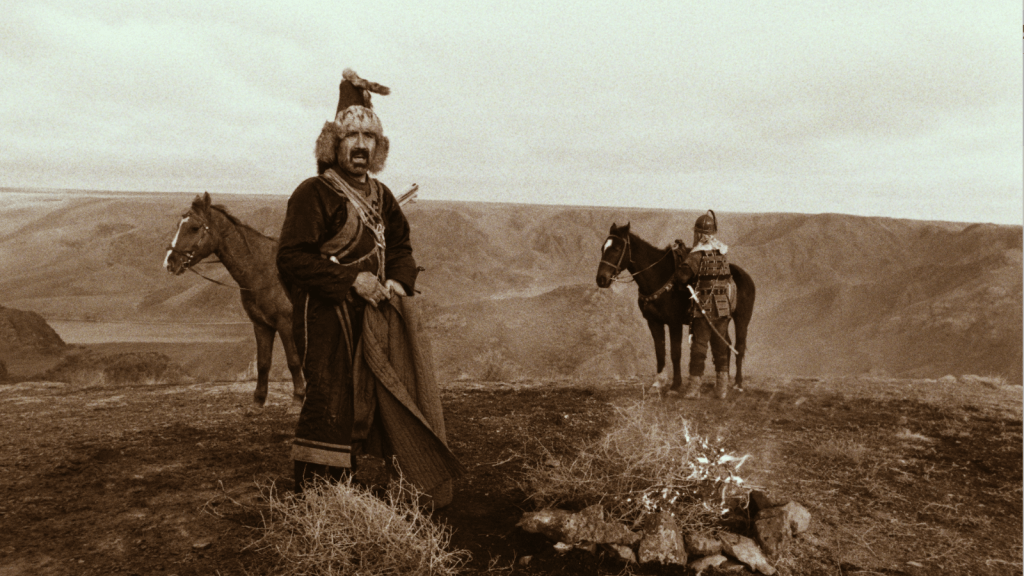
JV: This year in Sydney I’ll be doing the introduction to Robert Altman’s McCabe & Mrs. Miller (1971). It’s a film and director close to my heart, but it’s also one I’ve seen probably four or five times in pretty good quality. I think the one I’m most looking forward to watching on the big screen is Ardak Amirkulov’s The Fall of Otrar (1991). In previewing the film, we were only able to view it in very poor, pre-restoration quality. Even in that state, it blew me away visually. It’s a film of mesmerising textural detail—a cinematic Bayeux Tapestry showing the lead-up to the destruction of the Islamic West Asian civilization of Otrar by Genghis Khan. Though not for the faint-hearted, its unflinching vision of genocidal violence resonates with grim urgency in 2025.
In that context, I’d also like to mention Lebanese filmmaker Heiny Srour’s striking docu-fiction Leila and the Wolves (1984). Srour’s film is elegiac and defiant in equal measure, honouring the little-acknowledged involvement of Palestinian and Lebanese women in military resistance against British and Zionist colonisation in the twentieth century. Structured in temporal mosaic, it’s the kind of perspective that’s systematically excluded from Western media, and it feels as fresh and vital today as I’m sure it did in the 80s.
I’m always excited to revisit Robert Bresson. He stands alone as an artist and because his films tap into the collective unconscious, they always feel new. We’re showing his penultimate film, The Devil, Probably (1977). It’s perhaps his most angry, as well as his most prescient politically, anticipating the planetary-scale environmental crisis, the youth movement that would rise to fight it, and the crushing despair to which many have succumbed. Honestly though, I’m excited to see everything in the program on the big screen. That’s what it’s all about—the moment of sitting down in a beautiful theatre to discover the new restoration at the same time as everyone else.
**********
Cinema Reborn screens at The Ritz Cinema in Sydney from Wednesday 30th April to Tuesday 6th of May, and at Lido Cinema in Melbourne from Thursday 8th of May to Tuesday 13th of May. Individual tickets can be purchased on the respective cinema’s websites.
See the Cinema Reborn 2025 trailer, edited by James Vaughan, below. To find more information on Cinema Reborn, film notes for this year’s program, and an archive of previous years’ programs, consult their website.
 Rough Cut