

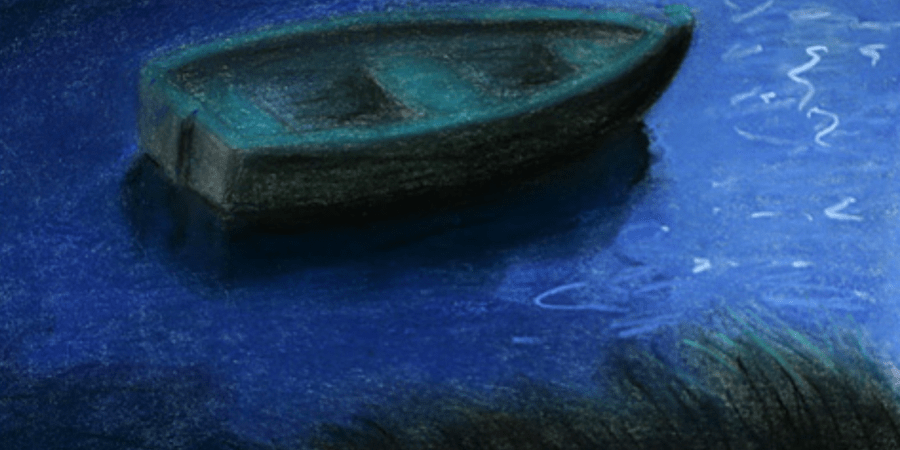
“Stories help. We live.” Sarah Watt’s Small Treasures (1995) ends here, but it is also where it begins. Stories and nature share a primal condition: repetition. Co-curated by Dr Ruth Richards, Mother Tongue: Australian Women in Animation, which was presented at the Cinémathèque on 26 November 2025, showcased the stylistic and thematic breadth of women animators across a twenty-five-year period. I left the cinema thinking about the circular nature of Watt’s animation; of the ocean’s place in grief; and of how losing someone is not so much an absence, but an ever-presence as constant and unreachable as the ocean we turn to for release. Jane and John scatter the ashes of their baby in the ocean, an entity whose depths have cradled many losses, including mine. There is no abandonment in this, no striving to relinquish, only the hope that the sea might promise perenniality. Once your hands are empty, you think gone. But as you drive away, the blue strip receding, you know you’ll spend your life searching the sand.
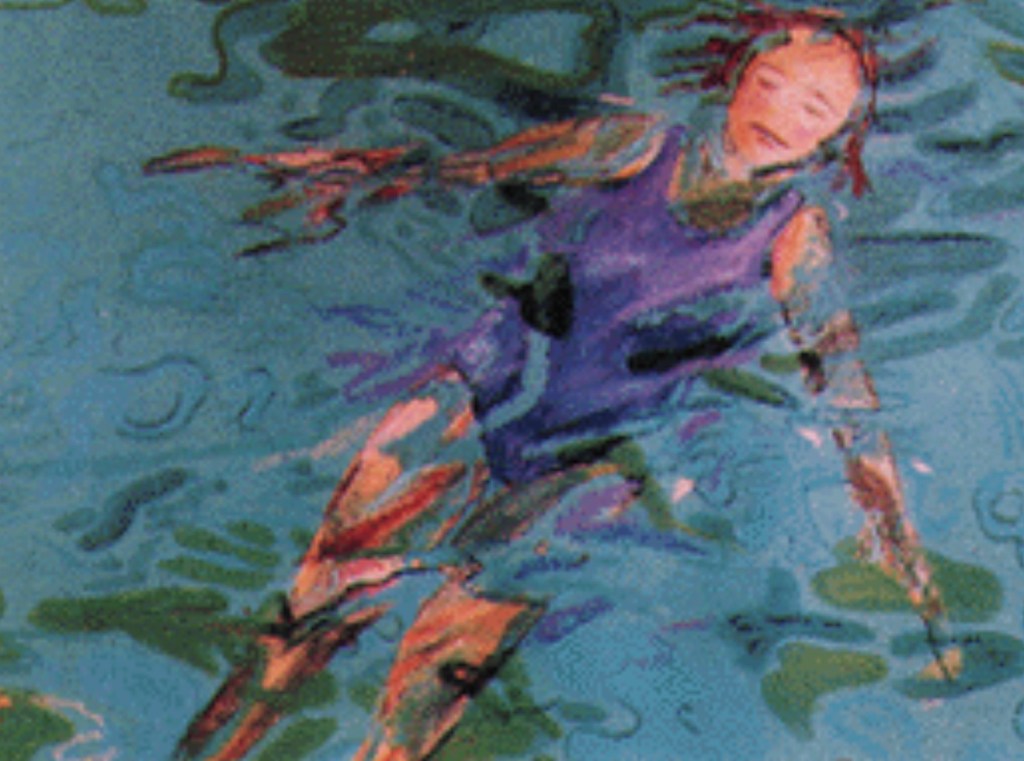
“I know that for the rest of my life I can never be just me anymore, I’ll always be me living without my son. And for the first time in my life, I am so lonely.” Small Treasures ends as it began, with Jane floating in the sea, face to the sun, though her view is now that of a woman grieving. The deep saturation of Watt’s animation does not falter, even when grief renders the world colourless. It is easy to say that the world never looks the same after loss, but I think, actually, it does, and that this is somehow worse, as if life is compassionless to one’s forever-altered internal landscape. I don’t know what it’s like to lose a child, but I do know what happens when you lose a part of yourself. Once separated, nerves go on remembering, hellbent on reuniting with their endings. There is no way of informing them of their futility, of redirecting them someplace kinder, less despairing. How to honour the body when grief’s physiology overrides any attempt at emotional self-preservation? Amidst the flailing, floating helps. Though it requires core strength, floating in the sea is both weightless and anchoring. Womb-like and softly ebbing, I have always found the sea more forgiving than land, having embraced the body that cannot, or does not want to be upright. There is a letting-in that comes from letting go. Over the murmuring of the waves the birds sing their enduring song, profoundly tender and transcending language.
“I thought about showing my child all the things I still see but maybe don’t marvel at anymore.” Spoken by Jane, this line in Small Treasures serves as a reminder: we become clearer to ourselves in the attempt to reach others. To see what we have grown accustomed to as if for the first time would be to shed familiarity and enter the moment of having first witnessed—a moment that only happens once, which is to say, inimitable. Perhaps it cannot be done. The impulse to tell and share does not end with the loss of a person, despite the lack of a response. The sea’s soft susurration answers the ceaselessly questioning voice, though its reply is no comparison to that which has made a habitat of the heart. In Small Treasures, all this fans out from close-ups and emphasis on visceral sensations, which give way to somatic memory. There is a stillness and a lingering within Watt’s animation that is, itself, a form of grief communication. Cutlery sounds in the background as Jane speaks about the pain of losing her son, and while this could be a matter of scenes dissolving, I take it to mean grief lives in the everyday, just as it unconsciously lives in the body. A quiet unease lingers in the sound of a table being cleared, perhaps because it definitively marks an ending. The table will be set without a place for you, just as life continues in your absence. None of this changes how you go on living in the self that loves you, who sees every passing stillness as a time to think about you, whose body bears the proof of your existence. When an elephant mother loses their baby, they cradle them in their trunks for days, wandering through wetlands while their baby’s heart does not beat. A mother is a mother.
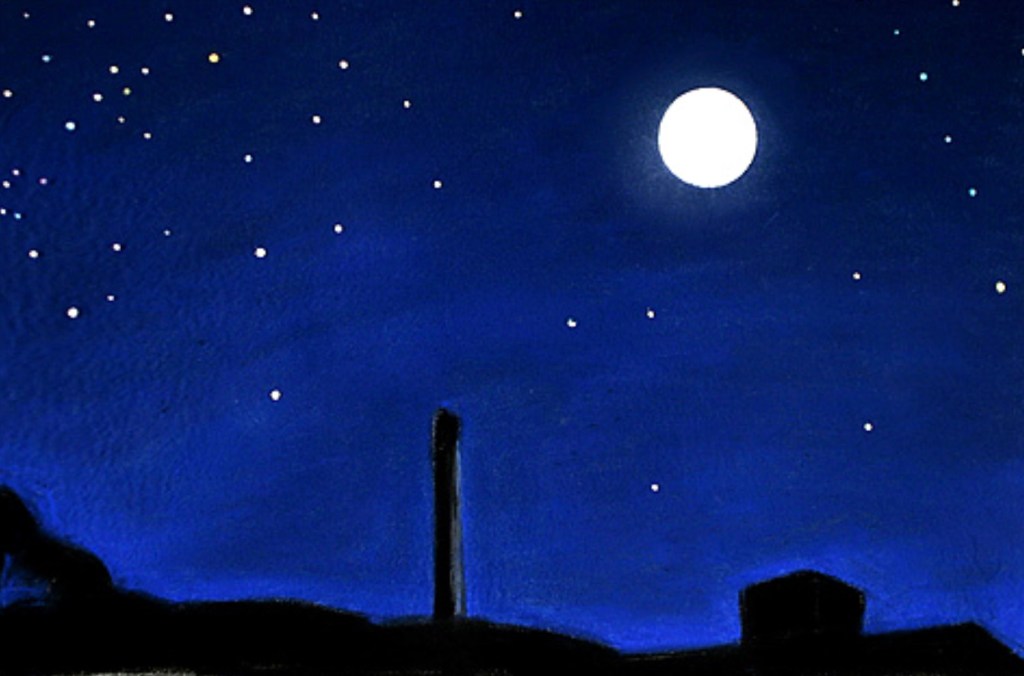
Sydney-based artist and animator Lee Whitmore described her 1997 animation On a Full Moon as a “poem to my mother’s memory.”1 Like watercolour pooling at the bottom of a page, touching everything in its wake, colour seeps into the present as Laura faces saying goodbye to her mother. Here, the steady development of colour offers a sense of lucidity amidst the ephemerality of memory. Poetry, whether written or visual, is a collective hope towards clarity and expansion. When we strive to remember, is it the moment we capture, or the anxiety attached to the fear of forgetting? Lately I have been thinking about how maternal instincts seem to be one of the last things retained in the memories of women with dementia. The fact of always having existed in the mother. Whitmore calls her daughter “Bubba,” which is what my mother called me as a child. Hearing the familiar term and its inherent tenderness prompted a response in me akin to child-like instincts, remembering a time when being called ‘Bubba’ meant a day spent with my mother, likely imitating her walk, which I considered the height of womanhood.
There is a softness to On a Full Moon that speaks to the gentle parts of the self, which are also the strongest. We are a soft species. Our foremost instinct is vulnerability, which is also the very thing we go to great lengths to abandon. We make an irony out of it, calling it the antithesis of strength, when in reality, vulnerability is our strongest asset. It cannot be destroyed. To destroy vulnerability would be to destroy the human condition. I am thinking of euphony, and how writers sometimes avoid it when writing about an unhappy experience. Euphony can lull a person into aural satisfaction, detracting from the intended meaning. I understand, though I also see euphony as a tool for empowerment—an offering of gentleness amidst heartbreak or grief. Both On a Full Moon and Small Treasures attest to this, whether by colour receding or increasing, like memory and the sea. The cardinal ebb and flow. Resistless.
**********
This piece was commissioned in collaboration with the Emerging Writers’ Festival—a Melbourne-based festival which facilitates the development of writers’ skills, careers, and connecting with community through a range of participatory events and writing opportunities.
**********
Tara Grace is a nonfiction writer and poet from Melbourne. Her work has appeared in Australian Poetry, un Projects, and Voiceworks, and has been featured in the Emerging Writers’ Festival. She was part of the 2024 Writers Program with KINGS and un Projects, publishing experimental literature in collaboration with visual artists. Her practice focuses on the personal and the poetic, writing toward the reclamation of bodily autonomy after loss. She holds a degree in Creative Writing and Sociology from the University of Melbourne.
- On a Full Moon Press Kit, Maracaibo Films, 1997, quoted by Richards in ‘Personal and Poetic: Australian Women’s Animation after 1990’, Senses of Cinema, November 2025. ↩︎
 Rough Cut