

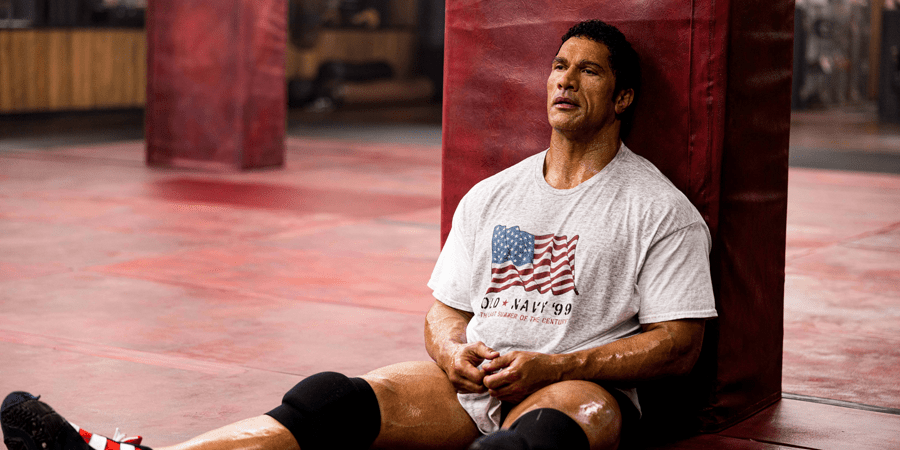
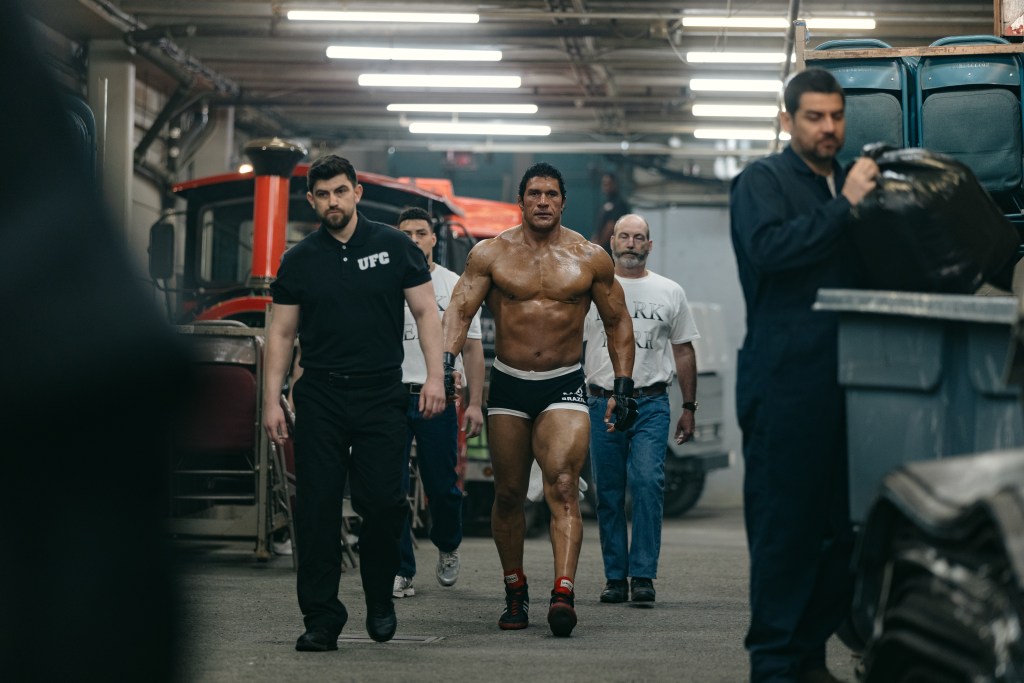
At 6 foot 3 and 255 pounds, Mark Kerr cuts an imposing figure. Following an unsuccessful bid to enter the 1996 Summer Olympics, the air is thick with anticipation as the former amateur wrestler steps into the ring for his professional MMA debut in São Paulo, January 1997. Although his opponent this evening is the formidable Paul Varelans, a UFC pioneer in the days before the sport’s stringent regulation, their fight against each other won’t last long. After a series of takedowns, punches, and brutal knee strikes to the head, Kerr is declared the winner of the bout in just over two minutes.
Halfway across the globe at the Alamodome in San Antonio, the WWF is in the midst of its annual Royal Rumble pay-per-view event, performed in front of a sold-out crowd of 60,000 people. The night will mark Dwayne ‘The Rock’ Johnson’s first ever appearance in the show’s titular match, in which he will last a respectable thirteen minutes before being thrown out of the ring and eliminated by his future rival, Mankind. Though the young star gives a commendable performance, including some fiery offence against the likes of Bret Hart and the Undertaker, any hope he has of main-eventing WrestleMania this year is dashed the moment he’s hurled over the top rope.
Nearly three decades later, it’s fitting that two men who have built their careers out of the spectacle of violence—or in Johnson’s case, the theatrical illusion of it—have had their destinies so astutely intertwined in Benny Safdie’s The Smashing Machine. Launching from that fateful night in Brazil, Johnson portrays Kerr over a formative three-year period as he contends with a debilitating painkiller addiction and a turbulent relationship with his girlfriend Dawn (Emily Blunt), all whilst attempting to mount a comeback in the unforgiving world of competitive mixed martial arts.
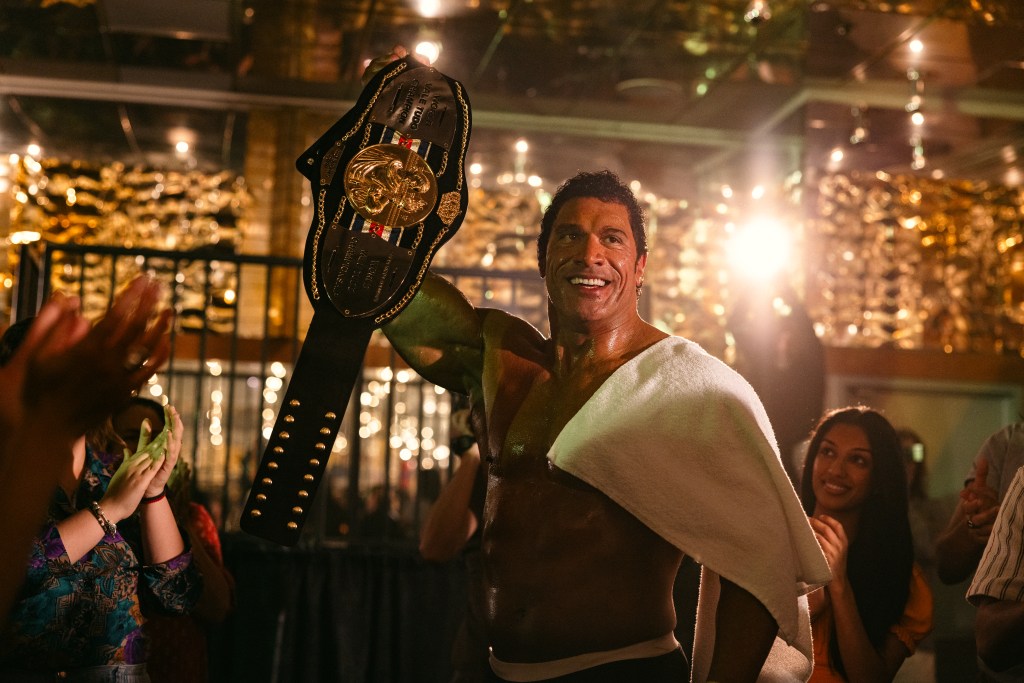
The Smashing Machine takes inspiration from John Hyams’ 2002 film of the same name, an unexpectedly intimate documentary that offers a raw and gritty look into a similar stretch of Kerr’s life. Watching Safdie’s adaptation, it doesn’t take long to figure out what drew him to this story. Though the A24 biopic serves as the filmmaker’s debut solo feature following a creative split from his brother Josh, there are inklings of the many projects the siblings have co-directed throughout the years embedded in its thematic DNA. Viewers might notice parallels between Kerr’s story and their 2019 film Uncut Gems, in which Diamond District jeweler Howard Ratner’s (Adam Sandler) pathological gambling habit ultimately ruptures both his personal and professional life. But while Ratner’s compulsions in that movie find him chasing the winds for wherever the next big payout will be, Kerr’s obsessions in The Smashing Machine are grounded in a much more disciplined, competitive nature. “Winning is the best feeling there is,” he remarks in voiceover, while pounding away on his opponent during the film’s opening scene. “There’s no other high like it in the world.”
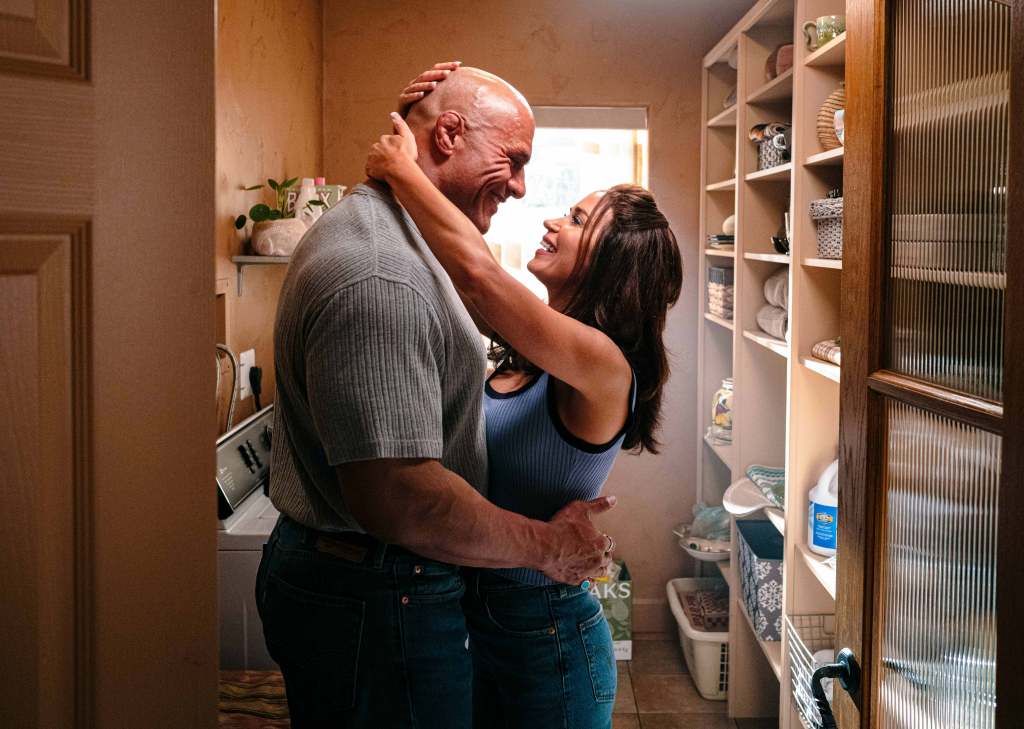
That never-ending pursuit of victory characterises a significant portion of the movie, as we idly follow Kerr between training gyms and doctor’s offices in his hometown of Phoenix, then locker rooms and hotel press conferences in Japan, where the fighter spent most of his professional career. In the former, Kerr lives in a cozy Pueblo Revival-style home, a loving but fractured space that also functions as the primary site for his addiction to a variety of prescription medications. Safdie and Johnson spare no detail in capturing Kerr’s frequent use of opioids; the many injections he gives himself throughout the film possess a sly casualness that reveals the behaviour of a longtime addict. But when his overreliance on drugs eventually disrupts his relationship with Dawn, a splintering that goes to some truly uncomfortable places thanks to Johnson and Blunt’s willingness to invert their happy-go-lucky dynamic previously established in Jungle Cruise (2021), its ugly ramifications eventually manifest within the sandy walls of the Kerr household.
Despite all the gorgeously textured 16mm images by regular Safdie DP Maceo Bishop, The Smashing Machine feels a little too derivative of its source material at times. Hyams, who served as a consulting producer on the movie, possessed the keen instincts to shoot his documentary in a cinéma vérité style, a technique that allowed audiences to experience Kerr’s tumultuous journey as if they were observing him from just an arm’s length away. Although Safdie has historically photographed his films in a similar fashion—surveilling his actors with long lenses from opposite ends of rooms and sidewalks to facilitate the authenticity of their performances—his decision to restage certain passages from Hyams’ film almost shot-for-shot feels particularly uninspired. Even more detrimental is the effect this choice has on The Smashing Machine’s narrative structure: Kerr’s stop-and-go career momentum and the film’s aspirations as a somewhat conventional sports biopic create a friction, placing excess weight on the shoulders of its movie star attraction.
Though it’s tempting to celebrate Johnson’s turn here hyperbolically, especially after the many recent years of slop he’s subjected audiences to, much of the critical hype surrounding the film since its premiere in Venice has correctly surmised the novelty of seeing a genuine, committed performance from one of the most overly commodified men in the world. Whether it be as an amnesia-stricken action hero in Southland Tales (2006) or a coked-up bodybuilder in Pain & Gain (2013), Johnson’s finest showings as an actor thus far have tended to play to the back of the room—a skill no doubt picked up from his many years spent in the middle of a professional wrestling ring. The beauty of his work in The Smashing Machine instead arises from just how unshowy it is; the star electing to play the melancholic rhythms of Kerr’s everyday life just a downbeat quieter than one would expect. Even underneath all the immaculately designed prosthetics—courtesy of special effects maestro Kazu Hiro—Johnson is still able to precisely communicate the contradictory mannerisms of a giant who frequently finds his emotional intelligence at odds with the savage brutality he inflicts on his opponents.
In that regard, one of the film’s better additions to Kerr’s story is a scene that follows him in the days after his release from a local rehab facility, as he and Dawn attend a demolition derby being put on by a nearby carnival. If there’s a single shot in The Smashing Machine that best encapsulates what Safdie might be trying to say about his tragic hero, it’s one here of Kerr staring blankly ahead while the crowd around him gleefully cheers on the vehicular carnage unfolding in front of them. As the repeated crunch of metal rings louder and louder, we arrive at the same conundrum that appears to be rattling around Kerr’s head. How could anybody love a sport so spectacularly violent?
The Smashing Machine is now showing in Australian cinemas.
**********
Kevin Bui is a writer and critic from Melbourne. His work has been published in The Guardian, Little White Lies, and The Big Issue.
 Rough Cut