


There’s a tragicomic moment in Palestinian-American filmmaker Cherien Dabis’ debut feature, Amreeka (2009), that I won’t forget. The film sees Muna (Nisreen Faour), a divorced mother from the West Bank, and her saturnine teenage son, Fadi (Melkar Muallem), leave for Illinois in hopes of escaping daily surveillance, only to arrive amidst the choking Islamophobic exhaust of America’s invasion of Iraq. Before the contents of their suitcases are raided with crude indifference by airport customs, they devour as many cucumbers as they can—a parting gift from Muna’s mother. Muna rustles the plastic bag, begging Fadi to keep eating, to absorb another bit of home soil before it too is confiscated.
Like Amreeka, Dabis’ miraculously executed new melodrama, All That’s Left of You—which the director, writer, and star describes as an attempt to render “the Palestinian origin story”—also documents both the dispossession and savouring of inheritances. Opening with the shooting of a protesting young boy, Noor (Muhammad Abed Elrahman), by an Israeli soldier in 2022, Dabis’ sprawling yet meticulous epic proceeds by telling the story of his grandparents’ brutal exile from Jaffa during the 1948 Nakba through the embodied memory of the boy’s grieving mother, Hanan (Dabis). In its 1948 vignette, the young family’s Jaffa domicile is conjured in thriving colour—a vivid tangle of terracotta and chalky blues, with soon-to-be-ransacked orange groves still in bloom. While Dabis goes on to illustrate all that is destroyed and distorted by the state of Israel’s imperial mechanisms, from physical violence and internment to public humiliation and fatal administrative obstacles, All That’s Left of You also illumines what remains, such as the verses of Arabic poetry exchanged between generations, memorised and recited as expressions of unimpeachable Palestinian sovereignty and solidarity.
A document of Palestinian resilience in myriad ways, the narrative of the film’s production echoes its excruciating arc of traumatic displacement. In October 2023, Dabis and her team were already five months into preparing to shoot the film in Palestine. Dabis had hired a largely Palestine-based crew, scouted locations, and begun overseeing the construction of momentous sets. When the cast and foreign-residing crew were forced to evacuate, Dabis had no choice but to begin from ground zero—“searching for Palestine everywhere but Palestine,” covertly exporting precious objects abroad, and imbuing her performance with an even more devastating sense of urgency.
Note: This interview has been edited for length and clarity.
Indigo Bailey: I recently watched your debut Amreeka. Although there are a lot of resonances between the two films, I’m curious about this new shift in scale, to broach such an epic intergenerational drama with All That’s Left of You. What influenced you to embark on this expansive, holistic approach to storytelling?
Cherien Dabis: Amreeka was my first feature and they say, “Write what you know”—especially when you’re starting—so I told a story that was really inspired by my family and what happened to us during the First Gulf War in a small town in Ohio. It was something I had directly experienced; some of the characters were inspired by family members. It was really a film so close to my heart, in that it was like sharing a little piece of my family and my life experience with the audience. My first two films [Amreeka and 2013’s May in the Summer] I consider a bit of a diptych: they’re both cross-cultural immigrant themed films. One of them is about a Palestinian mother who immigrates to the US with her son, and the second feature is about a Palestinian-American who returns to reconnect with her roots in the Arab world. Together, both of those films explore two different sides of my own identity as a Palestinian-American where, in the US, I was always too Arab for the Americans, and in the Arab world I was always too American for the Arabs.
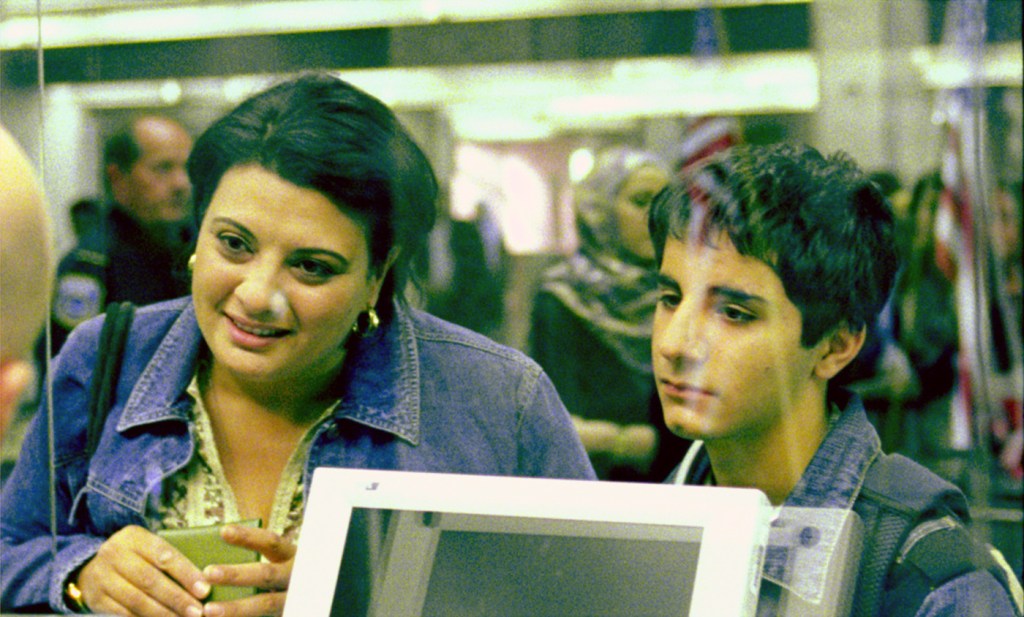
So I think those two movies were really an exploration of my own personal identity, and I really wanted to do something different afterwards. So with this film, I was ready to take on a much bigger story—a story that had kind of been with me for my entire life but is much bigger than me. In a lot of ways, it is the Palestinian origin story. It’s a story I always wanted to tell but never knew how. It took me getting to a certain level of craft and my career before I could figure out how to tell that story of Palestine and the Palestinian people. The film is about one family, but in many ways that one family is like every Palestinian family.
IB: Your film’s ambition in representing the experiences of a Palestinian family over generations feels very radical in the context of how historical and creative accounts of Palestinian lives have been erased or destroyed so systematically. What sources and inspirations did you draw on to write the film and to create its world?
CD: I drew on a lot of stories I grew up hearing—stories of things that happened to friends of the family, stories I heard about what happened to Palestinians in Jaffa and Haifa in 1948, stories I read about in history books. But I think the origin of the story really came from my own experience. I was born and raised in the US, but travelled to Jordan and the West Bank, where my father’s from, often. As a kid, even though I didn’t live under occupation, I would spend months at a time glimpsing what life was like for Palestinians who lived in Palestine.
My first memory of travelling to Palestine was when I was eight years old. We were going from Jordan into the West Bank through the Allenby [Bridge] border crossing, and my family was held for 12 hours by Israeli soldiers. They went through all of the contents of our suitcases and ordered us all to be strip searched, including my baby sisters, aged three and one. And they were screaming at my dad. My dad confronted the soldier because he was so humiliated by the strip search of the entire family, and they screamed at him. I was left with this feeling they were going to kill him right then and there. That fear stayed with me. I remember not knowing why that was happening and thinking for the first time in my life, “Oh, this is what it means to be Palestinian,” because prior to that I knew we were Palestinian, but in the US I didn’t really know what that meant. I would hear stories of things that had happened to family members in Palestine, but it wasn’t until that moment that I understood viscerally.
That experience was in some ways the inspiration for what happens in the middle of the film. I wanted to show how political turmoil can shift a family and impact their relationships with each other. That was what was interesting to me: to ask the question of, in that moment where I watched my dad being humiliated by the soldiers, how did my view of my father shift?
IB: So much of the emotional weight of the film rests on your character, Hanan. Can you speak to channelling this emotion, and to the experience of both directing and acting in the film?
CD: The way I like to describe it is that when you’re directing you’re on the widest possible lens—you’re seeing the entire world; everything is crystal clear, you know exactly what’s about to happen, what everyone’s going to say, how they’re all going to move, because you’ve planned the whole thing. And when you jump into the role of the actor, you have to forget all of that and zoom into the longest possible lens, and just focus on your one character—what your one character is thinking and feeling and wanting. I found this to be such a welcome relief, as sometimes directing can be such a huge responsibility.
I also found I was able to direct the actors by giving them a different performance. Directing the actors didn’t always require me to talk to them; it just required me to give them something different in the scene. So in some ways it was an exciting challenge for me. The character, as you said, does carry a lot of emotional weight in the film, and I found myself directing and acting this particular film during a time of intense grieving for Palestinians because of everything that has happened in the last almost two years. So, here I was making a movie about grief as I’m grieving. In some ways, it felt I wasn’t acting; I was simply channelling. And it was a relief to be able to allow myself to grieve in this somewhat public way. The actors and I talked a lot about this on set; we were so grateful to have the movie as a vehicle, a container for all of the things we were feeling given everything we were watching happen. The movie really did become a container of our grief and our love and our compassion.
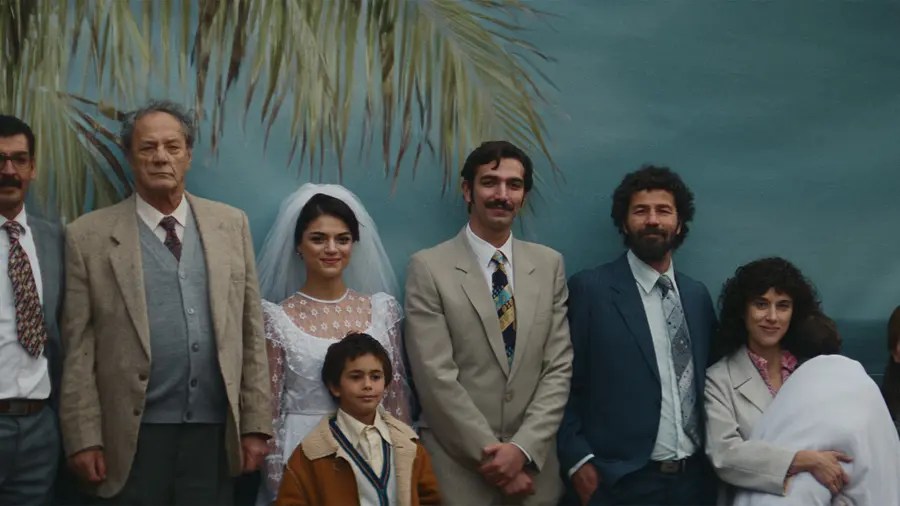
It was also great to work with one family [of actors]. I worked with the Bakri dynasty from Palestine. It was four generations of one family, because Mohammad Bakri played the grandfather [Sharif] in 1978, his son Adam Bakri played the younger version of him in 1948, and Saleh Bakri, his oldest son, played his son [Salim] in 1978. Then, teenage Noor—Muhammad Abed Elrahman—is the cousin of the two Bakri brothers. It was a beautiful experience because it was an intergenerational portrait on and off screen.
IB: You’ve spoken elsewhere about the complete upheaval caused when you were forced by the Israeli invasion to relocate from Palestine after October 7th, when you were already well underway with preparation for the film. I understand you had to make huge sacrifices to begin the process all over again elsewhere. How did you manage to restart after this crisis?
CD: It was tremendously challenging—probably one of the most challenging times of my life. I had spent five months in Palestine prepping with my crew on the ground, then my heads of department came from Europe, mostly from Germany, and I spent three months prepping with them. Then the rest of my foreign crew arrived, mostly from Germany, and a few days after they arrived, October 7th happened and we were forced to flee. Leaving behind the Palestinian crew was devastating—not knowing what was going to happen, not knowing if we were going to return, not knowing if we were going to be able to continue making the film. Then, watching everything that unfolded after that.
We went into crisis. I suddenly became the CEO of a sinking ship, thinking, “How am I going to keep this thing afloat?” It was a lot of scrambling, a lot of begging people for help, calling our supporters and financiers and asking them to put in more money so we could keep going. We had to re-prep the entire film, which is almost unheard of, and we had to raise a considerable amount of money to do that. Then, I found myself searching for Palestine everywhere but Palestine in our locations. Suddenly, I was recreating a place outside of that place, trying to make it authentic. All of that cost us more—production design, trying to get all of the things we collected in Palestine shipped out—we had to beg embassies to reopen so we could get some of our Palestinian crew out to work with us.
Filmmaking is already so challenging, but when you’re doing it in occupied territory and then a warzone, and then suddenly you’re fleeing that warzone and now having to re-create this movie you’re making about political turmoil… It was like the movie lived what almost every Palestinian lives, which is exile. It’s like the fate of every Palestinian, to end up somewhere very different from where you started, which is something that Edward Said once said.
IB: I want to talk more about how Palestine is recreated in the film, particularly how the beauty of Palestine is expressed so fully through colour, natural light, and architecture. Can you talk about working with your cinematographer and production designer?
CD: I love that question because I love those two people. I worked with Lebanese-German cinematographer Christopher Aoun, who is impeccable and so thorough, and such a phenomenal collaborator. We talked about everything. Bashar Hassuneh was my production designer, who is based in Ramallah. Part of the time we could barely get him out of Palestine to be with us as we were shooting. It was challenging, but he did an amazing job and we were like a trifecta, just working really closely. From the beginning, we knew we wanted a controlled colour palette. We also wanted to shoot on the same camera with the same lenses for the entire film, but differentiate each time period through colour and camera movements. So I worked with Chris and Bashar on the colour palette, then Chris and I planned how the camera would move in the different time periods, while still maintaining a cohesive visual style over the course of the movie, because we didn’t want it to feel episodic.

Bashar had his work cut out for him, because we ended up shooting where we had not planned to shoot. When we fled Palestine, we had already begun construction on our locations, and I was very particular in that I knew what we wanted. When we found ourselves shooting in other places, like Cyprus and Jordan and Greece, I was very specific about what I was looking for. Very often, we would find a location and have to work within it to rebuild what we wanted it to look like. We were careful to always have Palestinian artisans and craftspeople with us, so they could really make it look and feel as textured and authentic as it would have been if we shot in Palestine.
IB: And what was the emotional process of recreating a past version of Palestine for the first section of the film?
CD: The first word that comes to mind is joyful. In part because when we talk about Palestine, we talk so much about what was lost and what has been lost. Even within communities of Palestinians, we are so often grieving what was lost. But to be able to immerse ourselves in a time before what was lost and to recreate what it was like for Palestinians in urban Jaffa in 1948, before the family becomes dispossessed and is forced to flee… It was really beautiful to feel the texture, the textiles, the colours, the props; to study what the insides of homes looked like in Jaffa, such as the style of the three arches inside the main Jaffa home that we created. We ended up building the entire interior of that home in a dilapidated house in Jordan, based upon old photographs. We immersed ourselves in these architectural details, down to the art, curtains, and furniture in people’s homes. Some of it was Damask style; some of it was straight from Paris. It was just really cosmopolitan, and this wasn’t a side of Palestine we’ve ever really gotten to see.
IB: In speaking of loss and salvage, I was moved by the extent to which generations of the family, particularly Sharif and Salim, are fused by a love of poetry and literature. Can you speak to your relationship with Palestinian art throughout your life—and perhaps any works of Palestinian cinema that influenced your film?
CD: Part of what’s lost is showing what we once had, and I think poetry, literature, and cinema have always been really important in Palestinian culture. In 1948 in Jaffa, there were cinemas showing Shirley Temple movies. Poetry was really important and continues to be to this day, but it’s not something many people think about when they consider Palestinian culture and society. So much of who we are has been mired in the political strife we have suffered, so we are not known for much outside of that, despite the fact that Palestinians are tremendously educated people. Our rich culture of arts—the ability to express ourselves and write our stories—is one of the things that keeps us going despite everything we’ve been through. I wanted to make that an important part of the story because it’s an important part of who we are.
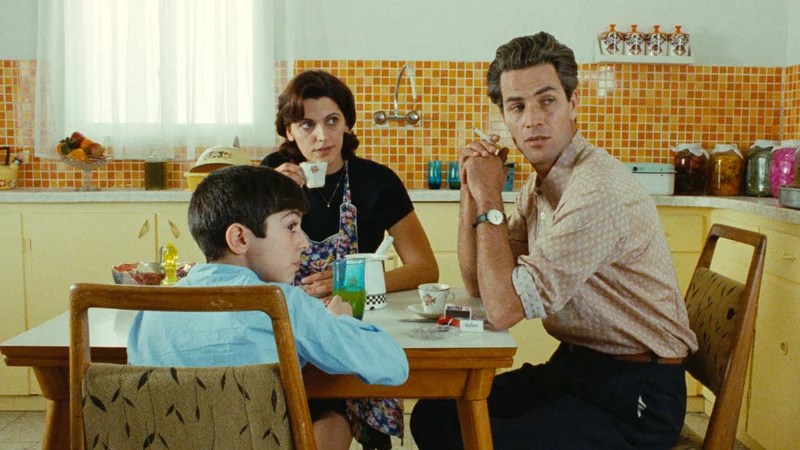
Regarding Palestinian films that influenced me, while Elias Suleiman, who makes more absurdist comedies, is such a completely different filmmaker, he made this movie The Time That Remains (2009) that partly explored that era [of and surrounding 1948], and that’s one of the films that inspired me to dive deeper into that time period. That was the first time I saw Palestinian history depicted in cinema.
All That’s Left of You screened at this year’s Sydney Film Festival on the 8th and 11th of June. It will screen once more in a sold out session on Sunday the 15th of June.
**********
Indigo Bailey is a Tasmanian writer and editor living in Naarm/Melbourne. In 2023, she received the Island Nonfiction Prize for an essay about rain sound. She has written for HEAT, Island Magazine, The Guardian, and Kill Your Darlings, among other publications.
 Rough Cut