


Since 2005, the Australian Cinémathèque—located within Queensland’s Gallery of Modern Art (QAGOMA)—has been screening rare prints and underseen titles for Brisbane’s cinema-going public. With many events free to attend, the Cinémathèque’s programming includes career-spanning retrospectives of respected filmmakers, innovative themed programs, and even silent films scored live with an in-house 1929 Wurlitzer Organ. In this conversation, Associate Curator Robert Hughes shares his thoughts on blurring the boundaries between art and film spaces, curating with “enthusiasm and institutional rigour,” gems of the Brisbane film scene, and highlights from the Cinémathèque’s past year of programming.
Rough Cut: A unique aspect of the Australian Cinémathèque is the way that it integrates cinema into the gallery as a whole, placing the medium of film in conversation with other art forms. Recently, you played a major part in organising a momentous retrospective program of Tsai Ming-liang’s films, featuring a conversation with Tsai himself, as a component of QAGOMA’s broader Asia Pacific Triennial.
QAGOMA’s approach feels precious in a world where arts institutions can often sideline cinema, maybe still seeing it as a separate, ‘popular’ cultural form. Can you speak to the relationship between the cinema and the gallery at QAGOMA?
Robert Hughes: As you note, there can be a peculiar divide between the worlds of art and film. The Gallery of Modern Art is the only art gallery in Australia with purpose-built cinema facilities and, consequently, we are often thinking about how to bridge this gap. Our cinema programming frequently responds to exhibitions on the gallery floor or even completely intertwines with shows—for example, the major David Lynch exhibition in 2015.
This shared relationship is also valuable when considering a multifaceted figure like Tsai Ming-liang, who operates in both spaces. He is celebrated as a filmmaker as well as an acclaimed video artist, with his Walker series often cited as a meeting point between these two paths. He is someone who has spoken about his belief in a greater blurring of the line between theatres and art museums to open up the medium of cinema to new images and audiences. Having the Cinémathèque conjoined with the gallery hopefully allows for those sorts of conversations.
RC: You also screened Powell and Pressburger and Bresson retrospectives last year, amongst a range of more eclectic programming choices, from the great Curator’s Pick series to film prints of niche works, sometimes with live score accompaniments. What are the considerations that go into creating a diverse and dynamic program?
RH: The balance of our program is something that we discuss a lot as a team. We try to sustain an interesting mix of filmmakers, genres, and modes across what we present. The Australian Cinémathèque is nearly 20 years old, so we are often in dialogue with our own past—what have we not screened? what is worth revisiting in a different context?—as well as with the canon and current discourses.
Like similar institutions, we keep an eye on new restorations, major anniversaries and so on, however our primary consideration is to shine a light on the many different histories of cinema. Part of that is screening the iconic building blocks of film history so they can be considered with fresh eyes, part of it is showcasing underseen or regional cinemas and voices that have been historically marginalised. It also involves breaking down divisions between so-called high and lowbrow cinema; the same enthusiasm and institutional rigour is applied to everything, in both thought and presentation.
Courtesy: StudioCanal.
We regularly curate programs based around different themes and concepts. These programs provide the opportunity to recontextualise films or put them in conversation with titles from other periods and places—something that we hope expands the audience’s understanding of the medium. They also encourage us as curators to stay alert to the changing ways in which people are thinking about cinema and how different stories can be explored on the big screen.
RC: The Australian Cinémathèque also differs from other state-based Cinémathèques in the country in terms of financial accessibility. Instead of operating on a membership basis or selling individual tickets, most of your screenings are completely free to attend. How does this impact your programming and how do you see the role of the Cinémathèque in your community?
RH: Any time a patron sends us a kind message or says something nice after a screening, it is almost always suffixed with “and I can’t believe it’s free!” Cinema should be an accessible medium and it is important to have places where there are as few barriers to entry as possible. Before I worked here, I attended screenings while I was a student. I never would have been able to afford to see as many films as I did back then had it all been ticketed. I also believe that the free programs promote curiosity. It is much easier to take a chance on something unknown or unfamiliar when you as an audience member are not worried about how it may affect you financially.
We are, of course, fortunate to be part of a large state institution and to not have the same commercial imperatives as other cinemas. It allows us to take risks in our programming that are important to our mission but which might be harder to otherwise justify. With that said, it is not news that it is tough for movie houses of all varieties at the moment and I am cheered to see more places taking chances with their programming as they try to find a healthy equilibrium in an ever-changing landscape.
Courtesy: StudioCanal.
RC: On a similar note, when we talk about Australian cultural capitals, Melbourne and Sydney are often placed front and centre. Can you speak a little bit about your experience of Brisbane’s own unique film culture, which perhaps doesn’t always get the recognition it deserves?
RH: Brisbane is a sunny, outdoorsy city and cinema-going is a dark, indoor pursuit, so I understand how it might be overlooked. Nevertheless, I think Brisbane has quite a strong film culture if you keep your eyes and ears open.
Millennia ago, in my university years, I used to frequent the Schonell Theatre at the University of Queensland and the dearly departed grindhouse Tribal Theatre in the CBD. I spent a lot of time there enjoying horror triple features and strange curios in a building that has since become a Hillsong Church. There was also OtherFilm at the Institute of Modern Art, schlock doyens Trash Video, 16mm screenings at the State Library, and a particularly fertile period for the Brisbane International Film Festival, amidst everything else that was in the fray.
Nowadays, things are still pretty robust. The Cinémathèque is going strong and we tend to screen between eight and ten films each week. The film society Container does terrific work showcasing bold contemporary cinema, with a lovely community of regular attendees. There are a number of smartly curated bespoke festivals—I’m thinking of the inimitable BORLFF, the Noir Film Festival, and the New Farm Queer Film Festival, among others—alongside the national festivals that travel the country. The Institute of Modern Art still hosts interesting events and I know there is a new DIY film night in Woolloongabba that I hope to attend soon. There is also an increasing variety of inspired rep screenings taking place at commercial cinemas; it’s great to see old Godzilla movies playing alongside Shinya Tsukamoto and Claire Denis throughout the week. I am sure I am overlooking other good work that people are undertaking around the city. It feels like there is a constant hum of worthwhile screenings—too many for most reasonable people to see each week, which must mean things are fairly healthy at the moment. From here, I would love to see some savvy microcinemas and more community screenings pop up, as well as more forums for local critics to be able to share and hone their work.
I would also be remiss not to mention that there are some very fine films being made here, too. Several of the best new Australian films I have seen in recent years are connected to this pocket of Queensland, including Audrey Lam’s Us and the Night (2024) and the Briggs-Dixon joint A Grand Mockery (2024).
RC: Can you tell us about the decision to highlight Tsai’s work as a major contribution to QAGOMA’s Asia Pacific Triennial late last year, and how Tsai himself came to be involved?
RH: As you mentioned, the program is part of the Asia Pacific Triennial, the gallery’s flagship exhibition. The Triennial is a platform to highlight artists who are reshaping our understanding of contemporary creative practice. There are few filmmakers who blur the formal boundaries of cinema in the way that Tsai does. He is someone who is constantly questioning the limits of the medium and creating new ways to think about how we understand the moving image. We have wanted to present his body of work for a long time and this seemed like the perfect opportunity.
In terms of his involvement, it was fairly straightforward: we asked and he agreed. Tsai is in the unusual position of owning the rights to most of his films through his production company Homegreen Films. As such, we were always going to be working closely with his office when it came to this program, and they were tremendously obliging when it came to these conversations. Tsai is very articulate about his own films and process, and we knew people would be excited to hear from him in person. We were also conscious that it is rare to screen so many of his films in one program and that it would be an opportunity to ask him about his more obscure works that, while discussed less often than his feature films, are just as worthy of examination.

Courtesy: Homegreen Films.
RC: Since many of Tsai’s films have been hard to find, especially in Australia, for a number of years, I can imagine that most of your audiences during the season would’ve been seeing them for the first time. What kind of responses did you receive from audiences and what kind of conversations did the films spark? Did the public reception of Tsai’s films surprise you?
RH: The reception to the program was overwhelmingly positive. I knew that Tsai was a great artist and that he has a passionate audience so in that sense I was not surprised, however it was encouraging to see people take chances on his lesser known works. While his feature films were understandably the most popular titles, we had strong crowds for his telemovies, experimental films, and installation works too.
It was particularly rewarding to screen (almost) everything Tsai has produced to date, as his body of work is so interconnected. You see recurring faces, images, and ideas that all shift in subtle and meaningful ways over the decades. When I was organising the program, I scheduled the films in largely chronological order—something I wouldn’t usually do for a retrospective. Here, however, it seemed that it could be a useful way to look at Tsai’s career. He famously has an inseparable collaborator in Lee Kang-sheng, who has appeared in just about everything Tsai has directed. In his more recent films, Tsai has been interested in documenting the way Lee is ageing and his changing relationship with his body. I felt that it could be interesting for audiences to be able to watch Lee gradually grow 30 years older over the course of the program, and to follow the way Tsai’s vision of cinema has changed throughout that period.
RC: What were your own highlights from the Cinémathèque’s 2024 programming, from the Tsai season and beyond? Did you have the chance to discover films you had never experienced before?
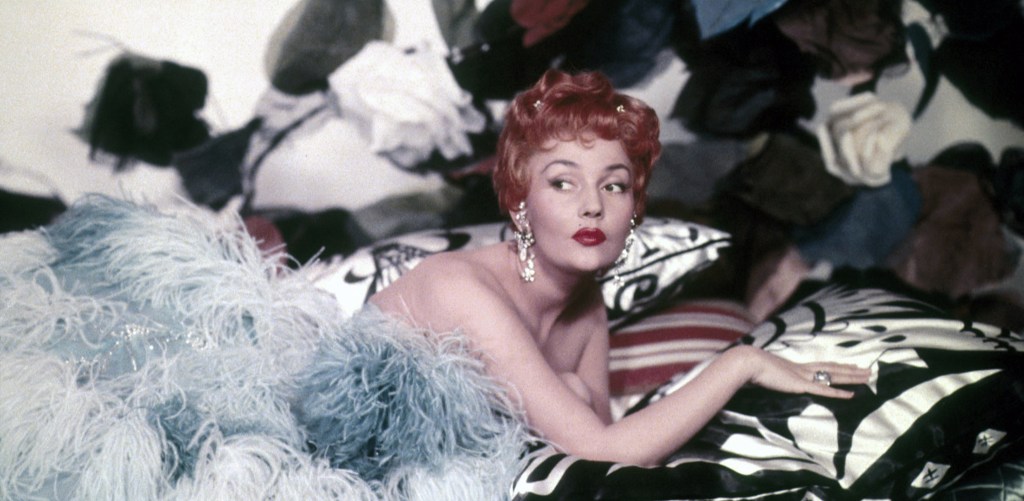
RH: I feel like it was a good year for the Cinémathèque! The Powell & Pressburger films were wonderful and it was a particular treat to see The Life and Death of Colonel Blimp (1943) and The Red Shoes (1948) on gorgeous 35mm prints. Luminous! As well, every Tsai film benefits from being seen in a cinema and watching The Hole (1998) on a lovely print from UCLA really made me fall in love with it anew. After the In Conversation, Tsai introduced a screening of Goodbye, Dragon Inn (2003) as an immense storm pelted down on Brisbane—a perfect complement.
We also presented Robert Bresson’s films over the winter period. It’s an incredible body of work and I particularly admire his final two films: The Devil, Probably (1977) and L’Argent (1983). By that stage of his career, his cinematographic style was so winnowed and his vision of the world so powerfully bleak. Truly revelatory works. We were also lucky to be able to go right back to the beginning and screen his rare 1934 comedy short film Les Affaires publiques. We received permission from Bresson’s widow Mylène to borrow the sole extant screening print from the Cinémathèque Française archive, then we worked with a translator to live subtitle it. You can see the director Bresson would later become in there, but you have to look pretty hard.

You mentioned the Curator’s Pick program earlier and it was a lot of fun to organise these one-off screenings for our new monthly series. My three selections for 2024 were Lau Kar-leung’s furious and mournful The Eight Diagram Pole Fighter (1984), Elaine May’s unrelenting The Heartbreak Kid (1972), and Larry Cohen’s cosmic singularity God Told Me To (1976)—each a masterpiece in its own way and each great to be able to share with a packed house.
And finally, what a joy to see Stop Making Sense (1984) as part of my colleague Rosie’s ‘Transcendence’ program. I have watched that film many times before, but the restoration has excavated so many new details in both sound and vision. Transcendent indeed!
**********
For their next program as part of the Asia Pacific Triennial, the Australian Cinémathèque will be screening the films of Japanese filmmaker Ryusuke Hamaguchi from 28 March to 11 May 2025. The survey of Hamaguchi’s work will include the Australian premiere performances of GIFT, his collaborative work with Eiko Ishibashi.
To find more information on the Australian Cinémathèque and their upcoming screenings, visit the QAGOMA website.
 Rough Cut