


A lucid yet porous documentary portrait, the first feature-length film produced by Dogmilk Films, A River in the Middle of the Sky, is a mosaic-like meditation on life, death, and community drawn from the extensive archive of Torajan artist Victor Konda. Ever since failing his entrance exam for a mining company as a teenager in Indonesia due to a vision impairment, Victor has become an assiduous visual diarist, documentarian, and broadcaster. To film, as Victor affirms in moments of thoughtful narration, is to remember, to communicate, and to commune. Yet the moving image is flawed, too: at one point, as colourful glitches spatter the screen, Victor observes that even digital memory degrades over time. A River in the Middle of the Sky (ARMS) takes this paradox—of filming as a way to remember and as a testament to the desperate frailty of memory—to heart.
Recalling local ceremonies and tracing the shadows of Victor’s relationships, most notably with the ailing grandmother who raised him and with the medium of filmmaking itself, it attests to memory not as a static bank, but as something made and remade through collaborative acts—celebrating and grieving, shooting and sharing images. In particular, this recurs through Victor’s loving footage of his interactions with his grandmother, as she gradually loses cognizance of her surroundings. It is largely through this attention to both forgetting and remembering, to life and culture as a matter of continual change and rebirth, that the film provides a gentle challenge to the norms of so-called ethnographic filmmaking—to the notion of any verifiable, objective portrait, whether of a culture or of an individual.
Despite the intensely personal nature of much of its footage, there is also a sense of privacy maintained by the film’s brevity; as if by a process of careful erasure, Victor’s 25-year archive becomes a bright, elusive cine-poem. Avoiding the strictures of chronology or excessive context, ARMS instead alludes to the persistence of life on the archive’s outskirts, especially in its focus on collective rhythms: of dozens of footsteps ascending a mountain or child dancers in the streets; of women loudly washing a loved one’s body or attending spirited funeral processions. It’s notable that ARMS is itself a communal project, a collaboration between Victor and co-directors Chris C. F. and Wahyu Al Mardhani, which feels defined by an undergirding mutual curiosity and respect. In our four-way conversation, I was grateful to speak with Victor, Chris, and Wahyu about the origins of their seven-year project, the film’s candid, intimate representations of death and dying, acts of memory, and more.
Note: the following interview has been edited for length and clarity.
Indigo Bailey: Could you tell us a bit about how the three of you found each other and began your collaboration? How did the idea for a feature documentary film blossom—and did your visions for it change over time?
Victor Konda: I met the Dogmilk Films crew through my friend Yakob. I’d heard that a group of Australian filmmakers were interested in visiting a funeral. I was keen to meet them and observe how they went about documenting such events, as I was interested in learning from their process and approach. We got along really well and so I invited them to my home and we made them Sago Fish Soup (laughs).
Over the next few days, we continued to meet up and visit different places together. I took them to see the preserved body of an extended family member who had passed away five years before, to familiarise them with common practices in Toraja and introduce them to our community in Sangalla’. At the time they were doing lots of interviews, including with me about DSTV’s work. They returned in 2019 and stayed at my place for two months. I wanted to get to know them better and learn from their skills and experiences, so we continued to document different events together.
They also started to document my family and my crew, and how we operated in the area. They were interested in our work and us in theirs! I was particularly fascinated by the tools they used— the steadicam and how they operated it. We made a funny little video together about the DSTV crew receiving a YouTube award at the top of Buntu Burake (a mountain with the world’s second biggest statue of Jesus on it). It was great! Our relationship and the film developed from all of that.
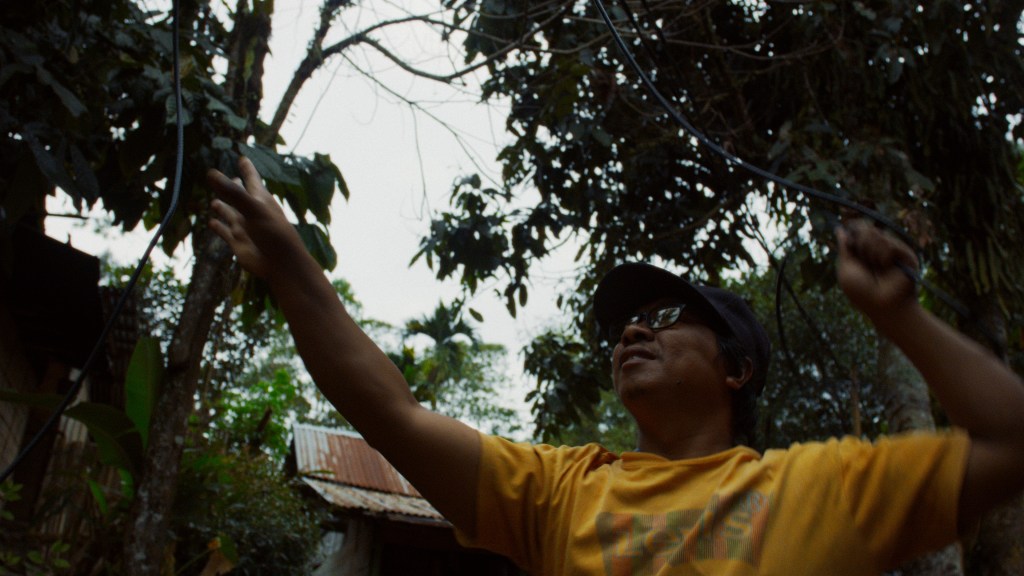
Chris C.F.: Initially, a journalist friend of mine told me about Toraja and I was inspired to do some research. Sam ([Hewison] Producer), John ([Hewison] Cinematographer), and I then travelled there for the first time in 2017, thinking of making a documentary about approaches to death and grieving in Toraja. This was spurred on by the experiences of my grandparents’ open casket funerals when I was young and the impact they had on me. I’d never faced the physical reality of death before then, it generally being a realm confined to medical professionals.
I was interested in ideas around spending time with the body of a loved one who’d passed away and how that’s central to the grieving process in so many cultures around the world. In the West we’ve industrialised death and for the most part eradicated that element of life. So we went to Toraja and within the first few days met Victor! While attending a funeral ceremony, we found that he was filming as well, and had been recording life and ceremony in Toraja for a very long time. We quickly became friends and he almost became our guide for that trip; we went where he was filming and he would join us in travelling to areas that we were interested in visiting. It all grew out of that beautiful time we spent together and since then, we’ve stayed at Victor’s place for months at a time over a period of seven years and become very close with his family and community.
In the West we’ve industrialised death and for the most part eradicated that element of life.
—Chris C.F.
Wahyu Al Mardhani: I met Chris and the Dogmilk Films crew at Rumata’ ArtSpace in 2019. A friend had told me about them and that they wanted to meet local filmmakers in Makassar, so I went to have a chat about their plans and ended up joining them for two weeks on their trip to Toraja to help out. We stayed with Victor so I got to know him well too. I was working mostly as an editor at the time, so I made a short proof-of-concept film out of the footage from the trip to present as part of workshops organised at Hasanuddin University and Rumata’ ArtSpace in Makassar. We had such a good time and got along so well creatively that a few months later, they got an opportunity to present an installation as part of Asia TOPA Festival and invited me to join them in Melbourne to continue working together. The installation was a collaboration with Victor and DSTV, using their footage on CRT monitors in a space built to reflect the spaces where DSTV footage was watched in Toraja.
I was supposed to stay for three months but COVID happened and I had to rush home unfortunately. But it was a lot of fun and we wanted to keep making work with Victor. We got the opportunity to develop the idea and present it on a large scale at the Central Australian Aboriginal Media Association in Alice Springs, so I did most of the editing in Makassar while he built the spaces the film was going to be viewed in. It was a four-channel video work that drew from the incredible archive that Victor had amassed over his career as a videographer. That was presented at the Abbotsford Convent in Melbourne, but we wanted the work to exist as a single screen documentary because of the difficulties in four-channel presentation. So we started shaping the previous work into that format. It was like a laboratory for experimentation, intuiting new paths as they arose and restructuring the film about a thousand times. But after years working on it we finally completed the film at the end of 2023!
IB: ARMS is created mostly from archival footage, recorded by Victor over a long period. Can you each speak about the process of selecting the footage that ended up in the film, and also about Wahyu and Chris’ involvement?
VK: I offered the Dogmilk crew access to my footage, so they explored my content on YouTube and selected the clips they found interesting. We then organised the raw footage for them that was unedited so they could arrange it themselves. I sifted through my film and digital archives, revisiting massive amounts of material and carefully choosing footage that was appropriate for public release. As the project developed, I’d watch edits and provide feedback, from the first versions of the four-screen version to the final cut of the single screen film. I found the whole process very exciting, in how they interpreted and put together all of this footage. We had many long conversations which were recorded and then wrote narration in the Torajan language based on the transcripts of these interviews.
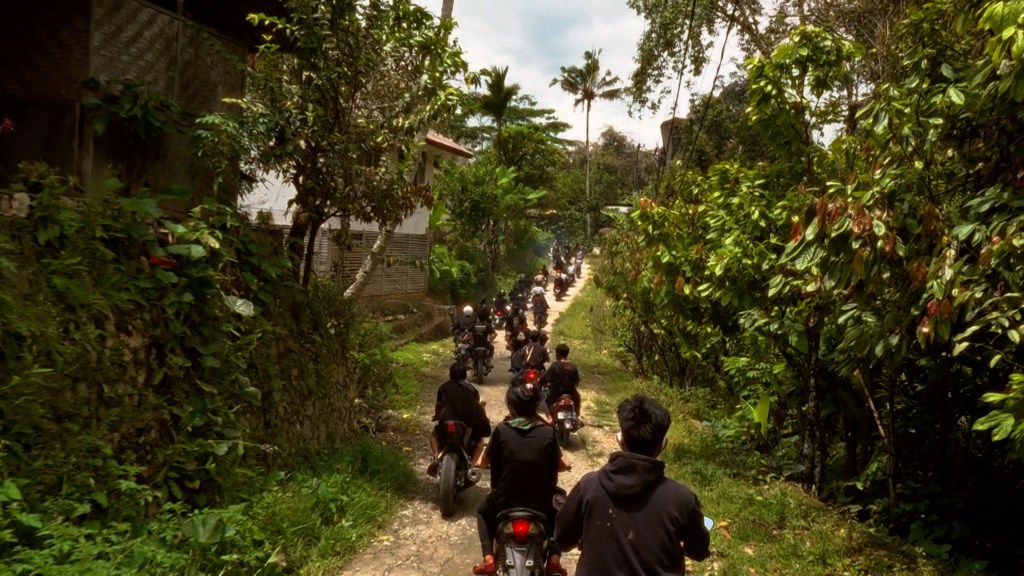
CCF: Our first interactions with Victor’s footage were via the broadcasting network he established, DSTV, watching on TVs all over Toraja. It’s one of the most popular channels in the region, with locals watching DSTV footage on screens everywhere—at palm wine bars, council offices, grocery stores, lounge rooms, the list goes on. On the first trip we spent a lot of time at Victor’s place, where he’d show us footage shot over years. In terms of selecting the footage, we drew from those experiences at Victor’s house and memories of particular footage we’d seen on TVs around Toraja, but then dived through hundreds of hours of footage on his YouTube channel, Sangalla’ TV.
WAM: During COVID, I stayed with Victor for a week and collected all the footage we wanted to review before assembling the film. I spent most of my time with Victor’s editor Edo, looking through footage and stacking hard drives full of material to watch properly when I got back to Makassar. They have hundreds of hard drives, tapes, and DVDs, so it would have been impossible to watch it all but Edo helped us find the clips we were looking for and Victor drew our attention to other clips we might be interested in. We wrote plans for an initial series of sequences and started to develop the structure of the film. For the installation, the four-channel film played in a loop, so we wanted it to make sense no matter when an audience member may have entered. When we moved to the single screen format, the most important aspect of the film became its structure, so the sequences were cut down and re-ordered to provide the most concise expression of the ideas we wanted to explore.
IB: At the beginning of the film, you—Victor—tell a story about how you got into filmmaking; when you failed a recruitment test for a mining company because of a vision impairment, your uncle bought you a handycam. Before this, where did your love of the moving image start?
VK: I’ve always been drawn to multimedia, even back when I was in school studying electronics. When I moved to Makassar, I started hanging out with students from Fajar University who were studying broadcasting. I’d tag along as they documented, sharing their passion for videography. My uncle noticed this interest around the time I was applying for a job at a mining company. He saw potential in me and gave me a Mini DV camera. Though basic, it was considered high-quality at the time. I taught myself how to use it and began documenting things that were happening around me. In the early 2000s, videographers were very rare in Toraja, so people began asking me to document their events and ceremonies. With the income from those jobs, I was able to afford better cameras which allowed me to capture better quality images of ceremonies with greater flexibility. Eventually, I started sharing all my footage through the cable TV channel I set up, as well as on YouTube from 2015, so others could experience and appreciate it. So video has been a naturally evolving passion.
IB: ARMS is clearly a deeply personal film, as so much of the footage records intimate exchanges among Victor’s family, particularly the illness and death of his grandmother. It seems like dying and death are often still taboo subjects in cinema, so it feels very rare to see such candid and tender images of these processes. What does this footage mean to you, Victor—and did you have any hesitations about including it in the film?
VK: In Toraja, death is always a presence. In our culture, it’s not considered a taboo subject. When someone passes away, the family handles all the preparations, from the bathing of the body to the burial—there’s no handling of the body by anyone else. I attend funerals almost every day, especially during the funeral season (Rambu Solo’), which often runs from August to December. For the community, there’s usually at least one funeral every week, but during the high season, it can happen daily—that’s just how Torajan culture is. Attending funerals is considered a shared responsibility. For instance, if I have a family member who has passed away, I’ll ask others to come and help organise proceedings. We rely on each other; if others need help, I’ll do whatever I can and they’ll do the same for me. The more people who attend, the better. This comes from the Torajan word Tongkon, which means “to come and sit together.” This tradition has been passed down from our ancestors and applies not only to funerals but also to other ceremonies.
When it comes to images of the dead in Toraja, opinions vary and circumstances are diverse, especially when it comes to publishing those images. When documenting death ceremonies, we seek consent from the families regarding whether the faces of the deceased should be shown. Some families prefer that they aren’t, and we respect that. But images of people who have passed away are very common and totally normal in Toraja. They become a way for people to participate in the mourning process. Personally, seeing images of those who have passed makes me more appreciative of life—especially when I reflect on those who’ve left us suddenly or have young children that they’ve left behind. Those images force me to consider the fact that death will happen to us all, and in turn, makes me reflect on my own life and priorities.
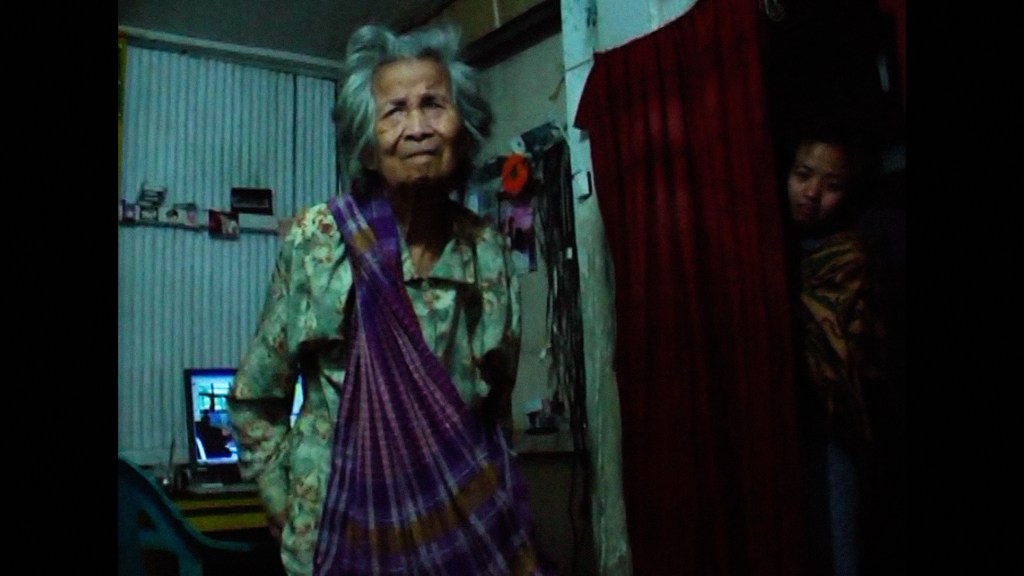
When it comes to the footage of my grandmother in the film, recording her life was a part of my work from the moment I got a camera. I captured everyday moments in our lives all the way through to the gradual decline of her memory. While sometimes I was filming for the fun of it, it became more important to me as she came towards the end of her life. I simply wanted to keep memories of the woman who raised me. When watching the film at Forum Film Dokumenter in Yogyakarta with a festival audience, I was a bit embarrassed because the footage is so personal (laughs). My wife was also very embarrassed about seeing herself on-screen (continues laughing). But as the film went on, I started to feel very proud that my work could reach a wider audience. Every time my grandmother appeared on-screen, I felt sad, but it was a good kind of sadness—it reminded me that we still have a deep emotional connection to those who have passed and how they remain a part of us even in their absence.
Every time my grandmother appeared on-screen, I felt sad, but it was a good kind of sadness—it reminded me that we still have a deep emotional connection to those who have passed and how they remain a part of us even in their absence.
—Victor Konda
CCF: The footage of Victor and his grandmother was some of the first footage we watched after the installation at Asia TOPA, and essentially the reason why we wanted to make the film. Victor had published it on his YouTube channel. Wahyu and I were both deeply affected by the footage. My grandmother had suffered dementia through my childhood, and those experiences shaped me in a major way. Watching someone lose their ability to remember is extremely difficult but can also be very funny at times. Everyone who’s had a loved one with dementia could identify with the fact that some moments are quite hilarious but are underscored by this dark and foreboding feeling that one day you might forget as well. And I think that touches on the impulse of the cameraperson, photographer or documentary filmmaker at their core, the impulse to capture one’s experiences and immortalise them somehow before you’ve forgotten them.
I found Victor’s footage of his grandmother, the slow and patient documentation of her last few months, so achingly beautiful. Sometimes it’s from a distance, sometimes up close and personal, sometimes you can feel him behind the camera and sometimes he’ll enter the frame. The times where he jokes around with her mirrored interactions with my own grandmother. The necessity to make light of what is otherwise too painful is, to me, an elemental human trait that connects us all across language and cultural divides. In terms of the ethics around using the footage, we definitely had hesitations and long conversations about it. What led to our decision to include it was that Victor wanted it to be included, that it was a core element of his work over the years and that he wanted to pay homage to his grandmother’s memory.
WAM: Victor’s footage of his grandmother made me very emotional the first time I saw it. I personally never got to meet any of my grandparents, so I was struck by how close these bonds could be and that I’d missed out on those relationships. The footage is incredibly touching and funny at times; the images stuck in my mind. It made me want to record all of my family members, especially my mother, as my father also passed away when I was 13. We talked a lot about the ethics of using this footage, as we knew it was incredibly sensitive material. But even if the footage disturbed some members of the audience, it was important for all of us to include it in the film as a reflection of essential Torajan philosophies and approaches to life and death.
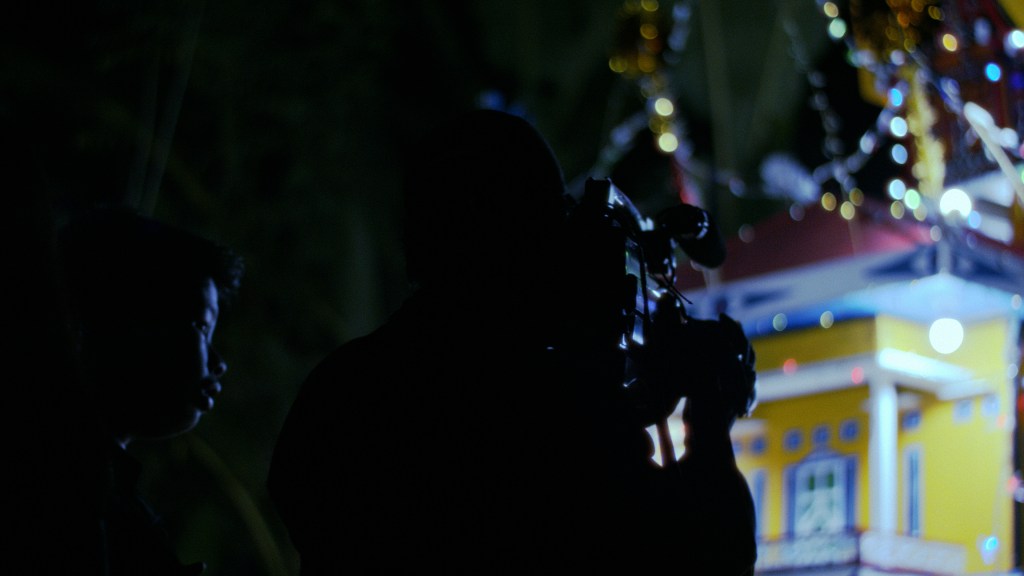
IB: In the film, Victor says “I record as a means to remember always.” Can you each talk more about this idea and how it influenced ARMS: of film as a way to remember—both for individuals and for communities?
VK: In Toraja and elsewhere, almost everyone wants to document moments, to keep them alive. When it comes to ceremonies and cultural events, I’m especially passionate about documenting them to ensure they have continuity and don’t disappear entirely. I want to be able to look at them when I grow old, and for my children and their descendants to have something they can see and connect with. Personally, I regret that many ceremonies, particularly those of our ancestors, weren’t documented earlier. I wish that in the past when the culture was different, before the land was developed, that there had been records of ceremonies. But I’m content knowing that my footage is being seen by wider audiences, rather than just sitting in my archive. It feels like a way of giving Torajan traditions and culture a platform to be appreciated beyond our community. It’s a record for the world to remember.
WAM: I’m very interested in the comparison between how the brain works to store memories and how a camera records moments onto a memory card. Cameras are designed to assist or even surpass human capabilities in memory storage. While the human brain retains many memories, it has its limits—some fragments inevitably fade. Video also has its limits, what’s shown within a frame is just a fraction of a situation from a particular angle, it doesn’t capture the entire context of what happened during the moment of recording. When we record even a fraction of an experience, the recording can serve as a tool to help our brain trace its way back to that time, acting as a series of hints or clues that allow us to remember the experience we lived through. Victor’s sentiment resonates deeply with me—there are people and experiences I want to hold on to forever, and having recordings of those moments becomes a way to revisit and relive them in the future.
CCF: There’s obviously severe limitations to video archives as well, requiring a lot of money and time to keep footage from disintegrating on hard drives, tapes or any other medium. Victor’s archive is invaluable and the film barely scratches the surface of its depth. I hope his images find different forms in the future so Victor and his community can continue to look back. In terms of the relationship between technology and the cameraperson, Victor’s work embodies the constant adaptation of humans and communities to video technology and how relationships to images change over time. It draws attention to both cultural differences in the motives for recording video and the motives that are shared across humanity.

The Australian premiere of A River in the Middle of the Sky will be held at ACMI on Thursday, January 30th, as part of ACMI’s ART+FILM showcase. The event will include a panel discussion with the filmmakers.
A River in the Middle of the Sky will also screen in Sydney on February 5th, at the Old Geology Lecture Theatre, Edgeworth David Building, Camperdown, and in Adelaide on February 8th at the Union Cinema (in collaboration with moviejuice).
Dogmilk is an independent filmmaking collective based between the land of the Kulin Nation (Melbourne), Mparntwe, and Makassar. You can stay updated about their upcoming projects via their website and Instagram, @dogmilkfilms.
**********
Indigo Bailey is a Tasmanian writer and editor living in Naarm/Melbourne. In 2023, she received the Island Nonfiction Prize for an essay about rain sound. She has written for HEAT, Island Magazine, The Guardian, and Kill Your Darlings, among other publications.
 Rough Cut