


Dylan Rowen reflects on the strangeness, fury, and sincerity of Derek Jarman’s films screened in November as a part of the Melbourne Cinémathèque’s ‘The First and Last of England: The Queer Legacies of Derek Jarman’ program, in partnership with this year’s Melbourne Queer Film Festival.
* * * *
1. For eternity and a day
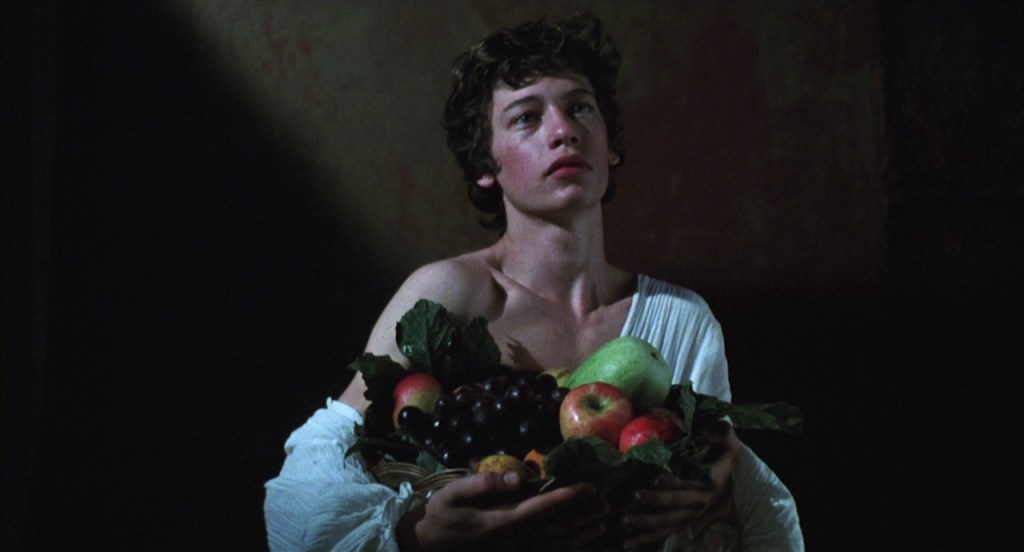
Jarman sets the table for that last supper, his final formal event before returning to the liberating qualities of Super 8. Out-of-time objects: a calculator, a typewriter, a motorbike and modern eyeglasses interlope in tableaux. The gleeful knowing smirk; fingers crossed behind your back because you know it’s anachronistic but that is what makes it art. Study the colour. Go back to the paintings; they’re all that you need. The Evangelist’s martyrdom. The brief flashpoint where Mannerism gives way to Baroque, enfolding bodies into intensity. Backgrounds unrevealing in their dark and varnished interiors. Painter and subject touch. Flesh transmutes into fabric into canvas; the body’s orientation in space, reimagined. You are my St. John, and this is my wilderness. Coins trickle from open mouth, leave an impression of distance, yet in that transaction lives all of desire. Oh! Patron Saint of Rentboys, Knife Fights, Bisexual Bacchanals and Experimental Cinema, we worship at your altar. Is it really such an affront to suggest that Caravaggio liked men? I mean, just look at the paintings; the proof is in the pudding.
2. Thunder that bends the air
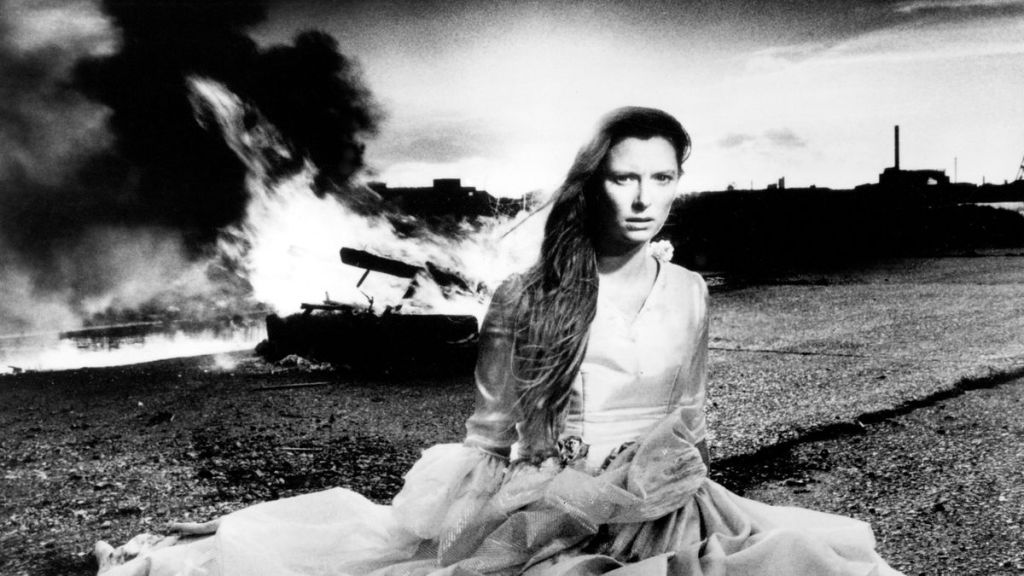
The expectant gap between thinking and making; the first step toward creation. Like scratches on the brain, that encounter with ritual. An indictment of Thatcherism (stuck, a sunkenness). The ooze of that particular strain of British transphobia and femmephobia. A uniquely terrifying experience, of poison as it leaks through plaster, emulsifying. Gestures gain meaning through their repeated (re)action to and against each other. Tilda’s wedding, the walk down the aisle. But then—her awakening. Tearing the white dress off, cutting up the sartorial promise between state and actor. Sometimes, all one can do is howl in rage. A stomped, caved-in, frotted canvas. Rhythm is there, but it’s syncopated. In writing memory, dreams ache, staccato with night sweats. The indigo Digitalis in bloom, nestled amongst the pale marble pebbles of Dungeness. Elderflowers and roses like little miracles, hardy in the frosted Kent wilderscapes. Cottaging the prospective cottagers at Prospect Cottage. Jarman considers sickness with the same eye he gives to every botanical arrangement—full of intention. Decayed peat fertilises purple iris while the self-seeded wild figs bend toward heaven. A Greek chorus of wallflowers, chamomile buds, poppies and nasturtiums witness everything.
3. Pray to be released from Image
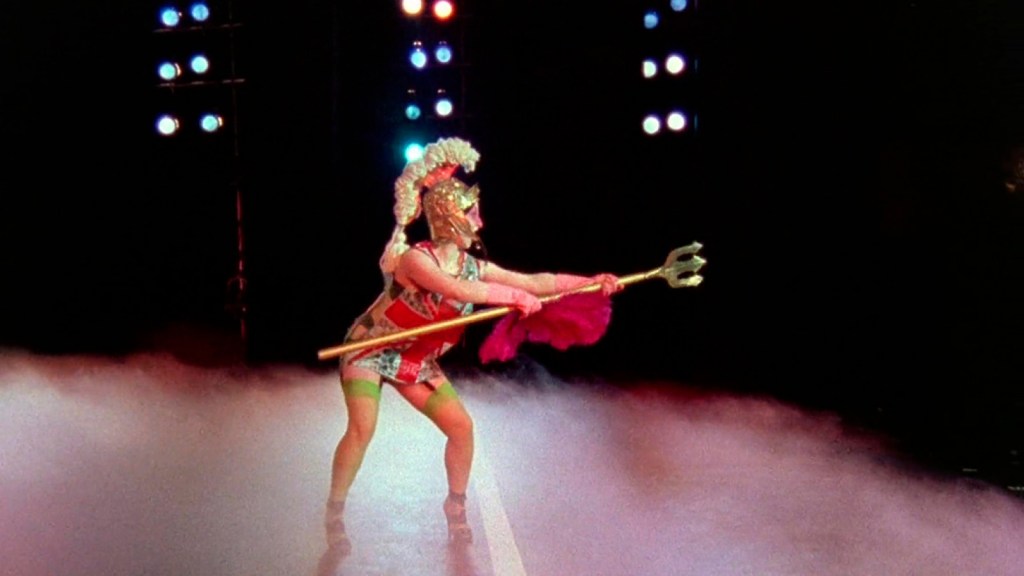
A shot in the night, a threat to commercial cinema. The frenetic musical—an interlude, a mess. Amyl Nitrate is our heroine. Sex, death and art meet at a book burning. But who is looking after the baby? Chaos the au pair scrubs Punk’s dishes. All the while, the angel of history stares back at us. Artists steal the world’s energy. Enter stage right: ‘Rule, Britannia’ performed by Amyl in that fascistic headrush and eventual headache. Camp isn’t just a row of tents! Colour itself disturbed and on the run. Anything can happen and already is happening. Turn toward that particular Yves Klein blue where one can feel a deep sensation of space and time passing. Improvised sketches, a list of side effects and the hell unique to a doctor’s waiting room. I’m reminded of what Maggie Nelson wrote in Bluets: This half-circle of blinding turquoise ocean is this love’s primal scene. That this blue exists makes my life a remarkable one, just to have seen it. To have seen such beautiful things. To find oneself placed in their midst. Choiceless.1 In the cinema, awash with colour, I peep at the others around me, transfixed and held in this hue; witnessing others witness this. Nothing ever like this again. Writing and language fail me. A final plea from Jarman: worship diversity. If one doesn’t, there will be No future.

**********
The Melbourne Cinémathèque screens films on Wednesdays at ACMI in Federation Square. Screenings are presented in partnership with ACMI, and supported by VicScreen. Full program and membership options—including discounted membership options for students—are available at acmi.net.au/cteq.
**********
Dylan Rowen is a writer and researcher based in Naarm. They are a PhD candidate in Screen and Cultural Studies at the University of Melbourne, where their research focuses on the representation of queens, fairies, and pansies in modernist literature and film.
- 2009, p. 3. ↩︎
 Rough Cut