


There is a moment in Daniele Luchetti’s Trust where Teresa Quadraro (Federica Rosselini), a brilliant young woman living with her lover and former teacher, Pietro Vella (Elio Germano), pulls her hand from soapy water to find it is bleeding. The glass she was washing has shattered. In the scene prior, Teresa initiated an exchange of secrets between them. These secrets, never disclosed to the audience, are so sordid that they would have the power to destroy Pietro or Teresa if made public. In the scene that follows, Teresa is gone, and the two will never be lovers again. From this moment on, Teresa’s trust in Pietro is galvanised by her love; she is steadfast in concealing her former lover’s secret, and never concerned that Pietro carries her own. Meanwhile, Pietro keeps Teresa’s secret out of fear of mutual destruction. This glass-shattering moment clarifies the primary interest of Trust: is trust contingent on love—or on fear?
Trust is a claustrophobic tale of lovers who cauterise their souls to one another only to live a life apart. Scored by Thom Yorke, it is based on the novel of the same name by Domenico Starnone, an author Luchetti adapted to acclaim with 1995’s School. Luchetti also finds a familiar collaborator in Germano, with whom he secured a wealth of prizes in 2007 with My Brother Is an Only Child. Despite these certifications, Trust drags viewers through a quagmire of extraneous plot, ultimately uncertain as to the point it wants to make. Luchetti’s pacing is erratic, matching the film’s glazing interest in its female characters. Even Yorke’s score struggles to keep up, often jarring as it shifts from one strung-out beat to another amidst Luchetti’s scramble.
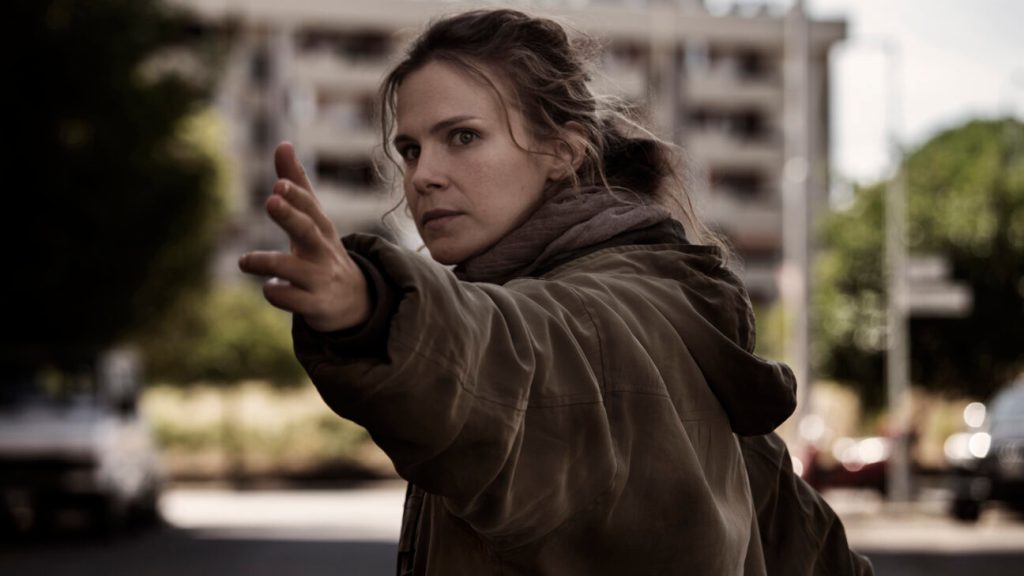
Trust follows Pietro as he gains accolades in response to his seminal paper ‘The Pedagogy of Affection,’ which argues for education reform that would encourage teachers to nurture and shape their students beyond textbooks into free-thinking citizens. Meanwhile, as Teresa moves to America, her presence and the destructive secret she keeps sit at the periphery. That is until she is asked back to Rome in Pietro’s twilight as he receives a presidential medal for his career and Teresa, revered across Italy as a famed mathematician at MIT and proof of the success of Pietro’s theory, is invited to give a speech at the ceremony.
Luchetti uses Teresa and Pietro to elucidate the two sides of the coin that is trust: love and fear. This comparative approach is a key aspect of Luchetti’s storytelling. One of the film’s most glaring comparisons is of the two women in Pietro’s life: Teresa and Nadia (Vittoria Puccini), Pietro’s wife. While Teresa is a student, Nadia, like Pietro, is a schoolteacher. Nadia works unpaid in Florence to earn her PhD in mathematics, while academic attainment as a mathematician is an uncompelling, easy, and “boring” pursuit for Teresa. Nadia has been engaged lovelessly since she was sixteen to different men, while Teresa dispatches lovers effortlessly alongside her matchless bond with Pietro. Teresa is assiduous, Nadia frenzied.
The result of this contrast, though, isn’t entirely productive. Charitably, the humiliation of Nadia could be understood as Luchetti’s critical commentary on the treatment of women through the later twentieth century—that, barring those born with savant intellect, women in Rome were failed by their context. However, in pitting women against one another in competition, Luchetti’s overreliance on these foils becomes a vertiginous kind of labour.
Luchetti casts the contextual net wider and wider, yet homes in time and again on the foundation of Pietro and Teresa’s trust issues, resulting in context that is piquing but superfluous, lacking substantial relevance to the story. Curious plots lie at the borders of the film’s limiting framework: wunderkind Teresa sets up her new life in America just as she becomes a famous name across Italy; Nadia admits that she is an “Easter egg without the surprise inside,” only to then play mother to Emma, who looks remarkably like another of Pietro’s students; Tilde (Isabella Ferrari), a powerful supporter of Pietro’s writing, is a successful woman in a world determined to prioritise men. The attempt to incorporate commentary on female agency in Italy is admirable yet confusing, as Luchetti constantly abandons the predicaments of these women to gravitate to their lesser half, Pietro, and further explore his bashfulness, arrogance, and general unpleasantry.
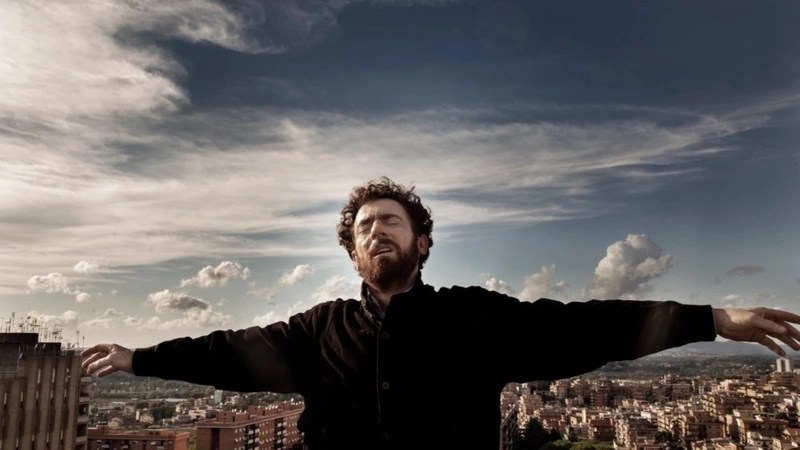
Pietro coerces rather than charms and is a serial adulterer who is becoming increasingly successful—extremes that interest Luchetti more than the enriching plots that lie with the film’s women. This is a loss not least because Rossellini and Puccini give compelling performances. Rossellini is intensely enigmatic, watching her lover as one fixated by hunger, while Puccini’s equally constant gaze is beleaguered by doubt. Germano is convincing as the smarmy, all-façade teacher who preaches the tenets of love such that it serves him, but this petulant performance is at odds with Pietro’s justification in the film, which relies wholly on our investment in his emotional state. In a telling episode, Pietro unexpectedly brushes up against Teresa to find he is no longer capable of sleeping with Tilde, with whom he is travelling. Instead, he clings to the rooftop and howls. It is difficult, in moments like these, to see Pietro as other than a caricature, let alone care for his fate.
Luchetti’s narrative sprawls and, to facilitate this, the primary characters take on detail and purpose that exceed the film’s own oversimplification of the love versus fear tropism, swiftly outgrowing these conditions and leaving Luchetti’s thesis poorly fleshed out. This is largely because Teresa is too clever to embody love alone. Teresa’s ability to read the situation is absolute. Prodigiously perceptive, she notes Pietro’s advances as a student but refrains from indulging him because she recognises that the teacher and student “weren’t equals.” She is socially acute, happening upon a group of Pietro’s colleagues and isolating his relationship to the group’s individuals within moments. Teresa understands Pietro’s wandering amorous proclivities and knows that to be committed to one another they must bare the terrors of their souls. She is the film’s perfect reader. Though love may be blind, Teresa is not. And as the film’s point of clarity, Teresa’s constant return to Pietro is calculated, suggesting that Pietro’s secret is forgivable at the same time as Luchetti, with the seriousness with which Pietro is painted, insists this isn’t the case.
As the film progresses, the Pietro-as-fear prosopopoeia isn’t carried with the requisite suspense to validate itself, either. The substance of Teresa’s secret is terrible enough to stun Pietro into silence and substantial enough in disgrace to encourage his complicit response. However, it is never through fear that Pietro keeps this secret. It is through indifference. Teresa scales heights Pietro will never attain, yet he shows no care in her secret. In fact, he needs to be reminded that he holds it. In an effort to subordinate the texture in the film’s women to a small man’s solipsism, Luchetti rubbishes the set of principles he seeks to substantiate.
Trust revels in its own image, and in the absence of any reveal, its intriguing thesis suffers a lacklustre execution. In the end, one can only ask what secret, from 40 or so years prior, could possibly be hounding the leading man of Trust in such a way? One can reasonably narrow this down over the testing duration of the film, but this is certainly beside the point. Luchetti keeps this secret between the lovers, making it apparent he wants us to focus on the hypothetical conditions of the film rather than the actual influences upon this dynamic. Perplexing the viewer with thin rhetoric and an overbearing lead performance, Luchetti builds and builds, but his reach exceeds his grasp.
Trust screens across Australia as part of this year’s St. Ali Italian Film Festival.
**********
Joshua Klarica recently received the MPhil in English literature at Cambridge. He is interested in criticism and culture, and has work published in Meanjin, Literary Review, The Mays, Griffith Review, and Overland.
 Rough Cut