


In the late 1960s, Jeni Thornley became involved in the women’s liberation movement. She was a founding member of the Sydney Women’s Film Group (SWFG), which had strong socialist feminist underpinnings. The SWFG produced several political short films in the early 1970s, including Martha Ansara’s Film for Discussion (1973), which Thornley acted in and assisted in writing. A landmark of Australian feminist filmmaking, Film for Discussion depicts a young office worker’s (Thornley) existential awakening, inciting women to question their assumed place in workplaces, families, and relationships with men. It concludes with Thornley vulnerably facing her mirrored reflection, anticipating a body of work grounded in the principles of looking back and looking within. Film for Discussion screens as part of this week’s Melbourne Cinemathéquè season, ‘Contested Histories: The Documentaries of Jeni Thornley’—a program spanning 50 years, beginning with the remarkable “farewell film poem to life,” Memory Film: A Filmmaker’s Diary (2023).
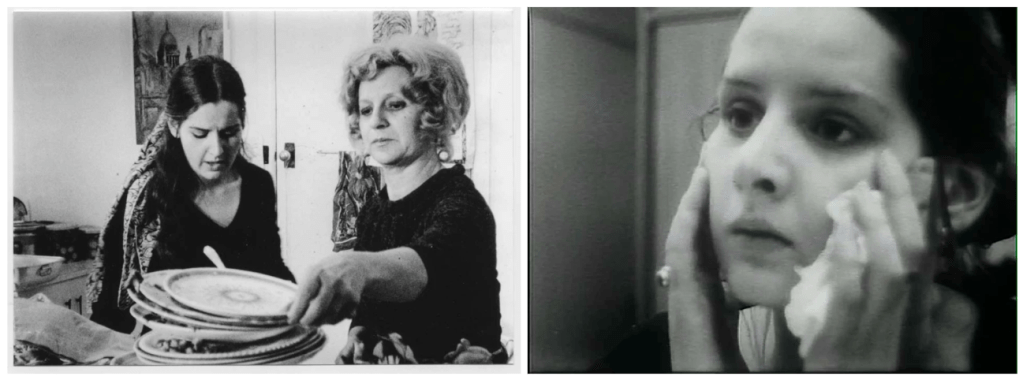
The SWFG was committed to creating opportunities for women in the film industry. At a time when Australian cinema was at the beginning of a resurgence, options for women in the field were still very limited outside of secretarial work. Alongside its lobbying efforts, the SWFG ran filmmaking workshops. The shorts created during these events saw several participants admitted to the newly created Australian Film and Television School (now the Australian Film Television and Radio School). For her application, Thornley submitted Still Life (1974), which she had co-directed with Dasha Ross. As the filmmaker wrote in Peephole Journal, the two women drew from their “complex feelings” regarding their experiences working as live models to develop this project, though Thornley suggests that their approach to representing the female body also betrayed a “naiveté.” Ross was accepted into the institution, but Thornley was not—a rejection which affected her deeply.
In the four years between Still Life and her first compilation documentary, Maidens (1978), Thornley continued her groundbreaking activism, coordinating the International Women’s Film Festival in 1975. The next year, she worked as a camera assistant on Journey Among Women (Tom Cowan, 1977), an experience she re-examines in Memory Film, particularly by involving a performer’s account of trauma stemming from her appearance in the film.
In a personal statement in the 1987 monograph Don’t Shoot Darling!: Women’s Independent Filmmaking in Australia, Thornley reflects on this period of her life and how it contributed to the development of Maidens:
I was swept away in Journey Among Women and lost the line between the film and reality. I entered into my ‘separatist’ phase. I followed a wild group of women squatting at the ‘Witches House’. Martha Ansara followed with her camera and made Secret Storm there. Several months earlier, she and I had experimented for her film, Jealousy. Me, improvising, her filming, in a loose, poetic style. Many of these images began to take form within Maidens, which I was always working on in my head.1
Maidens, in which Thornley traces her maternal lineage to construct an intimate auto-portrait, was the first of the director’s documentaries to draw from what she has called an “archive of the self.” Family photographs are interwoven with film excerpts (including a memorable passage from Film for Discussion) and Super 8 footage. In subsequent autobiographical essay films, excerpts from both constructed scenes and home movies are revisited and recontextualised across decades. With Thornley’s wisdom and grace, new meanings are formed, difficult truths are confronted, and subconscious ideas are allowed to fully surface.
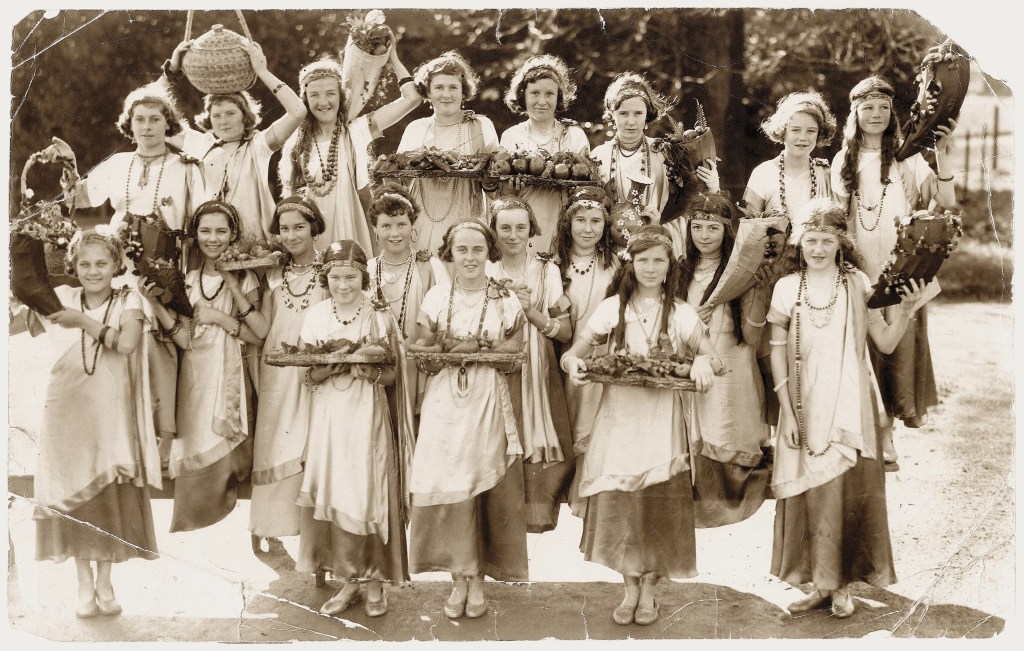
Following on from Memory Film, Film for Discussion, and Maidens, the Cinémathèque will screen Thornley’s doctorate film Island Home Country (2008), a cine-essay in which the director reflects on her upbringing in Tasmania, the denial of First Nations history and what it means to sit with discomfort as a settler in colonial Australia. While developing the documentary, Thornley began a blog to document her praxis. It’s an insightful resource, in which the filmmaker provides meaningful reflections on her work, as well as that of her contemporaries.
In one post, Thornley explores the tradition of the essay film, which is also intertwined with feminist filmmaking in the wake of the women’s liberation movement of the 1970s:
In Australia, many women filmmakers have been increasingly drawn to this expressive mode of autobiography—its subjective and personal style allowing for deep introspection, often crossing the borders between fiction and nonfiction, public and private […] often they are inter-textual, drawing on film and photographic sources from the filmmaker’s personal archive and film work. […] We, the viewers, might now experience the original text on a deeper layer, looking back along with the filmmaker’s probing, self reflexive, gaze.
In viewing Thornley’s films—from an early acting role to what she has expressed will likely be her final feature—in close proximity, the Cinémathèque audience will be well placed to share in this reflexivity; a rare privilege indeed.
**********
The Melbourne Cinémathèque screens films on Wednesdays at ACMI in Federation Square. Screenings are presented in partnership with ACMI, and supported by VicScreen. Full program and membership options—including discounted membership options for students—are available at acmi.net.au/cteq.
**********
Grace Boschetti is a Melbourne-based freelance film critic. She has written for Metro, Senses of Cinema, and ScreenHub, among other publications.
- From Don’t Shoot Darling!: Women’s Independent Filmmaking in Australia, edited by Annette Blonski, Barbara Creed, and Freda Freiberg, p. 222. ↩︎
 Rough Cut