


When Belgian writer-director Leonardo Van Dijl set out to make his stirring debut feature, Julie Keeps Quiet, he was met with the same criticism time and time again. “You don’t have a story,” Van Dijl recalls, echoing his conversations with potential producers and investors. “Nothing is happening.”
The film presents the tale of Julie (Tessa Van den Broeck, in her film debut), a prodigious young tennis player who refuses to speak for or against her revered tennis coach, Jeremy (Laurent Caron), after he is accused of misconduct. The allegations have come to light after the suicide of one of Jeremy’s former students, Aline, and it’s her parents’ belief that Jeremy’s actions led to their daughter’s untimely death. Julie quickly comes to understand what is at stake for her—the future of the coach she exalts, the status of the club where she trains, and her own desire for a career on the international tennis circuit. There is also the suggestion that Julie has had unwelcome experiences of her own with Jeremy, and her refusal to speak to anyone only enhances the suspicion surrounding the close bond they share.
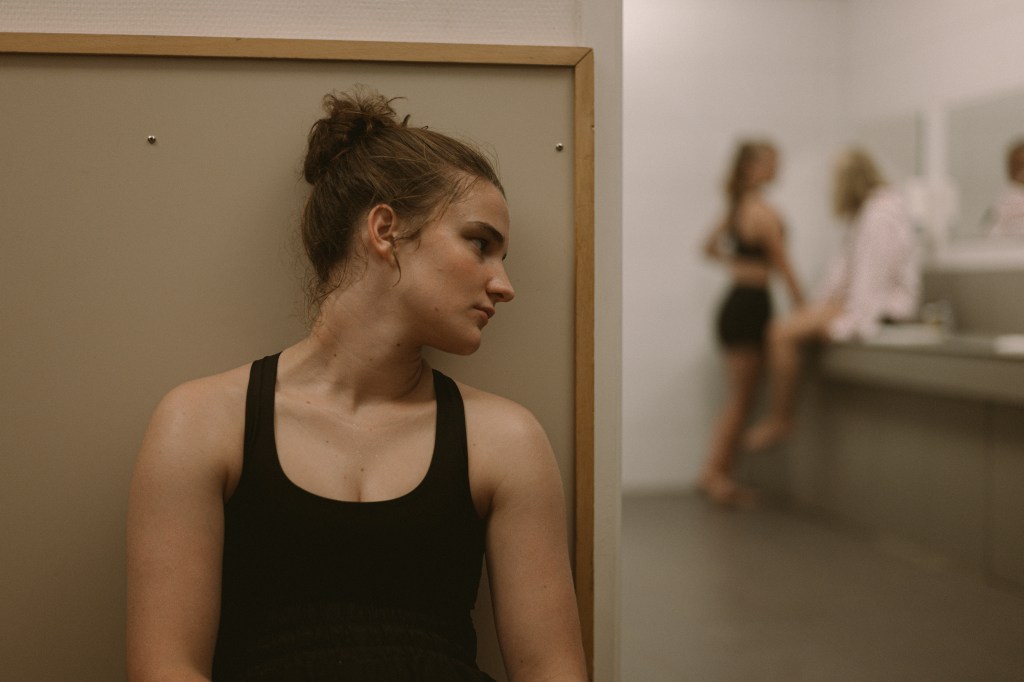
“She is a modern heroine,” Van Dijl says of Julie. “In a world where we are often pressured to speak out, Julie says ‘No, I don’t want to do that.’” Van Dijl cites Sophocles’ Antigone as a major source of inspiration for the film. “Julie [Keeps Quiet] speaks to an ancient concept,” Van Dijl says, “to speak or not to speak?” That is the question that Julie is confronted with, as she evades the prying eyes and ears of her fellow tennis students, the coaches, and her own family. Julie throws herself into her athletic practice, working with a new coach, Backie (Pierre Gervais), who she demands treat her the same as her fellow students to avoid the same ‘favouritism’ she received from Jeremy. “Tennis is her way out,” Van Dijl says. “When Julie plays tennis, it’s meditation.”
For the role of Julie, Van Dijl underwent a casting search for a real-life tennis player. “From the moment Tessa walked in, I knew she was Julie,” he recounts. “She did things on camera I’ve never seen.” Van den Broeck, who also performs all the tennis in the film, is outstanding as Julie. A difficult character for any actor (let alone a first-timer), the role of Julie poses the unique challenge of a woman who wants to assert her agency by withholding her voice. Much is conveyed in Van den Broeck’s intensely physical performance and the steely expression Julie tries to hide behind. Yet the actor still bears the cracks in Julie’s tightly worn mask, as the weight of her silence takes its toll.

“I didn’t want any pressure on her,” recalls Van Dijl. “To be a good actor, you need to be free.” The director rehearsed with Van den Broeck for over a month before shooting began to prepare her for the demands of the part, but she was more than up for the challenge. “Tennis players are really good actors—they are very good at taking cues,” Van Dijl says wryly.
To create a safe environment for the young actress, the director welcomed friends and family to stay on set and made sure rehearsals took place in public settings. His goal was to remove any sense of hierarchy between cast and crew, so that Van den Broeck felt “true agency” and could enjoy her first filmmaking experience. “Concentration is between action and cut,” says Van Dijl. “After? Just have fun—be a teenager!” The relationship between a coach and an athlete mirrors that of a director and actor, and Van Dijl has been sensitive in his approach to not only portraying a young woman struggling to make sense of the abuse she has suffered, but also his responsibility in steering an inexperienced actor through dark emotional territory. “The right coach can protect you and push you,” he says. “That’s the joy.”
Less of a newcomer to film than Van den Broeck, Van Dijl directs his debut with a remarkably assured hand. He boasts impressive credits spanning from fashion media to music videos and highly acclaimed short films—many of which explore the world of competitive sports. “[In media], we make [sports] a fetish,” he says, “but in reality it’s boring. If you go to the gym, it’s not like the Olympics. It’s much more about discipline than the ‘Eye of the Tiger.’”
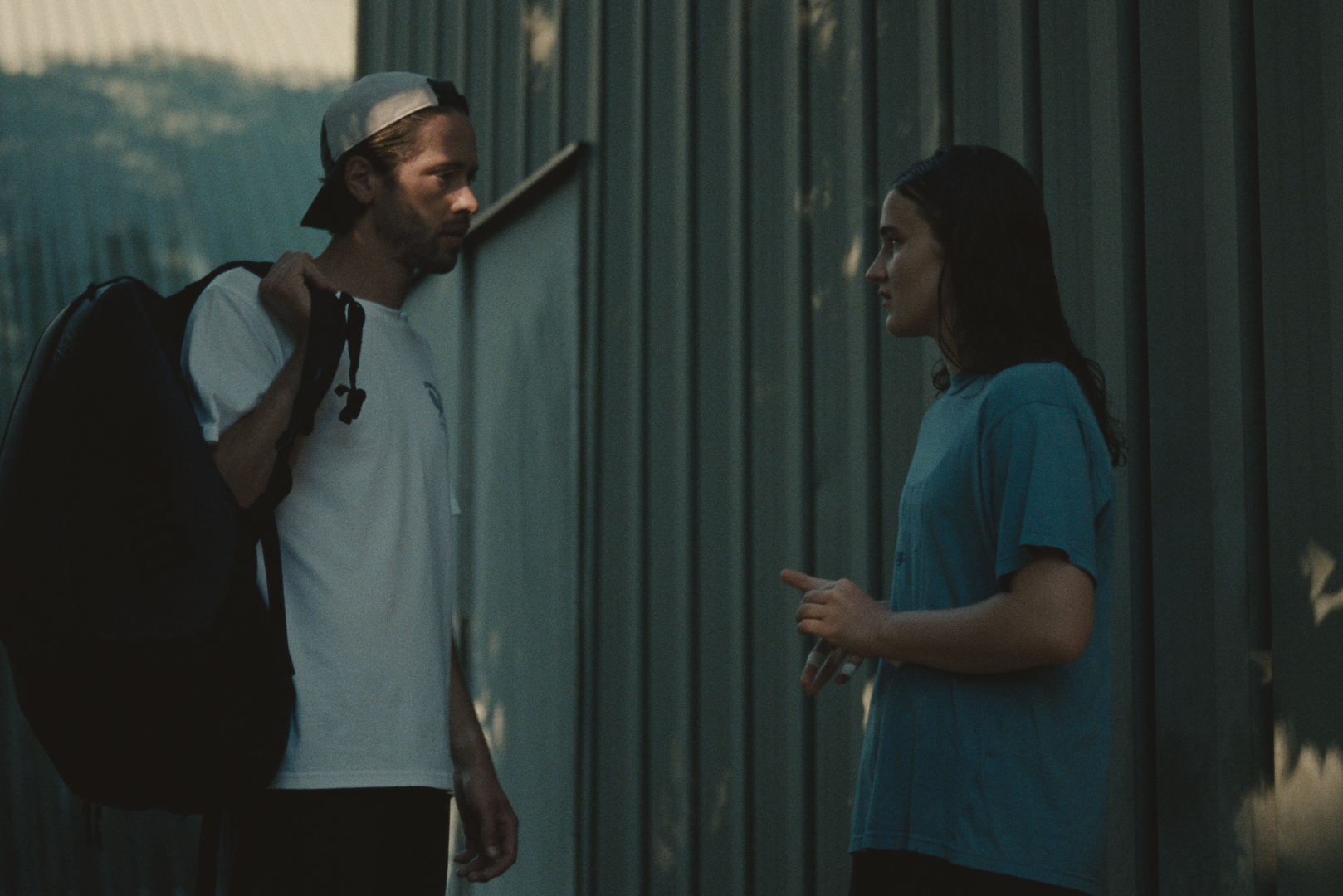
To convey the mundane rigour of the sporting world, the film has a sparse, stark appearance, complete with a stormy colour palette. This not only conveys the factory-like workmanship of the young tennis star, but the tempest within Julie’s mind and heart. Van Dijl, who worked with gifted cinematographer Nicolas Karakatsanis, described the choice to shoot the film on both 35mm and 65mm as a “spiritual decision.” “I wanted to make Julie’s silence expensive,” Van Dijl says. “We should not take this for granted.” Van Dijl wants the audience to consider the psychological landscape of an elite athlete beyond the physical nature of the job. “Friends of my generation say: protect your boundaries,” explains Van Dijl. “An athlete [says] ‘No. I have to go over my boundaries.’ Because they are pushed to cross their boundaries, they are the ‘perfect’ victims.”
I wanted to make Julie’s silence expensive.
—Leonardo Van Dijl
Throughout our conversation, Van Dijl reflects on the constant internal dialogue between himself and the young woman he wanted to portray. It is refreshing to see a film that deals with hot button subjects such as the #MeToo movement and so-called ‘cancel culture’ with a focus on the victim’s right to protect their own narrative, amidst a culture that thrives on performative displays of martyrdom. There are countless examples of women who, after suffering abuse, are made examples of in the public eye. “If [women] have ambition, they will be punished. They will go insane. They will lose,” says Van Dijl, speaking of the ways women like Julie are typically portrayed on film. “I didn’t want to do that. I didn’t want to take [tennis] away from her. Without it, maybe she would not survive.” Van Dijl compares Julie’s love of tennis to his love of cinema— the passion and drive that provides a way out of pain.
Part of the success of Julie Keeps Quiet is that, while it is a story about a woman dealing with trauma in a way some might deem ‘unconventional,’ the film purports that there is no ‘right’ way to respond to abuse. The film asks us to consider the ways we all want to be in control of our own narratives, and how silence is deployed as a defence mechanism. “We all have silence within us,” says Van Dijl. “We all have things we don’t want to talk about. There are things we want to talk about that we don’t have the words for. Julie’s silence is your silence as well.”
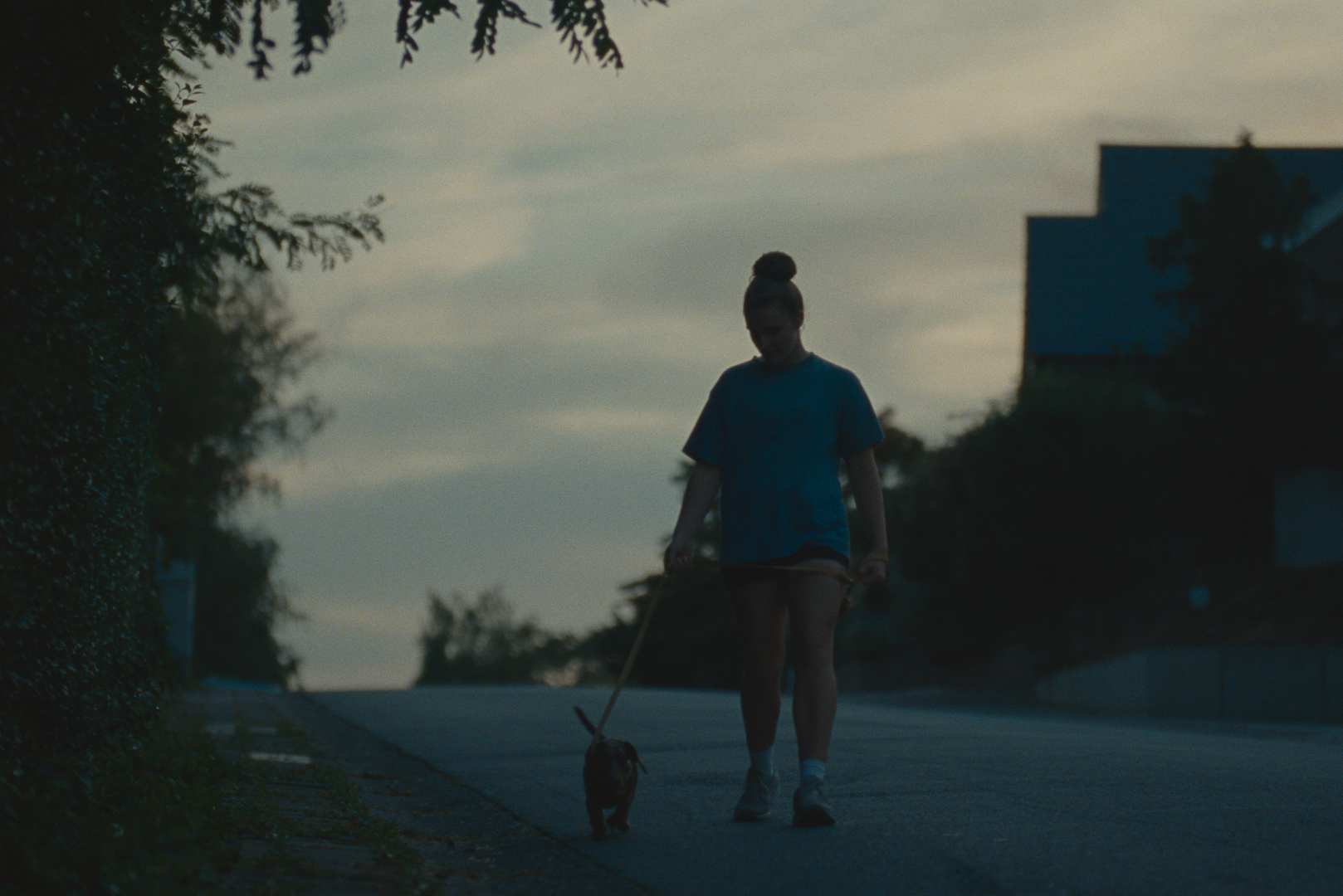
I ask the filmmaker about the ethical responsibility that comes with making an artwork about abuse, and the decision to focus on its aftermath, rather than its occurrence. “I don’t want to be advocating for silence in the long run,” says Van Dijl. “It will kill you.” The director instead wants to acknowledge the loss that is felt when one experiences a violation, and the dilemma that is introduced when the option of speaking out and the option of silence both come at a cost. “If [abuse] happens to you, there is always this thing—I should have known. Because I was warned. I was warned again and again… but it’s not your fault,” says Van Dijl. “That is why I don’t want to show [the abuse]. It’s not about how we educate the ‘perfect’ victim. It’s about educating the world around us. The responsibility of cinema nowadays is to offer new narratives.”
The first scene Van Dijl scripted with his co-writer Ruth Becquart was the film’s ending, which the director views as symbolic of a new beginning, both for Julie and for those across the world who face backlash for speaking out against their abusers. “We should be thinking about taking away the responsibility on girls like Julie to fight injustice,” Van Dijl says. “A safer world for Julie is a safer world for everyone.”
Julie Keeps Quiet screened at this year’s Melbourne International Film Festival.
**********
Andrew Fraser is a writer, performer, and filmmaker based in Sydney, Australia. He holds a Bachelor of Fine Arts (Acting) from the National Institute of Dramatic Art and is an alumni of the MIFF Critics Campus. He has worked on multiple film and television projects including Heartbreak High, Birdeater, Three Thousand Years of Longing, Bump, and Mr. Inbetween. His writing has been featured in the MIFF Revue, Kinotopia, and The Big Issue, and he is a regular guest critic on ABC Drive Radio.
 Rough Cut