


For much of the late-twentieth century, the suburban shopping mall was the epicentre of social connection for young people in the Western world. With the collective hours spent hanging in the food court, window-shopping, or attempting to sprint up the down escalator, the mundane pleasures of the mall lured many to adopt these shrines to consumerism as second homes. For a group of disenfranchised artists at the turn of the millennium, a freshly erected mall in Providence, Rhode Island became—quite literally—a second home, and the subject of Jeremy Workman’s delightful new documentary Secret Mall Apartment.
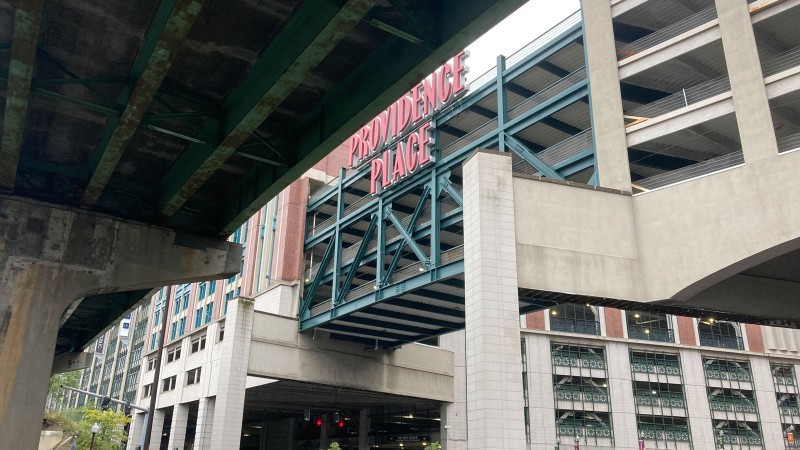
Providence Place opened in 1999 with the hope of injecting new life and economic growth into the community of downtown Providence, despite the objections of residents. Populated by hospitality workers, metalheads, and visual artists on the (unsurprisingly) lower socioeconomic end of the scale, the land surrounding the soon-to-be mall was quickly seized upon by vulturous property developers hoping to capitalise on the shopping centre’s wide shadow, leaving many to seek homes outside of the city.
While watching the rapacious construction of the precinct, local artist Michael Townsend made mental note of a small “nowhere space” in the building’s design that, upon the mall’s opening to the public, he came to find was accessible through various avenues within the retail complex—emergency exits, car park entrances, and even a small grate behind a tile in the mall bathroom. Accompanied by fellow artists and friends recently burned by the greed of real estate moguls, Townsend and his compatriots declared themselves to be “micro-developers,” and planted their flag in the space taken from them by secretly occupying this hidden, empty ‘apartment’ within Providence Place.
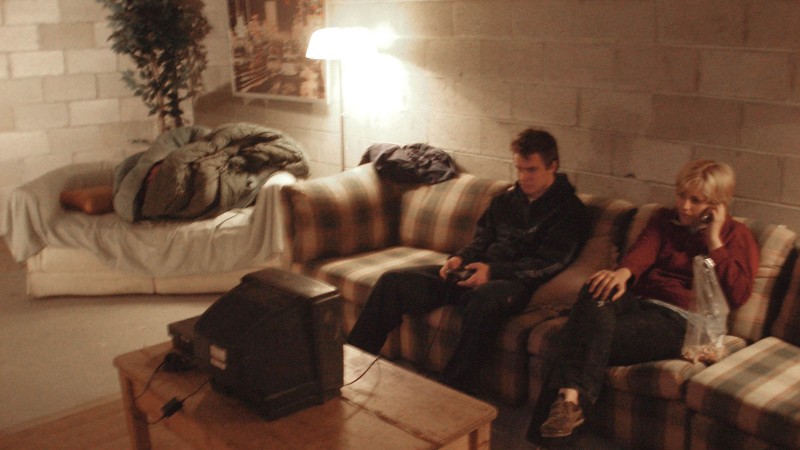
Townsend captured the process of occupying the hidden room on a Pentax Optio S5i—a low resolution, hand-held digital camera—and much of Townsend’s documentation makes up Workman’s film. Through this grainy, Y2K-era footage, we watch the project’s origins as a petty ‘fuck you’ to the mall itself with great enjoyment. As Townsend and his seven co-conspirators navigate the challenges of building the apartment in secret, the results are frequently hilarious. The ragtag team of artists’ completion of ludicrous tasks such as precariously moving second hand furniture up a steep metal staircase (in a style that would make Laurel & Hardy proud) and attempting to have mail delivered to the secret apartment are amusing and ingenious. Despite routinely setting off security alarms, the Providence Place surveillance team are swindled with ease by the octet and, with each escalating quest, the escapades of Townsend and co. become as riveting as any heist film.
Despite the project’s origins in spite and anger towards ‘the man,’ it quickly transitions into a meaningful artwork that is powerful in its criticism of capitalism and its commitment to collective resistance, giving rise to impassioned discourse. Interview subjects are invited by the director to assess the form of the work (sculpture? installation? performance?) and many are unafraid to cast scepticism over its long-term value. Revealing the cracks in their now-ceased marriage, the film features a riveting argument between Townsend and his wife and collaborator, Adriana Valdez-Young, in which she voices her concerns about the financial consequences of the secret construction. Despite the occasional conflict between the group, Secret Mall Apartment ultimately celebrates the infectious passion of the eight artists in creating a space not only to work, but most importantly to connect.
The archival footage, paired with talking heads of the eight artists involved in the apartment project, immediately transports audiences to the bygone era of the early 2000s—the final days of life with limited surveillance and the luxury of time to kill—to surprisingly moving effect. The artists involved all fondly reflect on the time spent in the apartment, a private shelter from the all consuming threat of capitalistic impulses and pressures. Each artist proudly shows their personalised key to the apartment—worn and a little broken, but an emblem of unopened possibilities and personal freedoms.
While mostly focused on the years of the mall apartment’s existence, the film also presents the collective’s work at the time, specifically the Tape Art movement led by Townsend, for which he created murals out of masking tape for local hospitals and in remembrance of victims lost to acts of terrorism. This additional footage supports the film’s exploration of the value of artists in community, especially amidst a lack of financial stability and government support. However, one does wish that more insight was provided into the artistic practices of other members of the project, despite Townsend’s clear status as the project’s ringleader.
Much has changed in the years since the apartment’s ‘lease.’ Malls across the world have greatly suffered due to the advent of online shopping, along with the rising cost of living and a heightened dependency on the internet. The mall has become a symbol of generational nostalgia and utopian imagination, rooted in the desire to reclaim public space in a time of ever-increasing alienation. Entire YouTube channels are now dedicated to breaking into abandoned malls, with the same reckless spirit of the group making their temporary home. The Secret Mall Apartment in question serves as a forceful reminder that great art will live on beyond trends or capitalistic impulses.
Secret Mall Apartment screened at this year’s Melbourne International Film Festival.
**********
Andrew Fraser is a writer, performer, and filmmaker based in Sydney, Australia. He holds a Bachelor of Fine Arts (Acting) from the National Institute of Dramatic Art and is an alumni of the MIFF Critics Campus. He has worked on multiple film and television projects including Heartbreak High, Birdeater, Three Thousand Years of Longing, Bump, and Mr. Inbetween. His writing has been featured in the MIFF Revue, Kinotopia, and The Big Issue, and he is a regular guest critic on ABC Drive Radio.
 Rough Cut