

Warning: spoilers ahead.
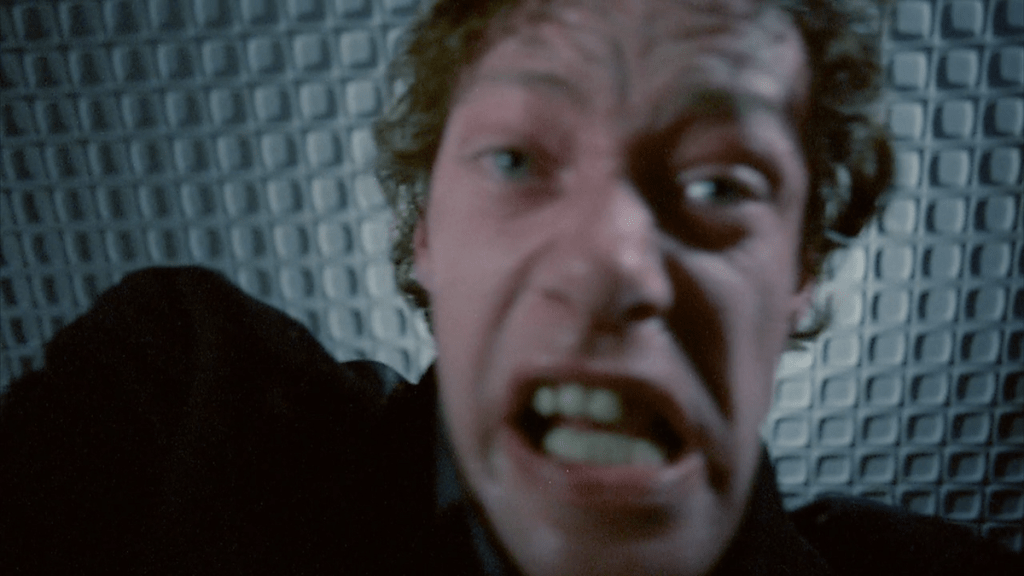
Exactly one night before watching Chris Nash’s In a Violent Nature, I serendipitously ticked another murder movie off my watchlist: Gerard Kargl’s 1983 horror Angst, which was a direct influence on the newer film. I can’t remember the last time I loathed a character so much. ‘K., the Psychopath’ (Erwin Leder) is a fictionalised refraction of the real German murderer Werner Kniesek, who Kargl indicts with sickening over-the-shoulder shots, not unlike In a Violent Nature’s own near-POV framing. K’s pathetic, self-pitying narration betrays no human recognition of the random family he annihilates; he whinges that he “had to go to prison for four years” for killing his mother “even though she survived.” “I can’t feel sorry for the victims,” Leder tells himself as he drags a slain woman downstairs by her feet; “I need to keep on killing.”
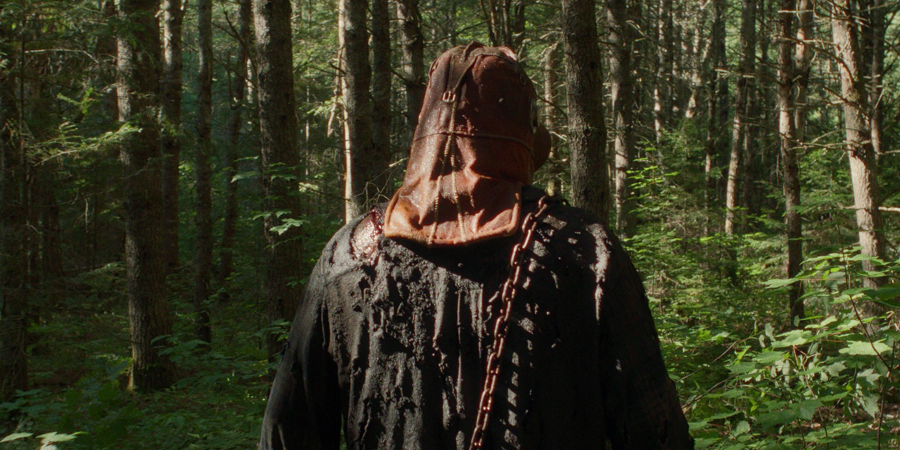
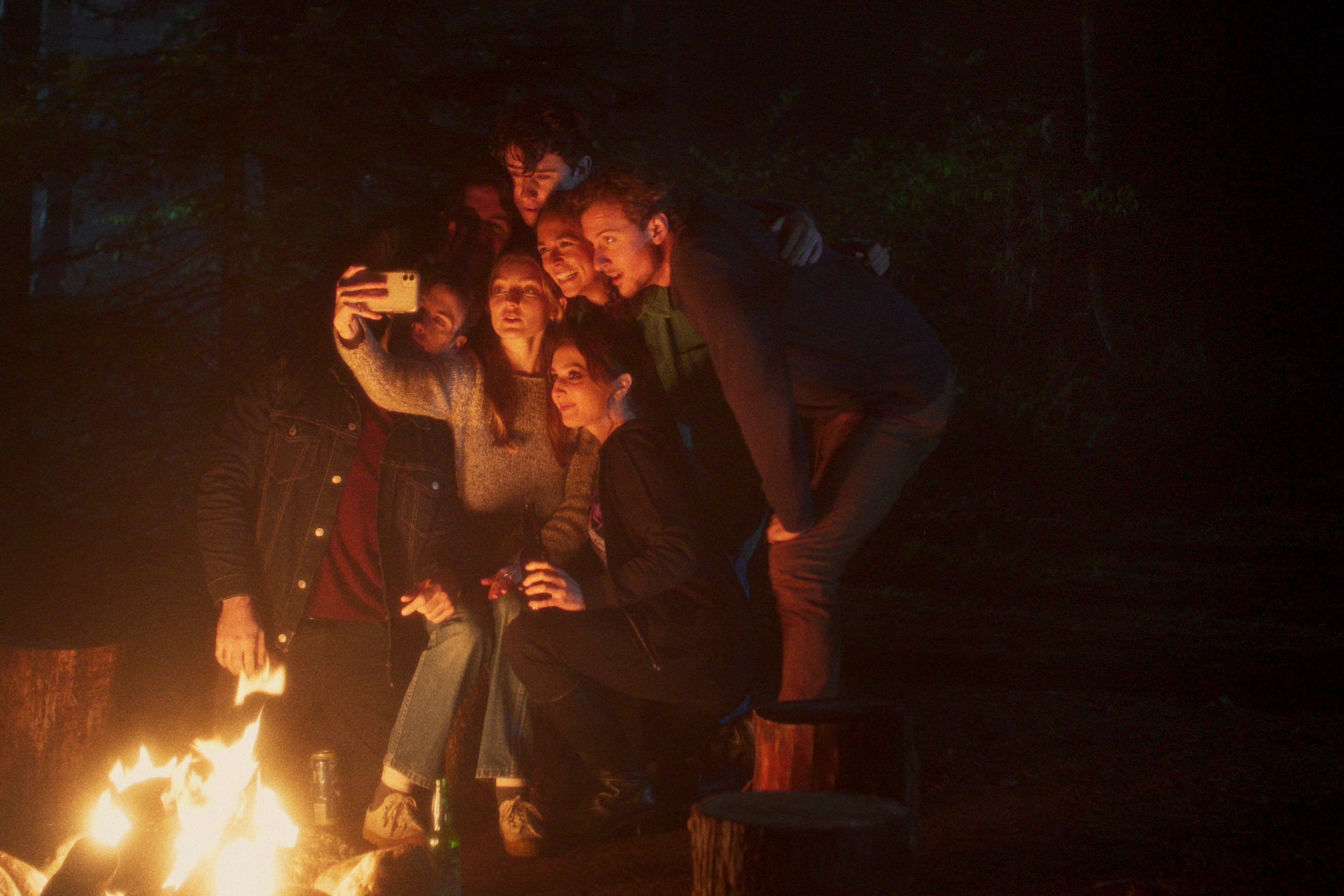
The next night, which I spent with Nash’s recent Canadian slasher, proved to be an entirely different beast. Like Jason Voorhees and Michael Myers before him, Johnny (Ry Barrett) is the strong and silent type, a lost child warped into a stoic golem of death with a trademark mask for a face. Purposefully clunky exposition, delivered around a campfire, lets us in on his familiar backstory; a prank-gone-wrong (à la The Burning) caused the brutal death of an innocent child (Friday the 13th) who rises from his forest grave (Friday the 13th: Part II) to wreak revenge on the descendants of the townspeople who put him there (Nightmare on Elm Street).
Shudder programmer Sam Zimmerman confirmed the bloody connection between In a Violent Nature and Angst in an interview with Variety, acknowledging the latter’s “really revolutionary cinematography” as a reference point for Nash. “I knew he wanted to make this artful slasher that didn’t reject the hallmarks,” said Zimmerman, “but evolved the language of it forward, and gave you a different perspective by tying you to the monster himself.”
Why, then, do I so deeply despise the killer in Angst while wanting to give In a Violent Nature’s Johnny a big tight hug and a juice box? Johnny’s body count is far higher, inflated way above K’s true crime realism by virtue of his supernatural strength and some imaginative, funny kills. The answer I’ve arrived at lies in neither evil man’s actions, but in my own capacity for projection, enabled by one killer’s silence and the other’s pitiful yapping.
K admits a “need” to kill. Johnny, however, doesn’t admit anything, allowing me to assume the best of him as a misunderstood softie. Most horror movies inspire a palpable interactivity in seasoned viewers, goading us into yelling instructions at the doomed victims; we coach the final girl into the attic rather than the basement, complaining aloud when she drops her car keys. In a Violent Nature forced me to take a long, hard look at myself for going the other way—hoping that my boy would gorily triumph over the NPC flesh-bags standing between him and his petty goal. I became Pamela Voorhees, eerily mimicking her dead son’s voice like a psychotic private cheerleader: “Kill her, Mummy…Don’t let her get away! Don’t let her live!”
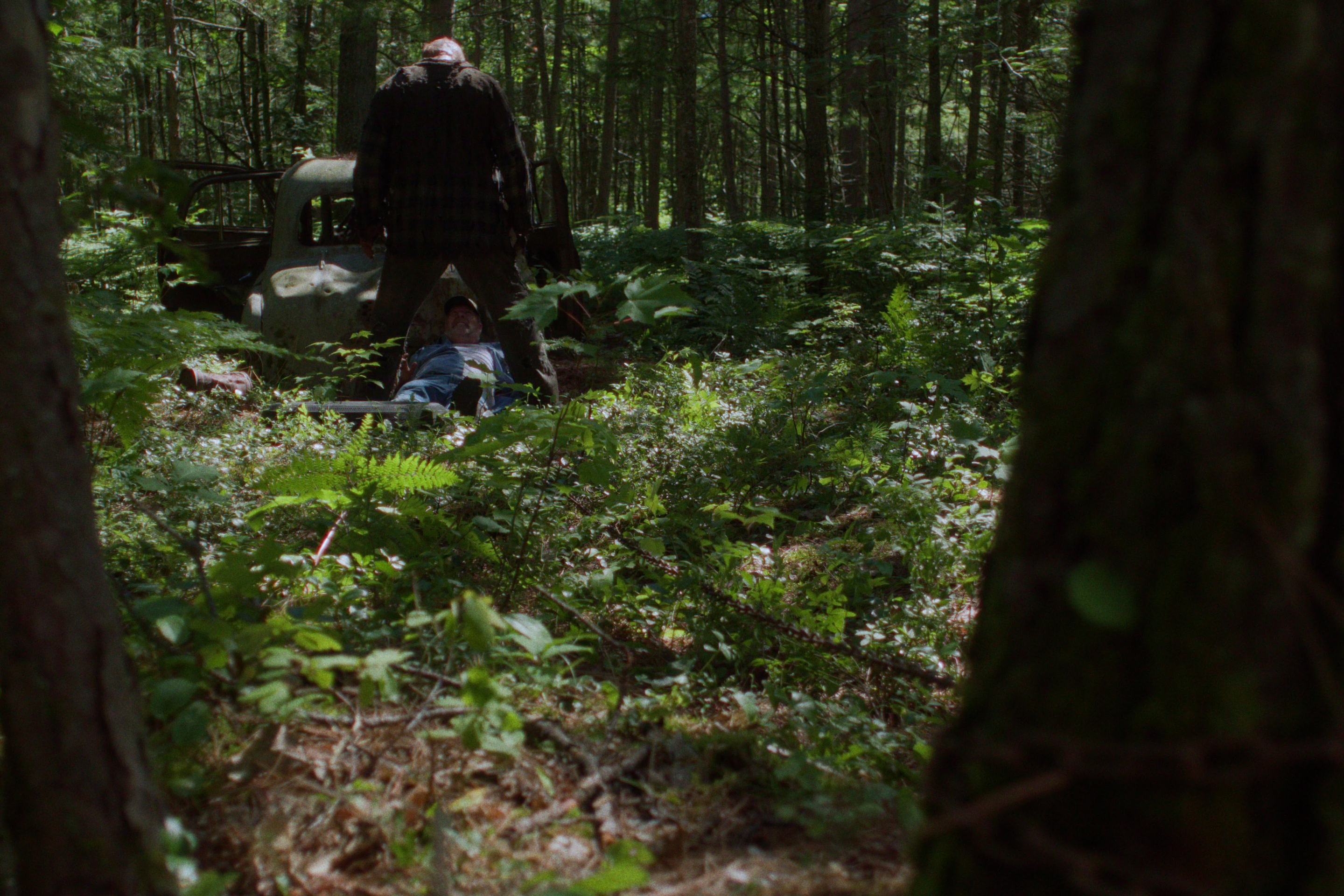
Here’s why I love Johnny so. We don’t see his face until the film’s midpoint, and it’s forever unclear what emotional reaction he derives from his brutality. Despite his beefy physique and complete lack of dialogue, we understand that he’s clever, capable of such bright ideas as pulling a yoga bimbo’s skull through a hole he’s punched in her stomach, before knotting her into a fleshy loop-de-loop. I use the derogatory term ‘bimbo’ here because Nash’s screenplay determinedly refuses to humanise any of Johnny’s victims, reducing them to papery archetypes merely for being in his murderous orbit. The only killing that has any semblance of personal stakes occurs painfully slowly, when Johnny gets hold of a forest ranger descended from one of his attackers from decades past. Johnny paralyses the poor guy, then tests out a log splitter on his wrist and neck, as the machine pushes through skin and bone at an agonising snail’s pace.
Despite these entertaining kills, and a later, long-held shot of Johnny comedically thwacking his final victim with an axe over and over and over again, I’m still unclear as to his motivations, if any. And I’d like it to stay that way. The reason for his reanimation at the film’s beginning is the theft of a shiny MacGuffin—the necklace hanging over his burial site, nicked by the movie’s central pack of bland college kids. Later, he’s distracted by a toy car. When he finally reveals his monstrous, frozen visage, Johnny plays with the car like the kid he is. We observe that things capture the killer’s attention, rather than the more adult catalysts of lust, madness, or vengeance that tend to plague other monsters.
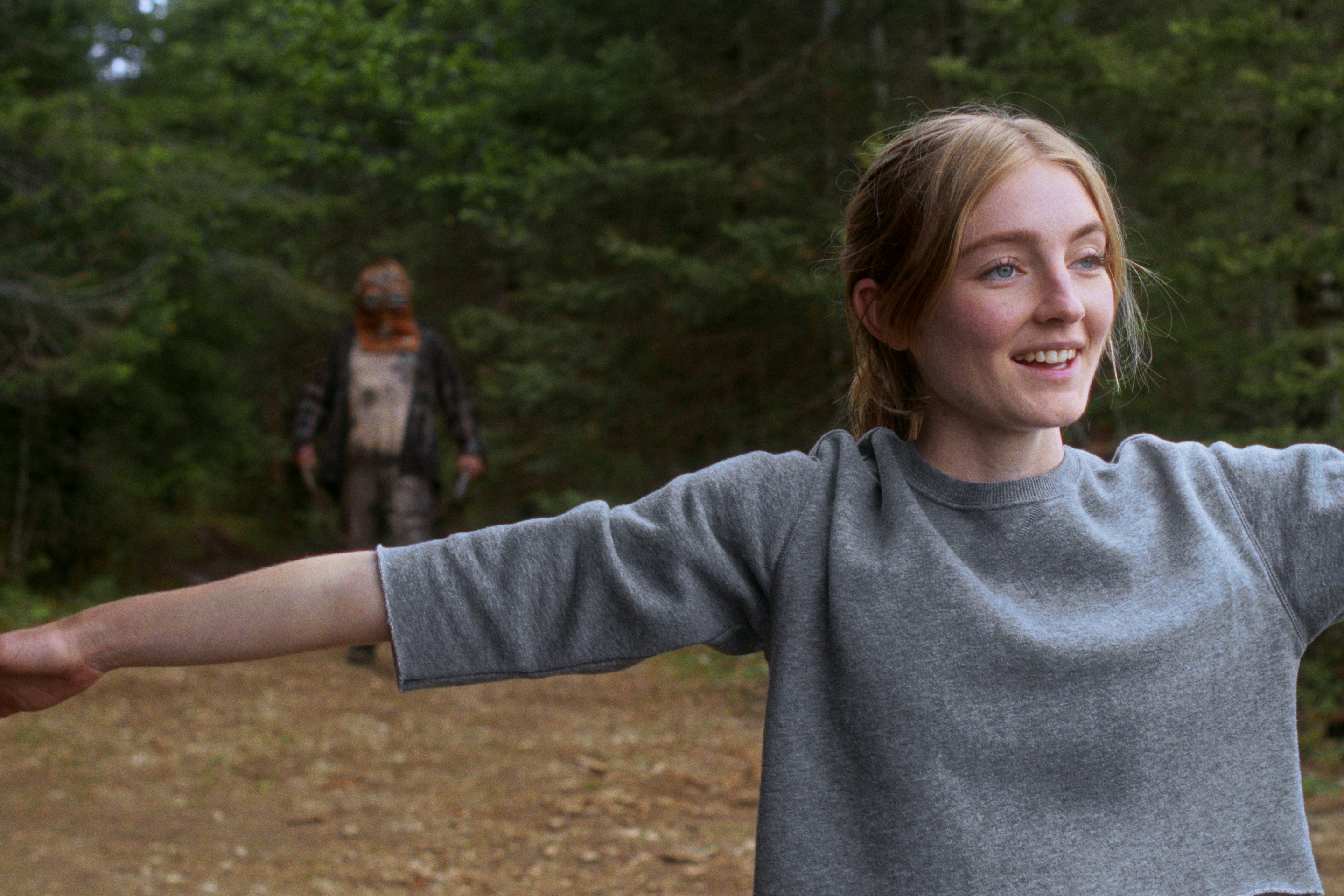
It becomes fascinating, though, how inessential In a Violent Nature’s designated final girl is to this theme. Nash’s camera follows Johnny on long, slow walks through the forest in search of his prize, and it first fastens on Kris (Andrea Pavlovic) as she stands in her cabin window, wearing only a bra. The moment isn’t conveyed as voyeuristic or deviant through Johnny’s underdeveloped gaze, and he never meaningfully interacts with her again. When she’s chased through the forest in the film’s final act, his presence is implied but his footsteps cannot be heard behind her. She’s running from nothing, and once she gets away and into the safety of daylight, Johnny is never seen again.
And boy, do I miss him! I was shocked at my bloodthirsty reaction to In a Violent Nature’s final beats, yearning for the teasing coda that recurs in almost every horror movie. You know it: the survivor is picked up by a well-meaning Good Samaritan who makes a foolish error on the road, leaving them both open to a sadistic final gotcha from the waiting killer. As this kind stranger (Lauren-Marie Taylor) drives them to the hospital to patch up Kris’ injuries, her suspenseful terror matched my impatient delight, with both of us muttering to ourselves, “Any second now…”
But the kill never comes. The extended finale is so overwrought with tension, it can be difficult to really hear the yarn Taylor tells about her brother being attacked by a bear years earlier in the same woods, ending the film with the pat conclusion that violence is merely animal nature. That, like wind or waves, it can torture us without meaning in one moment and hibernate in peaceful nothingness the next.
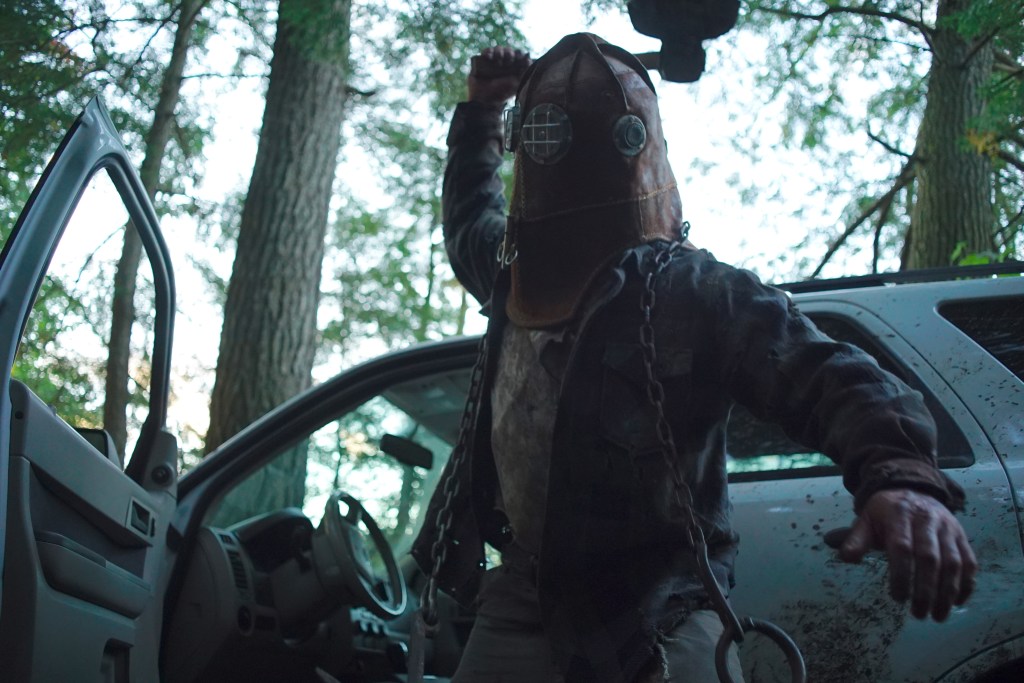
If Taylor (who plays a butchered camp counsellor herself in Friday the 13th: Part II) is to be believed, then it’s in my nature, too, to root for Johnny’s victory—I can’t help it. Nash’s filmmaking decision to closely follow Johnny’s plodding steps bears a potent resemblance to what viewers see when controlling their player in an RPG. The director could’ve opted for an even more ingratiating first-person perspective, showing each hike and slash through Johnny’s eyes rather than some omnipotent, hovering awareness. But the chosen technique’s distance gives us physical space beside, rather than inside, Johnny’s actions—empathy rather than complicity. The audience’s questions about Johnny’s decision-making and feelings bleed from interested detachment into something like support. Hearing ‘our’ traumatic backstory in snatches of NPC conversation, we identify closely with the character with whom we’ve been born into this referential, hyperreal homage of a world. With the elusive mind of a child and the body of an indestructible revenant, Johnny is an antagonist as protagonist, a force of nature.
And our nature, ultimately, is cast as the film’s real evil (at least I hope it’s ‘our’ nature and not just mine, marking me as a particularly over-enthusiastic sicko…). Johnny—and the hungry bear detailed in the stranger’s concluding story—cannot moralise. Nash forgives these elemental forces for being what they are, for surviving as they do, and offers a lens through which we can project our own judgements and meanings upon the bloody consequences. Did yoga bimbo deserve my laughter at her horrific fate? If one of Johnny’s banal victims had thought to simply hand over the necklace much earlier, would he still be compelled to slice their jaw with a drawknife? All I know is that I’d love to see Johnny take a trip to 1980s Germany and smear K into a paste. And that certainly says more about me than either of these equally murderous characters.
In a Violent Nature is now screening in Australian cinemas.
**********
Eliza Janssen lives in Naarm and writes about movies. A cofounder and previous editor of Rough Cut, she now contributes to The Big Issue, Flicks, and more, and worships Tubi and the Internet Archive.
 Rough Cut