

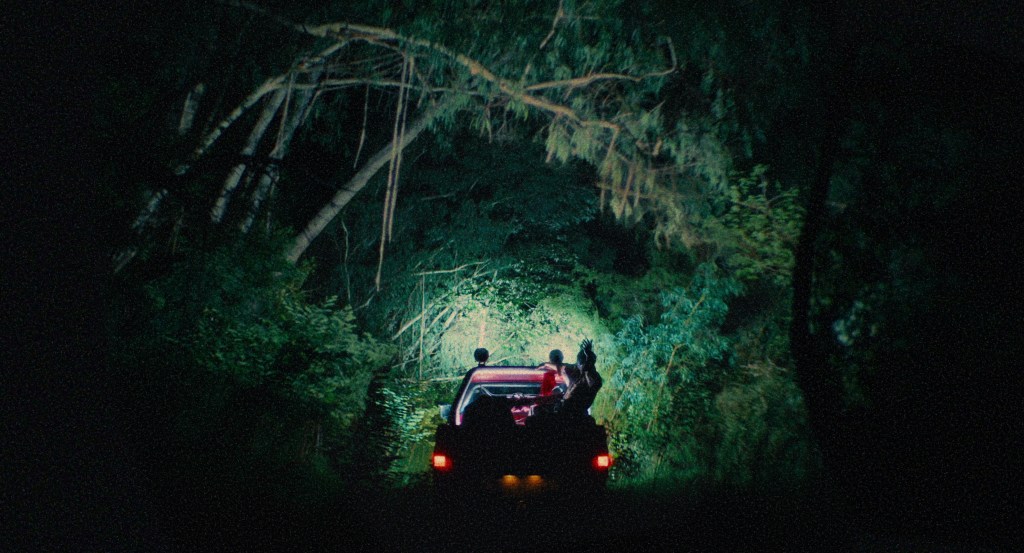
There’s a lot to admire about Birdeater. Good performances abound, the technical craft—sound, cinematography, and especially the editing—are all rock solid, and there is a wonderful attentiveness to visual semiotics, making even the most minor detail feel carefully selected. But the film ultimately flounders, betrayed by weak foundations.
The plot follows bride-and-groom-to-be Irene (Shabana Azeez) and Louie (Mackenzie Fearnley). They have a year’s worth of relationship issues, none of which are being discussed. All of this not-talking has caused Irene to develop intense separation anxiety: she has panic attacks if she doesn’t know where Louie is, which are managed only through the use of dubious pills, and her condition is deteriorating.
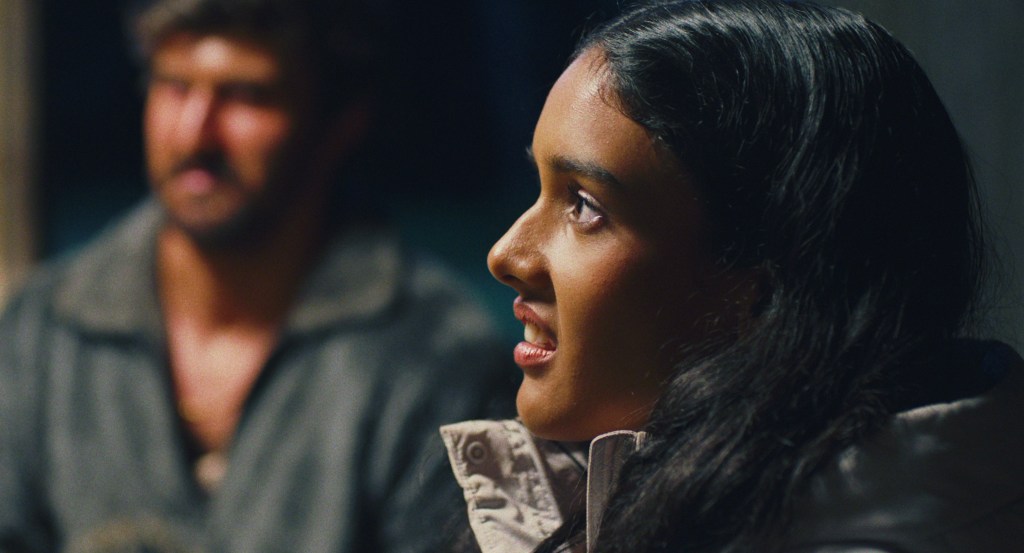
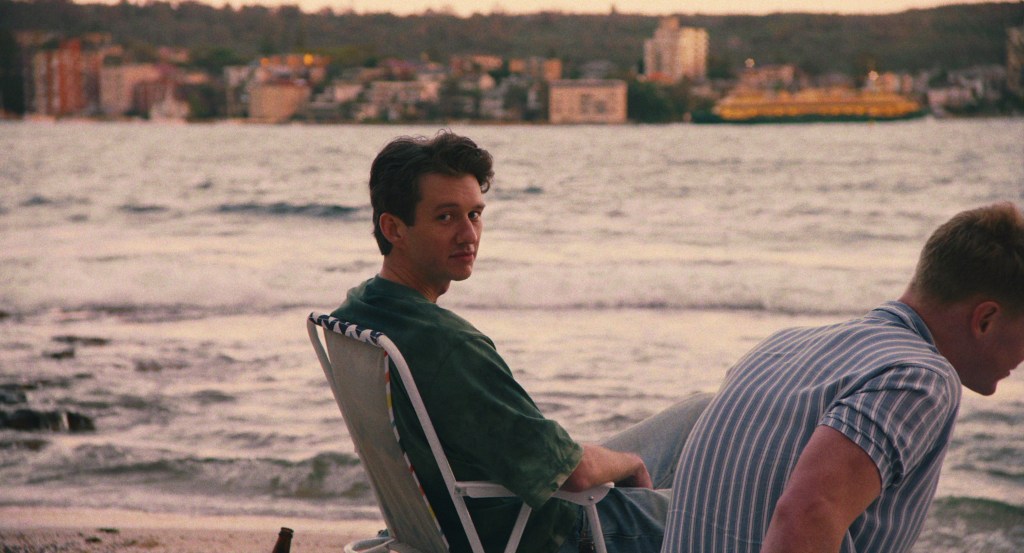
In an effort to be accommodating, Louie suggests Irene tag along for his bachelor party. She demurs, not exactly enthused at the idea of spending the weekend in the isolated country with his friends. And who could blame her? They’re case studies in hyper-masculinity one and all. There’s Murph (Alfie Gledhill), who uses boyishness as a defence against ever taking responsibility; there’s Charlie (Jack Bannister), a ‘wife guy’ in the making, with an inferiority complex and a short fuse; and then there’s Dylan (Ben Hunter—a standout), whose “no bad vibes” t-shirt is less of a mantra and more of a threat.
Louie dismisses Irene’s concerns. “It’ll be super modern. It’ll be fun,” he says, before adding that he’s already told “the boys,” and they are super excited she’s coming. Then, before she has time to dispute this particular claim, he adds—just so she doesn’t feel like the odd-girl-out—that Charlie’s girlfriend Grace (Clementine Anderson) has been roped in, too, closing the matter.
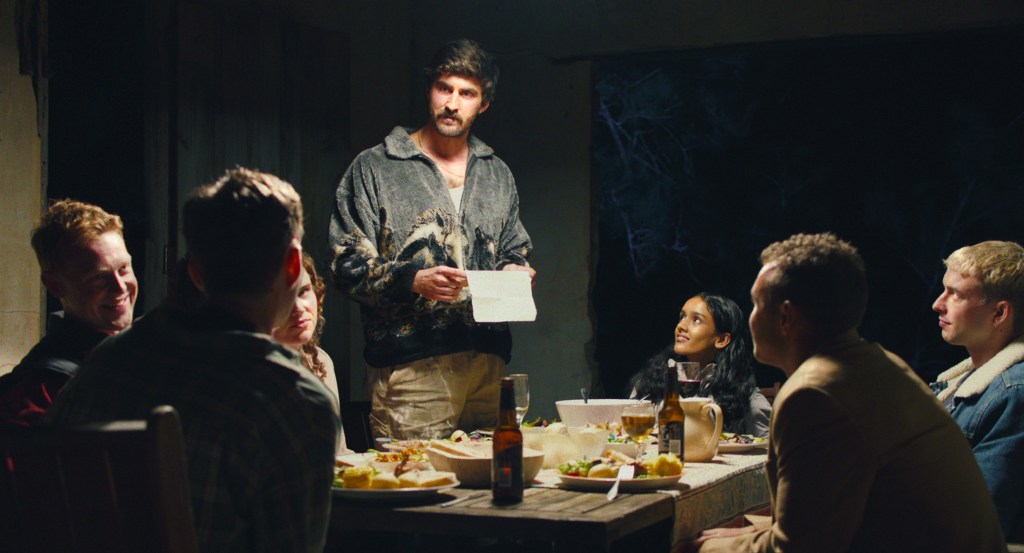
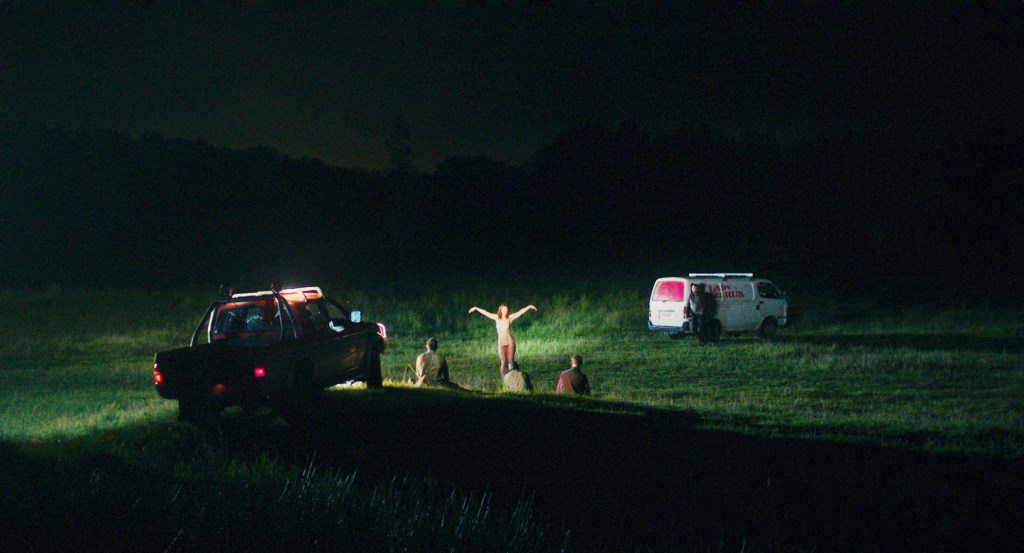
If their strange relationship dynamic doesn’t tip you off, then ominous shots of the bush and the jump-scare blow-up sex doll definitely will: this is a weekend destined to go wrong. The question is not so much whether the cocktail of toxic masculinity, substance abuse, and poorly kept secrets will sour into outright conflict, but when, and how exactly? Will it be when Dylan starts spiking people’s drinks with ketamine and forces Louie to wear a humiliating gimp suit? Or will it be when Charlie snaps after his—Christian, waiting-until-marriage—relationship with Grace is treated like the butt of one too many jokes? Or perhaps still, will it be when, in a moment of heightened emotion, Irene reveals exactly what’s in the pills Louie’s been giving her?
The 1971 Australian classic Wake in Fright (dir. Ted Kotcheff) is a huge influence here; co-directors Jack Clark and Jim Weir are upfront about that fact. The poster for that film is referenced in an early scene from this one. Once you know that’s what they’re going for, you’ll spot echoes, homages, and outright lifts everywhere you look. There’s the film’s overall arc of a normal guy egged on into inebriated mania, ego and superego succumbing to pure, feral id. There’s a whole host of visual motifs: coin flips, jarring match-cuts, a car lurching through strangled-looking bush, just to name a few. The third act even feels like a self-conscious update of the third act of Kotcheff’s film, with the sleaze and grime of early-70s Ozploitation replaced by the neon glow and eleventh-hour backstory reveal of modern elevated horror.
So, what’s new? Well, there are the themes of gender inequality and mental health stigmatisation, examined here through the lens of Australia’s ‘she’ll be right’ attitude. It’s invoked whenever someone tries to bring up how unhealthy Louie and Irene’s relationship is, when Grace tries to voice her concerns about the party spinning out of control to Charlie, or when someone tries to check in with Irene to see how she’s doing mentally. The film observes that this is a slippery way of thinking, because it automatically manoeuvres whoever you’re talking to into the role of humourless narc; it can be deployed by anyone who wants to avoid talking about serious matters or taking a stance (or even responsibility) in morally complex situations. It’s ironic, then, that for how critical the film is of this attitude, it uses it frequently to sidestep developing characters and themes.
Take Irene, for example. She’s nominally our point of view character. It’s her mindset that we’re meant to align with, feeling as if we’re trapped in the bush with these boys. But we never actually learn much about her. She’s English; she probably came here to study and then stayed post-graduation. But what did she study? Why did she stay? Was it for Louie or some other reason? What does she do now? What are her interests? Her desires? There’s her separation anxiety; that’s certainly a unique character attribute. But the fact that so many details are elided with a shrugging ‘she’ll be right’ only draws attention to how few have been included, making these feel less like meaningful character choices and more like handy narrative devices. Living abroad explains why her family and friends haven’t told her to ditch Louie; her attachment style is a hand-waving explanation as to why she’s on the trip (which no woman would agree to go on); and her pills are an obvious Chekhov’s gun, laboriously cocked and re-cocked throughout the film’s first half, then firing repeatedly during climactic scenes.
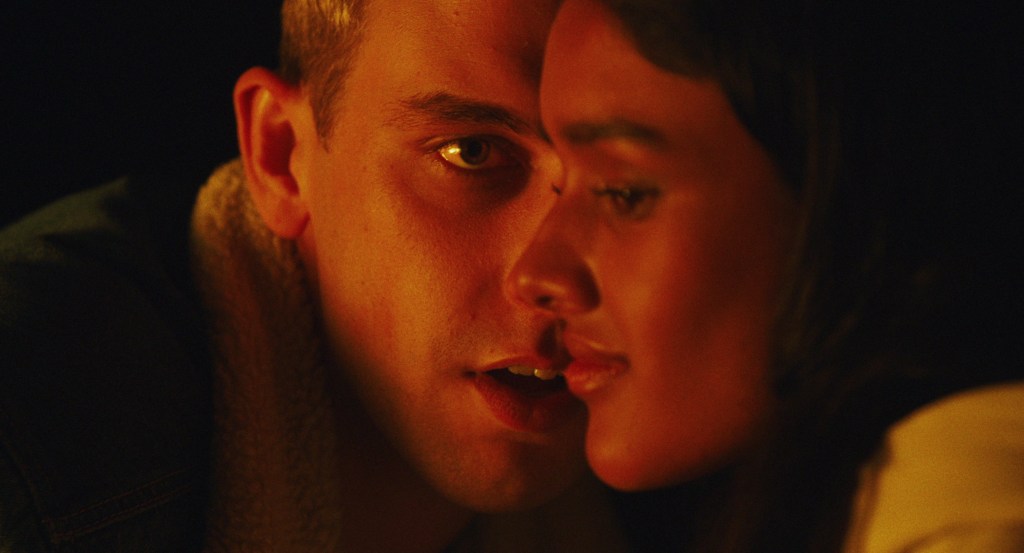
The film feels reverse engineered; it’s jonesing to get to that Wake in Fright descent into madness. The screenplay (which Clark wrote alone, though Weir gets a story credit) is well-paced but ultimately flat. The first 40 minutes are pretty flawless—a study in breadcrumb plotting. Each scene sets up a new mystery or deepens a pre-existing one. But, again and again, it stumbles at revelation and resolution. Every character is as thin as Irene; they have one attribute, maybe two, and they’ve been chosen with plot functionality in mind. And, because every character is so thin, you know the shape of their arcs before they’ve played out.
It’s all the more a pity that the climax is so predictable, and such a thematic dead end, because it’s also the film’s most stylistically accomplished sequence. The camera shakes through darkened bush, following barely-lit silhouettes, the score by Andreas Dominguez lurches between droning and manic jazz, and Ben Anderson deserves lumps of credit for the editing, which is frantic and anxious, quick but never choppy. Several times I found myself deeply unsettled by the imagery, which has shades of David Lynch and Panos Cosmatos (Mandy [2018], Beyond the Black Rainbow [2010]). But, after the high faded, I struggled to attach those feelings to something greater. There’s a hollow ring to it all. The narrative is a shell game; the characters are barely characters at all, themselves shadows at night.
Birdeater releases in Australian cinemas today.
**********
Joshua Sorensen is a writer, bookseller, and committee member for #LoveOzYA based in Naarm. Movies starring Holly Hunter are to him what lamps are to David Byrne.
 Rough Cut