


A group of young delinquents are ripping the hubcaps off a car when they hear them for the first time. Turning the corner, a legion of Harley-Davidsons send a chorus of vibrations into the asphalt, which reverberate through the ground before worming their way inside the impressionable minds of the juvenile gang. One of the youths, known only as The Kid (rising Aussie star Toby Wallace), locks eyes with a taciturn man perched on a bobbed crimson 1956 FLH, and in an instant he has a new dream—one that he’ll see through to its startlingly violent conclusion.
This wordless scene may just as well serve as the engine of Jeff Nichols’ latest film The Bikeriders, a sturdy examination of the ways in which certain brands of masculinity are incepted and then ultimately corrupted. Based on a 1968 book of the same name by photojournalist Danny Lyon, the film charts the rise and fall of the Vandals, a fictionalised Midwestern biker gang that humbly originates as a weekend social club before succumbing to changing times and attitudes as it slowly morphs into a dangerous criminal enterprise.
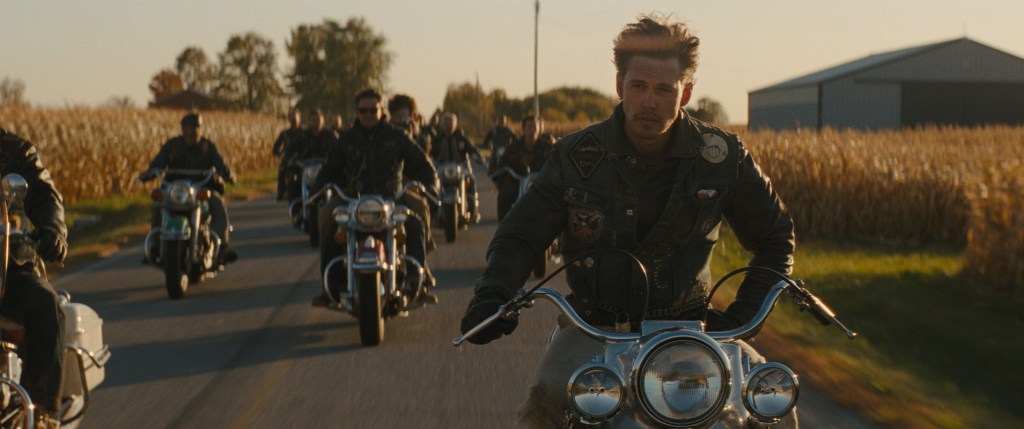
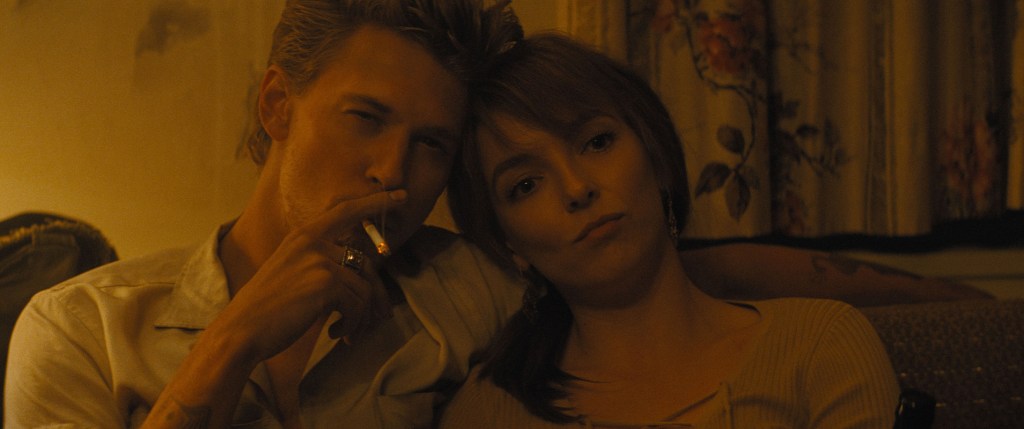
While Nichols ensures to flesh out the film’s ensemble with a wide range of oddballs and misfits, the bulk of its story revolves around a central triptych dynamic, as the brooding Benny (Austin Butler) is pulled between his loyalty to the club by its pensive leader Johnny (a heavily accented Tom Hardy), and a life of safe—if dull—domesticity by his wife Kathy (Jodie Comer, perhaps even more wildly accented).
It’s all familiar territory for Nichols. The men in his movies tend to be many things: drifters, loners, outlaws—but, more importantly, they are fathers, brothers, husbands, and sons. Reconciling the duties that come with their respective lifestyles with what it means to be a man in America has long been a point of interest for the filmmaker, going back so far as his debut feature Shotgun Stories (2007), an Arkansas-set fable of male rage and trauma that explores the possibilities of salvation from a particular kind of generationally-imposed masculinity.
The Bikeriders traffics in similar ideas, but rather than adhering to a hand-me-down sense of manhood by a paternal figure, the men who constitute the Vandals’ ranks seem to have constructed their entire identities from culture itself. A scene early in the film sees Johnny and his family watching a primetime broadcast of The Wild One, a controversial but seminal 1953 Marlon Brando film that was banned in certain territories due to its perceived endorsement of hooliganism. It’s shortly after this scene, where Johnny repeats Brando’s rebellious catchphrase under his breath, that he finally takes the initiative to found the Vandals, with the rest playing out in front of our own eyes.
The premise of a bunch of tough-guy wannabes using movies as their bible is an enticing one, especially given how much of the film is in conversation with its own cinematic influences. The broad genetic makeup of a Martin Scorsese picture is the most potent inspiration here, with Nichols dropping the title card of his film via freeze-frame in a knowing homage to the iconic opening scene of Goodfellas (1990). But while the first hour or so of The Bikeriders makes for seductive viewing, as we watch Kathy become swallowed by a world of chrome and smoke, the movie takes its foot off the gas when it forces Benny to choose between further hitching himself to the rapidly deteriorating club or pulling the parachute and escaping to the suburbs.
While Goodfellas showcases the temptations of the Mafioso lifestyle by following the effects of its spoils on a host of memorably eccentric personalities (Scorsese is better than anyone at illustrating the highs and lows of excess), Nichols’ film fails to recreate that sense of intoxication for the Vandals, whose membership mainly consists of alpha-male clichés and caricatures. There are a few exceptions; chiefly Norman Reedus’ Funny Sonny, an edentulous Californian who rocks up in the second half of the film hoping to don Vandal colours, and recurring Nichols player Michael Shannon as Zipco, an older Army-reject with seemingly nowhere else to go. Most members of the gang, however, lack a distinctiveness that might have helped us better understand their unique machismos, let alone the gang’s seemingly irresistible pull.
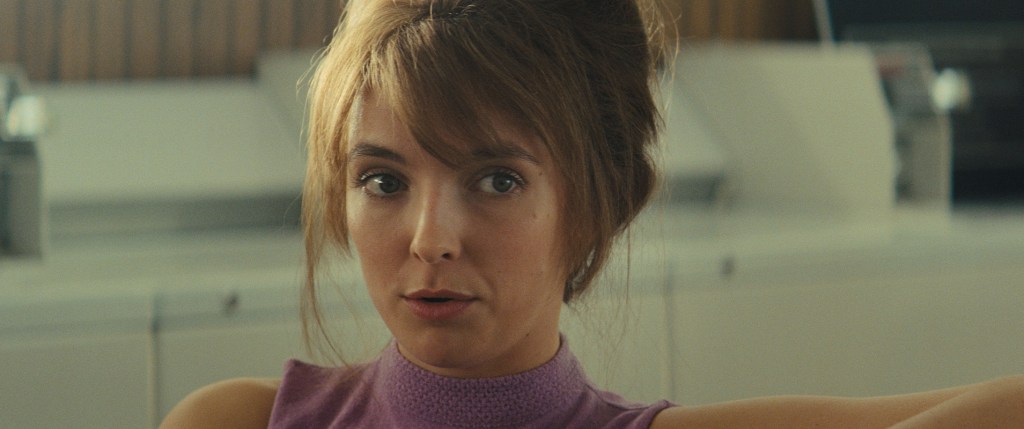
Conversely, the relationship between Benny and Kathy is tender and believable, but never reaches a gear that makes you crave for the pair to leave it all behind and ride off into the sunset. Part of this is a framing device issue, as most of Kathy’s scenes take place in a series of interviews conducted by Lyon himself (played here by Mike Faist), functioning primarily as a way for us to learn about the origins of the Vandals. Comer is able to fill an otherwise thinly sketched character with the sort of details that suggest an entire life offscreen, deploying a perceptive gaze that imbues Kathy with an almost clairvoyant sense of her surroundings. But while this intensity elevates her from the status of passive observer, key moments between her and Butler nevertheless lack a real energy to them, much to the detriment of the overall film.
Perhaps, then, The Bikeriders is best approached as a well-crafted slice of pop entertainment, its familiar beats resonating more profoundly as a greatest-hits crowd pleaser than a richly textured character drama. It is, after all, one of the rare movies currently in cinemas made for grownups, shot on real locations with real people and made with a level of detailed production design that breathes life into every rundown house and dimly-lit bar—an accomplishment that is unfortunately too regularly missing from theatres nowadays.
The film is at its best when Nichols allows his characters to crack themselves open and reveal the bruised souls underneath. The most intimate instance of this is a moment between Hardy and Butler; as other members of the Vandals share stories around a campfire, Johnny and Benny are engaged in their own private conversation—not one of dialogue, but an exchange of looks which makes time come to a halt around them. In the masculine world of The Bikeriders, actions say more than words ever could.
The Bikeriders is now showing in Australian cinemas.
**********
Kevin Bui is a writer and critic from Melbourne. His work has been published in The Guardian, Little White Lies, and The Big Issue.
 Rough Cut