


If Gucci collaborated with undergraduate fashion design students on a feature-length natural-disaster-themed campaign where the brief was “Lord of the Flies by way of Bertolt Brecht” and they poured Laurie Anderson, Daniel Bensi and Saunder Jurriaans into a blender for the soundtrack, you’d end up with something like Ladyworld (2018).
In spite of all these pop-culture evocations, writer-director Amanda Kramer’s arresting low-budget feature is evidence of a unique artistic vision. From unsettling shorts to painterly music videos, Kramer’s past work reveals an assured and consistent style — affected, alienating performances abound, as do preoccupations with female relationship dynamics, eerie domestic spaces, and very good costumes.
All of these elements are used to great effect in Ladyworld, a psychological thriller that sees a group of teenage girls lose their grip on reality after a mysterious natural disaster traps them in a house together. At the Sydney Film Festival, Ivana Brehas spoke to Amanda Kramer about writing, weirdness, and womanhood.
Ivana Brehas: What have you been up to today?
Amanda Kramer: So far, I’ve had coffee and a tiny bit of food. Just enough to keep me going. I’m supposed to be writing, but I’m not right now.
IB: That’s a big part of writing – saying, “I should be writing.”
AK: Thank you for saying that! That is not how most people feel. Most people are like, “You have to set deadlines. and have a method. You have to write on the days you say you’re gonna write.” Some days it’s like that, but some days it’s just fucking not!
IB: Definitely. I studied screenwriting, so I appreciate where you’re coming from. You have to also sit around and take the world in.
AK: You do. You have to think; you have to remember to be still and silent, and take thoughts in. And you have to fail at it, too — you have to sit down and write and have nothing come out, then get frustrated, and throw a pen off your desk and be like, “Damn it!”
IB: Yeah.
AK: I used to write novels, and when you write novels, you need to be writing for 8 hours a day. It’s like a job. But when you write screenplays, you can write for, like, an hour. There’s just hundreds of thousands of words to write for a novel, so if you’re fucking around all the time, it never gets done.
IB: Do you have a preference, between novels and screenplays?
AK: I miss novels. When you’re writing a novel, you’re exercising every corner of your brain. You’re thinking about how a sentence works, about how plot works, about character development, about the width and breadth of story, and about how all of that feels in the beginning, middle and end. With a screenplay, you’re trying to be so entertaining. Not that I’ve ever been entertaining — I’m not entertaining at all, in any way. But you’re just trying to get people to understand it, don’t you think?
IB: Yeah, I really connect with that. I felt really frustrated and limited by the screenwriting course, so this year I’ve been doing poetry and prose and staying away from screenwriting. I felt like I needed a change.
AK: You’ll be better at it when you get back to it.
IB: Yeah! It’s giving me other ways to approach screenwriting. My course was very narrative-focused, and I wanted to try experimental stuff.
AK: I was on a panel once at the London Film Festival, and everyone was talking about the patriarchy, and someone asked me a question and I went, “You know what the patriarchy is? It’s the narrative structure. Like, women don’t think narratively. If you want to be a feminist in work, you should be more experimental and avant-garde, because we don’t think in the traditional narrative structure – we’re more surreal. We should throw away the plot design and all be like Maya Deren.” And everyone on the panel was like, “Shut up!” [laughs] Yeah, I’m not trying to, like, direct a Marvel movie. But some women are.
IB: I had a question for you about that in my notes! About feminism and linearity, and traditional storytelling being embedded in a patriarchal structure.
AK: I think when you write linearly, you’re just trying to make sense, and when you get wrapped up in your mind over ‘sense’, you lose so much else that creates story. To me, story is not just ‘who what where when’ – all the things you learn in school; these bullet-points and blockers of “This is what plot is; this is what theme is; this is what character is.” We’re in the 21st century. We’ve been doing this for so long now. We’ve been doing plot for so long now. Like, before the Bible. We can all stand to be a bit more non-linear and surreal. It’s harder in movies, because when people have to look with their eyes, they’re not always as trusting. If they start to get bored, then they’re like, “Oh, that means it’s not good. I want to look away and check the time.”
IB: Right.
AK: But I would posit that you could be watching the most exciting thing in the whole world and still want to look at your phone. That’s just what life is now. I don’t know anything that holds anyone’s attention. So you just have to do the thing that’s the most intrinsic to yourself and not worry about, “Am I making sense at every point? Is everyone following the logic from A to B?” I don’t think you need to hold the hands of your audience. I think they can be given more credit.
And if you’re a good filmmaker and you understand visually how to represent something, it’s okay if someone is like, “I don’t remember that character’s name,” or, “Were they sisters or cousins?” It’s like, does it fucking matter? Maybe it does – just not to me. I only write about the things that I care about, and I just care about the interactions between people, so I’m not that worried about, like, “Does everyone understand what everyone’s doing here?” In the early days of showing Ladyworld, people would be like, “Wait, it’s a birthday party?” and I’m like, “Yeah.” And they’re like, “And she’s how old?” and I’m like, “16.” And they’re like “Ohhh! I didn’t know that.” And it’s like, but does that make it a better movie, now that you know?
People have been trained to watch a certain way, and it takes a lot of work to un-train them. You have to be diligent about it, like Buñuel or Lynch — you have to be like, “I’m weird the whole way. Trust me or don’t trust me.” I think everyone should be a lot weirder.
IB: I agree.
AK: Just have a year of being weird, and see if it pushes art. See if it pushes the boundaries of capitalism and consumer culture and superhero movies. If everyone just agreed that the next superhero movie was gonna be the weirdest thing ever — just one! Just one! What could happen? What if they made a Pirates of the Caribbean movie and it was just weird? No one would die.
IB: My friend’s 16th birthday party was a weird night. Ladyworld really reminded me of it.
AK: [laughs] Oh, no!
IB: It was all girls; no parents in the house; people were drinking for the first time. It was a weird dynamic — the only thing we all had in common was the birthday girl. There were some kind of mean girls who separated themselves from the space, and marked their own territory. People got drunk; things got kind of out of hand; a girl got a knife from the kitchen at one point. If we had gotten trapped in that house… it’s not that much of a leap.
AK: I know. You think you’re writing a totally psychotic, surreal nightmare, and then every woman you meet is like, “You know, I went to a party like that once.” I had an experience like that when I was really young. I knew a girl who was, like, the last bloomer — she was still very childlike, and she had this antique doll that she used to sleep with. She went to sleep first, and when she was asleep, we were all like, “Let’s play a prank with the doll.” We didn’t want to hurt her; we didn’t want to fuck with her — we were just little shits, y’know? We took the doll out of her arms while she was asleep, and one of the girls at the party was like, “Okay, we’ll put tape all over the doll’s face, and then we’ll draw all over the doll’s face, and when she wakes up she’ll think that we ruined the doll, but we’ll tear the tape off and she’ll see that the doll is fine.” And everyone, immediately, is like, “Great idea.” [laughs] I mean, what the fuck is wrong with us?
So, we cover the doll’s face with tape, and we get markers and draw all over it, and then we wake her up and she screams. Like, tears and screaming — it was so sad. And then we’re like, “No, look, your doll’s okay,” and we start to peel off the tape, and of course the marker had bled through the tape, and we ruined the doll. I’ll never, ever, ever forget her mother coming to pick her up in the middle of the night, and the feelings of shame and sadness for this girl who was clearly just, like, nice, and didn’t deserve that. And we just did it ‘cause we were like, “Well, we’re not into dolls anymore. We’re women.” It’s so dumb. She probably thinks about that night and is like, “Those were the meanest people ever.”
IB: Aw.
AK: I hope she sees Ladyworld and sees how sorry I am. ‘Cause I am sorry.


Left: Annalise Basso (‘Piper’) and Tatsumi Romano (‘Amanda’). Right: Zora Casebere (‘Mallory’) and Maya Hawke (‘Romy’).
IB: Was Ladyworld originally conceived as a film? It’s very play-like, and you’ve written plays before…
AK: It was always supposed to be a film — I just don’t think I know how to write films. [laughs] So I just write plays and shoot them. It’s really lazy, actually. But I set it up like a stage because that’s how I can visualize it. The first day on set I was like, “Okay, everyone, you’re gonna sit at this long table, but you’re only gonna sit on one side of the table, and you’re gonna face the camera,” and all of the girls were like, “But no-one sits at a table like that.” And I remember thinking, But if you sit on the other side of the table, I’ll see your backs. I just thought it would be cooler if they all sat on one side, and then I wouldn’t have to do coverage and shoot around them. So it ends up looking like a play — but it was always meant to be a movie.
IB: It makes it very painterly, as well.
AK: Thank you. I take that as a compliment.
IB: Definitely! You’ve said that table scene was referencing The Last Supper…
AK: Yeah. Who’s in The Last Supper, by the way? Do you know? I don’t even know.
IB: Uh…
AK: Is Jesus there? Jesus is there, and then there’s, like, his other guys, right?
IB: Yeah, it’s the… apostles. The disciples?
AK: Not the apostles. The disciples. They’re different! Who knew?
IB: Are they?
AK: I don’t know. Apparently. But I think Christian iconography from that era, especially in paintings and statues, is the most evocative art in the world, ever. The way that they pose Christ and Mary and angels and saints and shit — I think that’s the best way to pose actors. It’s the most dramatic, overwhelming, memorable… I don’t know. It feels like ecstasy. It’s calling back to something so otherworldly. So to see them sitting there, in their posture, it just felt right.
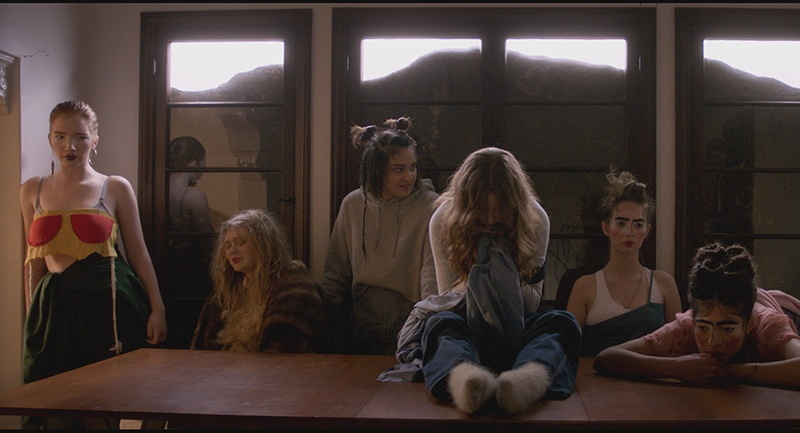
Still from ‘Ladyworld’.
IB: It’s a really awesome cast. I know you didn’t really do auditions – you’ve said you’re “post-casting”, and that you think casting is bourgeois.
AK: [laughs] Yeah, I think casting is bourgeois! I said that, and I believe it, but it’s funny to hear someone say it back to me. Yeah, I don’t really get it. If you’re actually lost, and you want to find an actor that you have no preconception of — someone you want to discover, and you’ve never seen their work, and you don’t know anything about them — sure, audition them. But I don’t know if you’re gonna get what you want out of it. I don’t know that there’s that much magic in auditions. I think that’s a bit of a myth. I prefer to just spend time with an actor. And it takes a lot of work — you have to meet them for coffee; you have to meet them for lunch; you have to meet their parents sometimes. I was meeting so many people’s parents. Eventually you just know how to cast them, and you don’t ever need to see them read a line. You just feel it in your bones. [laughs] I sound like an idiot. And when I said it was bourgeois, that makes me sound like I’m crazy, but I think it is.
IB: No, I get that. I’ve done a bit of work as a casting director, and I’ve done it because I love being around actors, but I find the system really frustrating. I’d love to operate like that. In auditions, I get a sense of whether they’re the right person just from chatting to them before they start actually acting.
AK: I have the problem where I think everyone is right for the role, and then I’m like, “You show me that you’re not right.” I don’t really have many preconceived notions of what my characters look like. But I’m friends with so many actors, and they tell me their experiences of going into castings for, like, 11 seconds, and being told, “Thank you.”
IB: Yeah, it’s horrible.
AK: Like, oh, they just didn’t want someone with brown hair. I just don’t even invite that into my realm. I call you and ask you out if I think I want you, and then I spend time with you. If you suck as a person, then it’s not worth it, and if you rule as a person, then I talk to you about the role, and then if you get the role, we move on to the next thing. Although sometimes you get to set, and they open their mouths to say the lines, and you’re like, “Oh…” It’s cool to be spontaneous with people, but then you’re stuck with them. It’s a gamble. I’m happy to gamble. I don’t suggest it for everyone, but I do think people should do it more.
IB: But even for the actor to know that they’ve been approached as a human, rather than a prop, would change how they feel on the set so much. I think that’s really valuable.
AK: Every once in a while I’ll talk to someone and they’ll say, “Oh, I have this script about a female cop and I really want Sandra Bullock,” and I’m like, “Why doesn’t Sandra Bullock have to audition, and all of these other actors do? Because she’s been in so many movies? She might not be a very good cop in your movie.” People don’t think like that. They think, “Well, she’s a famous actor, so she can do it.” But I feel that way about actors in general. I’m like, “You’re actors. You can do it. Now I just want to know if I like you.” All I’m doing, really, is like, dating all of them. It’s a lot of dates. [laughs]
IB: How did you decide who was going to play which role? I’m thinking about Piper being a redhead, and that whole redhead-villainy thing…
AK: Definitely. When I met Annalise [Basso], I was like, “Oh, a fucking little redhead meanie!” And she’s the nicest person alive. She is legitimately the sweetest. Ryan [Simpkins], who plays Dolly, has a really sweet face, and she looks like a doll in real life. She has a little doll nose. I knew that she would be good because of her look. But in general, I just cast based on their energy. I knew I wanted a certain type of actor for each lead, and I like tropes like that — when the cute girl is smart, and the redhead is mean. It’s good to play with that stuff.
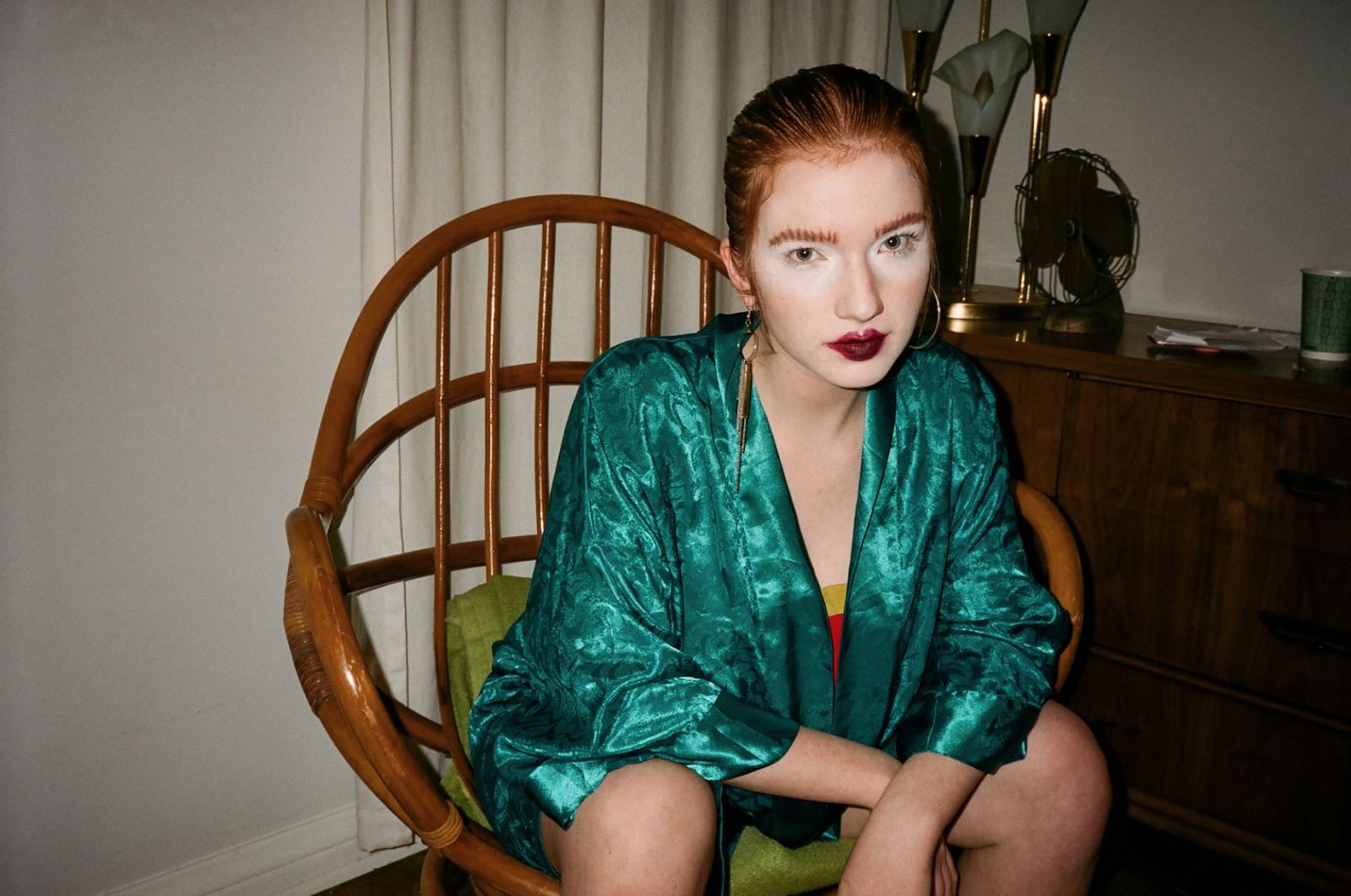
Annalise Basso (‘Piper’).
But with that many girls, the main thing is that they look different from each other — different faces, hair, and backgrounds — and that they represent different lives having been led, so that on-screen you can sense their differences. That, visually, does so much of the work for you. And obviously, their fine acting carries the rest of that weight. But if you just get, like, four brunettes, all the same height, and you’re like, “Here’s a hairclip for you, and a pink sweater for you,” you’re putting the audience at a disadvantage, and you’re also not doing anything for a diverse cast. People want to see all different kinds of faces and bodies. Actors are just like dolls — versions of ourselves. We want to see the doll that represents us. And that’s really meaningful in culture now.
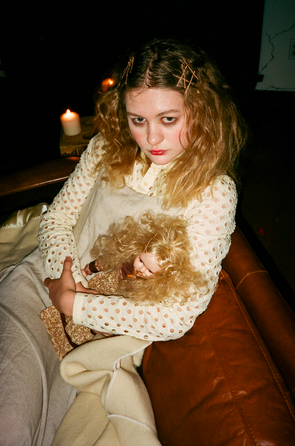
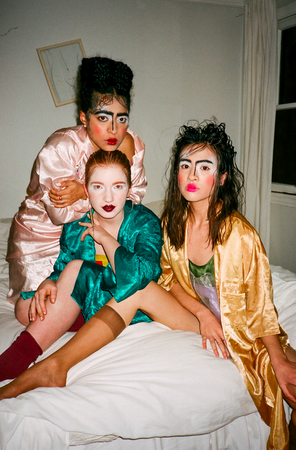
Left: Ryan Simpkins (‘Dolly’). Right: Zora Casebere (‘Mallory’), Annalise Basso (‘Piper’), and Tatsumi Romano (‘Amanda’).
When casting young women, especially in Hollywood, you’re going to get a lot of cute little brown-haired girls, and a lot of pretty little squeaky-clean blonde girls, and it’s your job to suss those out and find the best of the best. You have to put it to yourself to be like, “People look different. Women have different kinds of bodies. They have different kinds of faces.” You’re always going to get someone who is generically pretty, because that’s the business, but beyond that, it’s your job to round out the cast with people who represent other people, and not just four cookie-cutter versions of the same person. I chose my cast because of their abilities, but when I put them in a room together and felt how different they all were, it was a good feeling. It felt like a success on that level.
IB: The costume and makeup in the film is amazing, too.
AK: So good, right? I can’t take any credit for that. Jillian [Cainghug] is my costumer. I’ve known her for seven years. We’re very close; we’ve worked together on everything, and she just gets it. I’m always like, “Put them in something strange, put them in something memorable, put them in something editorial. Make sure that every time the character walks in you immediately get it — you’re like, ‘Okay, she’s kind of sporty, she’s kind of sexy.’ Pick colours that represent feelings.” She does a very deep dive on each character, and then we create a full story so that all the costumes seem to match together, but they’re each tailor-made for the character themselves. She’s a genius.
Tania [Becker] is my hair stylist, and I just sent her Fellini; clown stuff; really strange avant-garde runway hair. Same with Carson [Stern] who did my makeup — I sent her face paint and all different kinds of sad, old, caked-on French clown makeup. By the time they’re in the final act, their makeup is not just their ‘play-acting’ makeup — it’s, like, decaying on their face. So we’d put the girls in full hair and makeup, then start making their hair greasy and make it seem like it’s falling apart, and smear their makeup. It was a pretty brutal process. They look terrifying. I think they all looked really good. Maya [Hawke] in particular — she plays Romy — I think she looks really special. We worked pretty hard on that character design thing of the drawn nose and eyebrows, and when the girls had it on, it just seemed right.
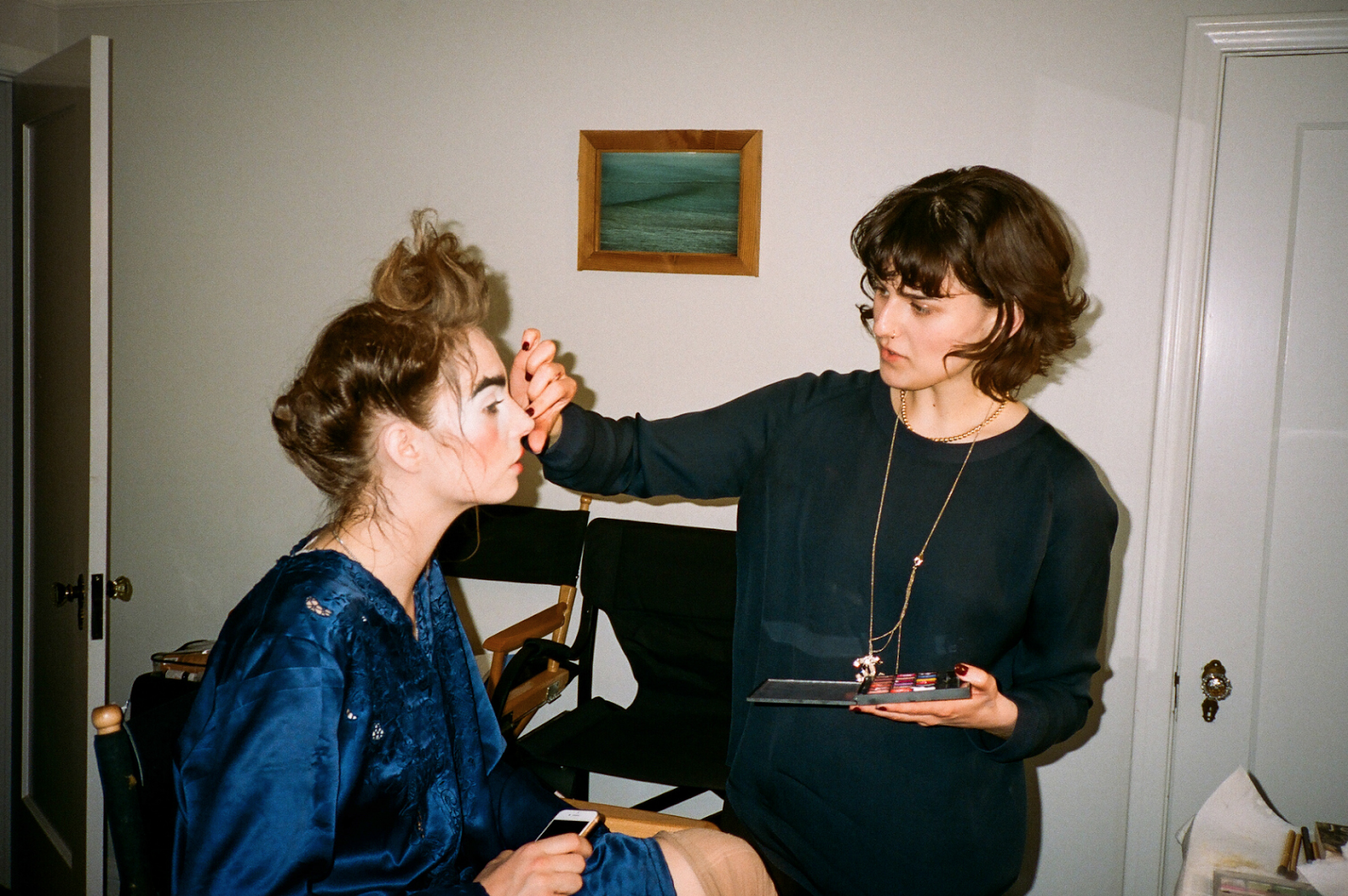
Maya Hawke (‘Romy’) and makeup artist Carson Stern.
IB: I think it’ll be in contention for some people’s Halloween costumes this year.
AK: I really hope so. What a dream, to be a Halloween costume!
IB: And it really feels like runway stuff, like you were saying. The costumes and the makeup felt like things I would see online. It’s the kind of stuff young people are drawing from — this random wealth of things from the internet to create looks.
AK: No-one looks interesting in movies anymore. Everyone has just dumb jeans and t-shirts on. Which is fine — I’m wearing jeans and a t-shirt — but I don’t know, it didn’t seem right. It usually doesn’t seem right to me. I just think about Freddy Krueger — he looks so memorable to me. Why does Freddy Krueger get to look memorable, and not anybody else? It’s important that costumes are evocative and memorable. Now, unless someone is doing something period, or sci-fi, or something for superheroes, you get, “Just make them look normal.” Like ‘regular people’. And that feels wrong somehow.
IB: Like they’re approaching it from a place of being functional and not artistic.
AK: Yeah. Like, look what you’re wearing. If someone wore that in a movie, people would be like, “Oh, she’s quirky.” Like, no! People just wear weird stuff. People are just people. And yet in movies, people just want to bland everyone out and homogenise them. It’s strange, isn’t it?
IB: A while back, I made some earrings out of my wisdom teeth…
[I show Amanda my tooth earrings.]
AK: Oh my God, that’s huge. That’s a wisdom tooth?
IB: Yeah, with the root and everything.
AK: Those are great. Do people think that you’re scary and goth, or do they like ‘em?
IB: It’s divisive. Some people have been like, “Oh, I’m getting mine out; can you make them into earrings?” and other people think it’s disgusting.
AK: I think it’s cool.
IB: Thanks. So, yeah, I appreciate your approach to costume, because it’s truthful.
AK: I screened the film at TIFF and there were so many teenage girls there, and they all looked so much like the cast, and it felt normal. It felt right. I was like, “Oh, yeah, teenage girls look weird now.” Teenage girls look stupid now! I think that’s another thing. They have a bunch of stupid shit on, ‘cause they’re experimenting with style, and I think that’s cool. I think about what Molly Ringwald used to look like — she looked crazy! And that’s so interesting. That’s what made everyone fall in love with her — she was so idiosyncratic in the way that she looked. When you can do that with characters and actors, it’s like it has the opposite effect — it feels more relatable than when they look like ‘regular people’.
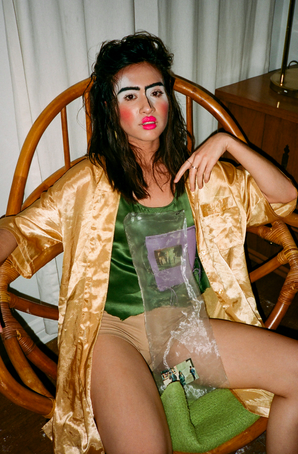
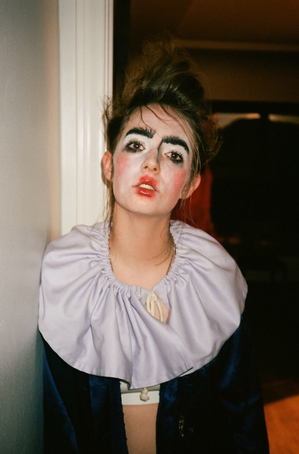
Left: Tatsumi Romano (‘Amanda’). Right: Maya Hawke (‘Romy’).
IB: So, you’re working with a cast of young women, and it’s an intense film, psychologically. How did you create a safe and comfortable environment on the set for them?
AK: I mean, they were just partying the whole time. They were so happy. They arrived so light, and genuinely cheery — we’d shoot something incredibly intense, I’d call ‘cut’, and they’d just be laughing and talking. It was so easy for them to be real, happy, supportive young women, and then step right into something that was incredibly intense and dark. It was, like, the happiest set, and I think it’s ‘cause the girls needed that air. You shoot an intense scene, and all of the breath gets sucked out of the room, so when you’re not shooting, you just want to be eating candy and joking around.
And I encouraged everyone to be friends — right off the bat, I said, “Come early, meet each other, spend some time together, like each other — ‘cause we’re about to do something that is really chaotic and hard, and if we’re all friends, I think we’re gonna have a better experience and make a better movie.” All of them became really good friends. They would arrive together and leave together, and spend their days off together. I’d be like, “Don’t you guys want to get away from each other on your day off?” and they’d be like, “No, we’re going out to lunch!” [laughs] It was really easy to be on set with all of them. They made it calmer for me. Like, I’d be stressed out, and I’d go in the makeup room, and they’d be dancing, and I’d feel better. I think they’re the ones that gave me the safe space. They set the tone for the whole crew, and the crew was really happy.
IB: That’s really nice to hear, especially for women that young — and doing physical scenes; fighting, and sexual scenes. It can be easy for women to be brought onto a set with no communication, no intimacy coordination, nothing discussed.
AK: On this set, one actress would say, “You can just push me really hard,” and then the other one would be like, “Okay, how hard?”, and they’d say, “Just push me as hard as you wanna push me,” and I’d have to walk in and go, “Wait, wait, wait, wait, wait. No-one’s pushing anyone that hard!”
But that’s the good thing about becoming friends and being communicative — as soon as you set up a space where everyone can talk about that, the actress feels more comfortable and they’re like, “You can touch me, you can push me, you can toss me around, I’m okay with that,” and the other actor is like, “Great — how hard? Can I hold you here?” and it becomes very easy. It’s just about talking and not presuming.
Young actresses are already set up to do that. They’re in the generation to be asking and communicating, and so they handled all of that. I was only there to be like, “Don’t hurt each other too much. Don’t touch each other too much. I don’t want anyone to get actually hurt.” They were all like, “Punch me! Knock me around!” [laughs] They were very much in it. And I think because they’re all the same age and working together, it just felt comfortable for them.
IB: Ladyworld says a lot of things about women’s safety, rape culture, and that looming presence of ‘The Man’ — it’s got a really interesting perspective on rape culture.
AK: I think all women are scared of being raped, and they’re scared of being raped their entire lives, from the second they realise that they have a vagina and they understand what a vagina is, and they understand what a man might want from a vagina, and they understand what their physical body is in opposition to a man’s physical body.
The day you realise that — and for some people that’s seven, for some people that’s 14; it just depends on who you are, where you live, what your environment is — your life is never the same again. And you’re self-conscious of it, you’re self-aware, you live in relation to other people because of it — you walk down the street and think about it; it’s in the back of your mind; you walk to your car with your keys between your fingers. Once you know, you never don’t know. Once you understand what rape is, you never don’t know that it’s possible. It lives inside of you, like anything that looms. And that’s really sad. A few of us are lucky, and get to live a whole life without being assaulted, and some of us are not fortunate enough to have that kind of safe life.
Everyone has been a victim of something — men and women, truly, at this point — but I think in our teenage years, when we’re becoming really aware of it, we don’t know what to do with the fear. We don’t know how to talk about it, and we don’t know where to place it, and it’s like your brain terrorizes you even before a man does, because you’re so conscious of it. That’s a heavy burden. And it makes people scared of men, it makes people scared of situations — that’s what I wanted to talk about. Other films tackle the subject head-on, but I think of it having a dreamlike quality — like, I’m always thinking about it somewhere in my brain. It’s a constant presence, like a ghost.
And that’s sort of what the man in the basement is — the conscious energy and understanding that we are the gender that is the most in fear of that, unfortunately. And that’s not going to change. We can get more women to speak out, and we can get more men to be safer, more respectable, more honorable, but the fear is just… It’s like being afraid of your plane crashing. It’s like being afraid of dying. It’s a fear that lives with us. We can live a very safe life and still have that fear. Discussing that felt really important.
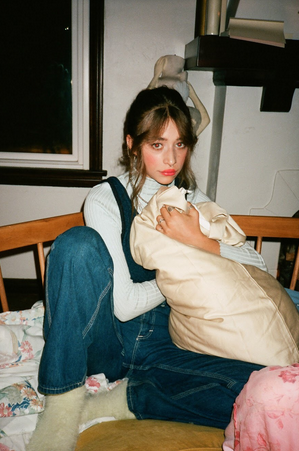

Left: Odessa Adlon (‘Blake’). Right: Ariela Barer (‘Olivia’).
IB: You’ve said all these really valid and important things about young women, and loss of innocence, and fear, but you’ve also often cited Roman Polanski and Woody Allen as references — they’ve been either accused or convicted of preying on young girls, and I struggle to reconcile those things.
AK: You know, I’m also not a social worker, and I think it’s important to note that. I have my personal taste; I have my heroes in art, and they’re not my heroes in life — they’re not my friends, or even my peers, or my coworkers. But some of them have made some of the greatest imagery of all time. I worry that when we start to excavate the art of men, we lose the art of life. We won’t have Gaugin, we won’t have Picasso… I mean, we really won’t have anyone, which is tough to deal with. If we’re looking for men who are perverts, they’re all perverts, and if we’re looking for men who are harassers, many of them are harassers. If we’re looking for men who are rapists, molesters, assaulters — there goes probably the 14th, 15th, 16th, 17th, 18th, 19th and 20th century in art. [laughs] So I like to look at the art as its own self and its own piece, and I don’t speak about the men as they live.
I can only say that when I first saw Chinatown (1974) or Repulsion (1965) or Stardust Memories (1980) or Deconstructing Harry (1997), my life was changed by the art, and I wasn’t in a position at that age to think about the man that made it. I was only in a position to look at the thing itself. The thing itself made me an artist, and I hold on to that. If someone said, “Do you think Roman Polanski should be let back into America and be making movies like your movie,” I might have a different answer. [laughs] But I can’t lie and say that I’m not influenced by their work. I think in order to be sane and fair, sometimes we have to separate the art from the artist. Like, I’m not the nicest person ever, but I hope people like my work and don’t have to worry about liking me, or vice versa.
But I see the conundrum, and I know that in our times it’s very difficult, ‘cause we want to take certain punitive measures against people that we feel have wronged other people — and I don’t feel like we shouldn’t. I’m just highly influenced by these people, and I don’t want to take that away from them. They have their own thing going on as men in the world, but as artists, they’ve given us some really special things that have led to other men and women making things, that have led to me making things. Sometimes you’re an artist before you’re a person — and that’s really fucked-up and unfortunate, but sometimes it’s just true. Good people do bad things, bad people do good things, and that’s a hard thing to reconcile.
IB: I appreciate you being receptive to that question. I was born in 1998 — I didn’t grow up with these films, so I haven’t had that experience with them. But there are other films that have been very significant and influential to me, and I don’t know what would happen if I found similar things out about their creators.
AK: It’s hard. But it’s something that we all have to deal with — abuse of power comes as no surprise. Men and women abuse power, but men in power tend to abuse power and women, if they’re going to be abusive. So it’s hard. But art is also separate; art is also life-giving; art is also inspiration for more art. Every once in a while, it is good to check in with that and realise that, because some of our greatest minds have been our biggest motherfuckers. And that will be true forever, I think. Especially the artist’s temperament — it brings in a lot of people who are egomaniacs; people who are unchecked and run amok. It just depends on what their insides are, y’know? I can’t judge that unless that’s the conversation. I can only judge the art if the art is the conversation.
IB: Thank you for allowing me to touch on this. There’d be a lot of interviews where I might not feel comfortable going there, but you’ve been very open and relaxed.
AK: I think nothing should be off the table. In general, I think we talk about things because we want to have our minds changed, and we want to hear other people’s minds change, and we want to be open. I go into every conversation being like, “Oh, if I’m wrong, tell me I’m wrong.” I was born in 1981, and I’m a slightly different feminist, you know? I come from a different era of that. I’m into equality and fair pay, and I’m into men and women loving one another, and finding ways to communicate. I’m a bit old-school in my approach, and I’m definitely old-school in my approach to art. I’ll be the next generation where all the young people are like, “Could you just die already?” Like how we feel about the Boomers. “Could you just get out of here? You’re ruining everything.”
Every generation gets to that point where all of a sudden they’re, like, irrelevant, and their ideas are a bit too antiquated. Feminism and political correctness moves faster than people can move. And policing art is the biggest mess, disaster, ever. Everyone has to say and do what they need to do in art, and then we, as a public, have to decide what we do and don’t like. Silencing people gets into dangerous, fascistic, dictator territory — especially in the States, ‘cause we live under a weird presidency and all that stuff. So everyone has to keep their mind, not be a part of the group, and have their own opinions, but not be so willful and stubborn that they’re not open to changing their opinions. That’s the best we can ask. I have a Woody Allen tattoo, so whenever I give an interview, people inevitably ask me about it. And I’m always like, “It’s okay, I can talk about it, it’s on my body. It is a thing.” But it’s a thing I live with.
IB: To wrap up, what’s next for you? What are you working on?
AK: I’m going to make a movie with Maya. She’s the star. It’s set in the ‘50s. It’s a weird queer odyssey that’s super violent and super sexual; it’s very big and bombastic, and there’s lots of male actors. I will be leaving my all-girl cast and directing men for the first time, really, ever. I’ve only directed, like, two or three men before. So it’ll be a very strange experience, but, I think, a really good one.
Ladyworld is playing at the Sydney Film Festival on Monday 10 June & Saturday 15 June as part of the Sydney Film Festival. Visit the SFF website for more info.
*********
Ivana Brehas (a.k.a. Joaquin Shenix) is a writer and filmmaker living in Naarm (Melbourne). She has written for Dazed, Much Ado About Cinema, The Big Issue, 4:3 and more. Contact her at www.ivanabrehas.com.
 Rough Cut